Huawei Digital Power and TÜV Rheinland jointly release White Paper on High-Precision SOC Algorithms for Energy Storage Systems

Jul 13, 2026

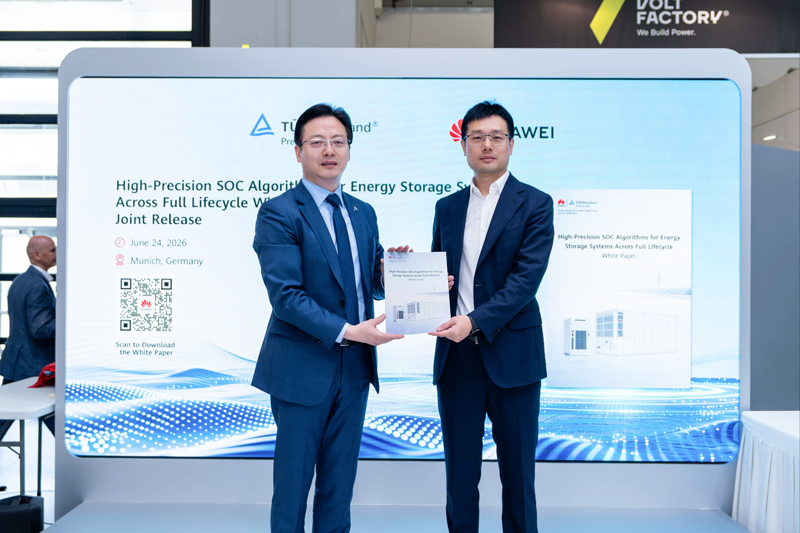
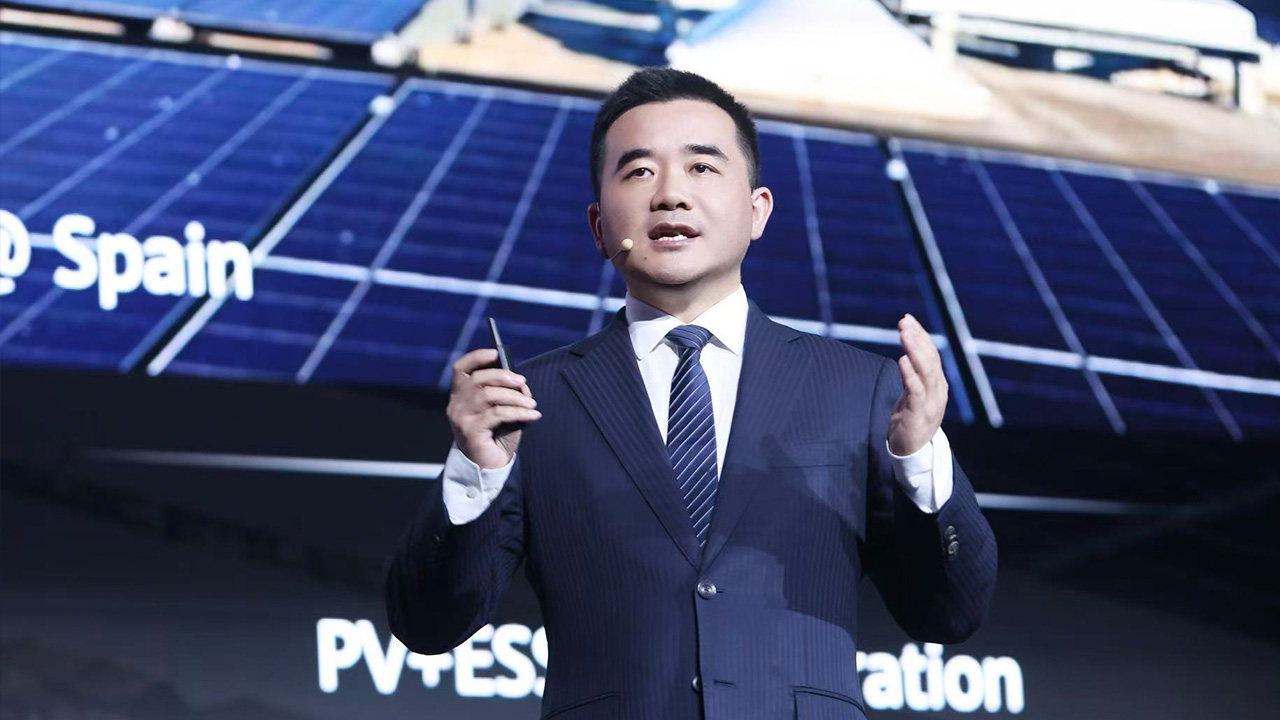
On June 24, 2026, during the Intersolar Europe, Huawei Digital Power and TÜV Rheinland, an international independent third-party testing, inspection, and certification organization, officially released the White Paper on High-Precision SOC Algorithms for Energy Storage Systems Across Full Lifecycle. Leilei Wu, Director of Golbal Marketing Dept, Smart PV&ESS Product Line of Huawei Digital Power, and Weichun Li , Senior Vice President of Solar & Commercial Products, Greater China; Senior Vice President of Global Power Electronics Business, TÜV Rheinland Group, attended the launch ceremony.


Huawei Digital Power and TÜV Rheinland jointly release White Paper on High-Precision SOC Algorithms for Energy Storage Systems

As the large-scale deployment of energy storage systems and the development of the new power system forge ahead, high-precision SOC estimation, automatic calibration and multi-stage balancing capabilities have evolved from technical details into core metrics for evaluating the advancement and reliability of energy storage systems. The jointly released white paper systematically sorts out the technical routes and verification methods of high-precision state of charge (SOC) algorithms across typical application scenarios. For the first time, it expands SOC management from a single algorithm accuracy indicator into a comprehensive evaluation framework covering calibration mechanisms, balancing strategies and working condition adaptability. The proposed framework delivers a quantifiable upgrading roadmap for the industry, shifting from "basic estimation capability" to "accurate estimation", and further to "maximized usable battery capacity".

As the global energy landscape accelerates its shift to clean, low-carbon power systems, energy storage stands as a vital pillar enabling large-scale renewable integration and flexible dispatch of new power systems. SOC, one of the system’s most fundamental operating parameters, directly dictates storage operational efficiency, safety and full-lifecycle economic returns.

Amid maturing power market mechanisms, energy storage is developing multi-functional business models spanning energy arbitrage, capacity leasing, virtual power plants and grid ancillary services. Corresponding demands on SOC performance have advanced beyond static calculation to real-time dynamic adaptation.

The rapid uptake of grid-forming storage introduces stricter operational demands: units must independently stabilize voltage and frequency under harsh scenarios including frequency excursions, islanded mode, black start and weak grid interconnection. In turn, precise SOC management has become an essential technical benchmark to judge system responsiveness and deliverable capacity.

Based on its self-developed technical specification 2 PfG 3165/12.25, TUV Rheinland established the industry’s first three-level SOC evaluation system,which divides the SOC management level of energy storage systems into three levels.

Level 1 (Basic): SOC calibration is supported only in deep charge/discharge scenarios, and balancing is limited to the cell level. This level meets the minimum requirements of both Chinese and international standards, and represents the baseline capability.

Level 2 (Plus): Supports low-precision calibration in shallow charge and discharge scenarios. Rack-level balancing capability is added. This level meets the stable grid-forming requirements, although the ESS retains a reserved margin of usable capacity.

Level 3 (Prime): High-accuracy SOC calibration is supported in both deep and shallow charge/discharge scenarios. The system adapts to multiple operating conditions, enables plant-wide balancing, and features pack-level optimization and rack-level management. This level meets stable grid-forming requirements, with the ESS usable capacity fully utilized.achieving a unified balance between "sufficient use" and "stable use."

According to this standard, TÜV Rheinland conducted comprehensive testing and evaluation of Huawei's LUNA2000 / LUTERRA2000 energy storage systems against key performance indicators, including SOC static accuracy, dynamic automatic calibration, capacity availability, frequency regulation response, grid-forming capability, black start capability, and multi-level balancing (active, passive, and inter-cluster). The systems achieved the highest Prime (Level 3) rating and were awarded the corresponding certification.


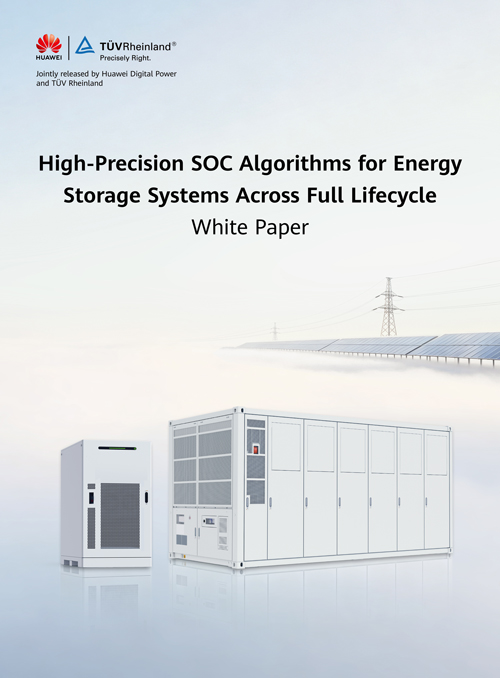
English cover of the white paper

Download link for the white paper

https://solar.huawei.com/admin/asset/v1/gray
/view/906d18515fe04b4db48a1ea61b56ce10.pdf



Related Recommendations
Huawei Digital Power and TÜV Rheinland jointly release White Paper on High-Precision SOC Algorithms for Energy Storage Systems

Jul 13, 2026

On June 24, 2026, during the Intersolar Europe, Huawei Digital Power and TÜV Rheinland, an international independent third-party testing, inspection, and certification organization, officially released the White Paper on High-Precision SOC Algorithms for Energy Storage Systems Across Full Lifecycle. Leilei Wu, Director of Golbal Marketing Dept, Smart PV&ESS Product Line of Huawei Digital Power, and Weichun Li , Senior Vice President of Solar & Commercial Products, Greater China; Senior Vice President of Global Power Electronics Business, TÜV Rheinland Group, attended the launch ceremony.


Huawei Digital Power and TÜV Rheinland jointly release White Paper on High-Precision SOC Algorithms for Energy Storage Systems

As the large-scale deployment of energy storage systems and the development of the new power system forge ahead, high-precision SOC estimation, automatic calibration and multi-stage balancing capabilities have evolved from technical details into core metrics for evaluating the advancement and reliability of energy storage systems. The jointly released white paper systematically sorts out the technical routes and verification methods of high-precision state of charge (SOC) algorithms across typical application scenarios. For the first time, it expands SOC management from a single algorithm accuracy indicator into a comprehensive evaluation framework covering calibration mechanisms, balancing strategies and working condition adaptability. The proposed framework delivers a quantifiable upgrading roadmap for the industry, shifting from "basic estimation capability" to "accurate estimation", and further to "maximized usable battery capacity".

As the global energy landscape accelerates its shift to clean, low-carbon power systems, energy storage stands as a vital pillar enabling large-scale renewable integration and flexible dispatch of new power systems. SOC, one of the system’s most fundamental operating parameters, directly dictates storage operational efficiency, safety and full-lifecycle economic returns.

Amid maturing power market mechanisms, energy storage is developing multi-functional business models spanning energy arbitrage, capacity leasing, virtual power plants and grid ancillary services. Corresponding demands on SOC performance have advanced beyond static calculation to real-time dynamic adaptation.

The rapid uptake of grid-forming storage introduces stricter operational demands: units must independently stabilize voltage and frequency under harsh scenarios including frequency excursions, islanded mode, black start and weak grid interconnection. In turn, precise SOC management has become an essential technical benchmark to judge system responsiveness and deliverable capacity.

Based on its self-developed technical specification 2 PfG 3165/12.25, TUV Rheinland established the industry’s first three-level SOC evaluation system,which divides the SOC management level of energy storage systems into three levels.

Level 1 (Basic): SOC calibration is supported only in deep charge/discharge scenarios, and balancing is limited to the cell level. This level meets the minimum requirements of both Chinese and international standards, and represents the baseline capability.

Level 2 (Plus): Supports low-precision calibration in shallow charge and discharge scenarios. Rack-level balancing capability is added. This level meets the stable grid-forming requirements, although the ESS retains a reserved margin of usable capacity.

Level 3 (Prime): High-accuracy SOC calibration is supported in both deep and shallow charge/discharge scenarios. The system adapts to multiple operating conditions, enables plant-wide balancing, and features pack-level optimization and rack-level management. This level meets stable grid-forming requirements, with the ESS usable capacity fully utilized.achieving a unified balance between "sufficient use" and "stable use."

According to this standard, TÜV Rheinland conducted comprehensive testing and evaluation of Huawei's LUNA2000 / LUTERRA2000 energy storage systems against key performance indicators, including SOC static accuracy, dynamic automatic calibration, capacity availability, frequency regulation response, grid-forming capability, black start capability, and multi-level balancing (active, passive, and inter-cluster). The systems achieved the highest Prime (Level 3) rating and were awarded the corresponding certification.


English cover of the white paper

Download link for the white paper

https://solar.huawei.com/admin/asset/v1/gray
/view/906d18515fe04b4db48a1ea61b56ce10.pdf


Related Recommendations