In the rapidly evolving landscape of the global electric vehicle (EV) industry, both AC and DC power serve as the “fuel” for electric vehicles. However, charging speed has emerged as a crucial determinant of EV adoption rates and user satisfaction. DC fast chargers are instrumental in alleviating the prevalent concern of EV range anxiety.
This guide commences by exploring the question: Why is DC charging faster than AC? From there, it delves into the actual speed of DC fast charging and the underlying mechanisms that enable it. Understanding this can help you make the best choice when deciding how to charge.
Why Is DC Charging Faster Than AC?
DC fast charging boasts a substantial speed advantage over AC charging, and this can be mainly attributed to three core differentiators.
1. Differences in Current Type
How DC fast charging works? DC fast charging is akin to an "electricity express," bypassing intermediate conversion steps to directly deliver high-voltage direct current (DC) to the vehicle's battery. In contrast, AC charging acts as an "electricity transfer station," relying on the on-board charger (OBC) to complete the conversion of alternating current (AC) to DC.
It’s important to note that electric vehicle (EV) batteries can only store DC, while grid power remains AC. Thanks to DC fast charging’s 'direct delivery' feature, it not only significantly reduces energy loss during conversion but also eliminates the time spent on current conversion.
As a result, DC fast charging achieves remarkably higher charging efficiency and enables rapid energy replenishment.
2. Difference in Charging Efficiency
Another key factor affecting the charging speed of an electric vehicle is charging efficiency. This factor not only influences the value, durability, and stability of a charger but also contributes significantly to reducing the total cost of ownership (TCO).
Charging efficiency is the ratio of the energy stored in the battery to the energy supplied during the charging process.
Charging efficiency is affected by several key factors, including:
● Temperature
● Charging speed
● Battery chemistry
● State of charge
● On-board charger (OBC)
For a comparison of the charging efficiencies between DC fast charging and AC charging, please refer to the figure below.
|
Type
|
Energy Conversion Path
|
Main Sources of Loss
|
Typical Efficiency
|
|
AC
|
Grid AC → On-board Charger → Battery DC
|
Charger conversion, cable resistance
|
85%-95%
|
|
DC
|
Charging Pile DC → Direct Input to Battery DC
|
Cable resistance, charging-pile components
|
Above 90%
|
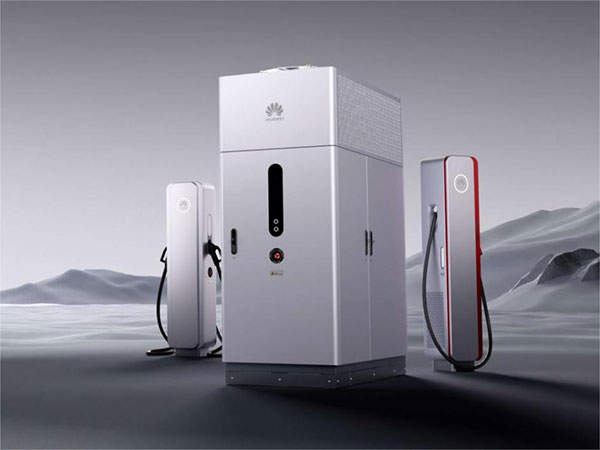
In the field of DC fast charging, Huawei FusionCharge Liquid-Cooled Ultra-Fast Charging technology has achieved an astonishing charging efficiency of 95.5%*. This breakthrough not only reduces charging time effectively but also delivers a more efficient and convenient charging experience for users.
3. Differences in Power Level and Compatibility
Of course, the power level and compatibility of the charger are also crucial.
The following table presents the differences between AC charging and DC fast charging in terms of power levels and compatibility:
|
Category
|
AC
|
DC
|
|
Power Level
|
- Household: 3.3-7 kW
- Commercial: Up to 22 kW
|
- Standard fast charging: 20–200 kW
- Ultra-fast charging:300 kW+(e.g., Huawei 600 kW)
|
|
Compatibility
|
- Relies on On‑Board Charger (OBC)
- Must match the vehicle’s OBC maximum power (e.g., 11 kW)
|
- No on‑board charger needed
- Direct battery input
- Requires DC fast charging–capable port
|
|
Core Dependent Equipment
|
On-Board Charger (OBC)
|
DC charging pile (built-in converter)
|
|
Vehicle Interface
|
Universal AC charging port (e.g., Type 2, GB/T 20234 AC)
|
Dedicated DC charging port (e.g., CCS Combo, GB/T 20234 DC)
|
|
Typical Scenario Limitations
|
Cannot meet emergency rapid recharge needs
|
Requires high‑voltage grid support (e.g., 380 V three‑phase power or higher)
|
The above explains the core principles behind why DC charging is more efficient than AC charging. So, how fast is DC fast charging?
Comparison of Common Fast Charging Powers and Charging Times
|
Charging Pile Power
|
Battery Capacity (60 kWh, charging from 20% to 80%)
|
|
50 kW
|
Approximately 45 minutes
|
|
50 kW
|
Approximately 18 minutes
|
|
350 kW or more
|
Approximately 8 minutes or less
|
Note: Data are theoretical estimates; actual times vary by vehicle model and environmental conditions.
Is DC Fast Charging Bad for EV Batteries?
A common concern among EV owners when using DC fast charging is whether it can damage the battery.
The impact of DC fast charging on EV batteries should be objectively evaluated from two aspects: short-term advantages and long-term potential effects. Reasonable usage can strike a balance between charging efficiency and battery lifespan.
● Short-term impacts: Single DC fast charging sessions cause limited damage to the battery. The temperature control technologies of modern Battery Management Systems (BMS) and charging piles can effectively mitigate overheating risks.
● Long-term impacts: Frequent use of DC fast charging (e.g., more than 3 times a week) may lead to accelerated degradation of battery capacity. Research data shows that long-term high-frequency fast charging can reduce the battery's cycle life by 10%–20%.
Charging Strategy Recommendations:
1. Avoid extreme state-of-charge operations:
● Try to avoid fast charging when the battery level is below 20%. At low charge levels, battery internal resistance is higher, leading to more significant heat generation during fast charging.
● In daily use, it is recommended to set the charging limit to 80%–90%, and only charge to 100% when traveling long distances.
2. Control fast charging frequency:
● Prioritize AC slow charging (3.3-22kW) for daily commuting, and use fast charging only for emergency energy replenishment.
● Complete at least one slow charging full cycle (charge to 100% and discharge to 20%) per month to help the Battery Management System (BMS) calibrate the battery level.
2. Choose high-quality charging piles:
● It is recommended to prioritize car manufacturer-certified fast charging piles such as Huawei FusionCharge Liquid-Cooled Ultra-Fast Charging. These chargers feature more precise voltage/current control, effectively reducing the impact of non-standard piles on the battery.
AC vs DC Chargers: Which One Is Better for Your EV?
AC and DC charging are the two primary power‑supply methods for electric vehicles (EVs), each with distinct characteristics and benefits. The choice between them hinges on your driving habits, vehicle specifications, and access to charging infrastructure.
AC charging is best for:
● Overnight charging if you don’t drive much daily.
● A backup charging option when no faster charger is available.
● Small‐battery EVs or hybrid electric vehicles (HEVs), which have smaller battery packs.
DC charging is best for:
● Road trips and long‑distance travel.
● Emergency top‑ups when the battery is low.
● Urban EV users without home charging.
The Role of DC Fast Charging in the Future of EVs
DC fast charging will play a pivotal role in accelerating electric vehicle (EV) adoption and addressing key challenges in the transition to sustainable transportation. Its core roles and impacts include:
1. Overcoming range anxiety and enhancing convenience
2. Enabling long‑distance travel and commercial EV deployment
3. Supporting smart‑grid integration and energy efficiency
4. Driving EV market growth and boosting consumer confidence
5. Facilitating urban mobility and ensuring equitable access
Conclusion
This guide delves into core questions such as “Why is DC charging faster than AC?”, “How dc fast charging works?”, and “How fast is DC fast charging?”, revealing that DC fast charging is not just a convenience but a foundational technology for the EV revolution. By addressing range anxiety, enabling long-distance travel and commercial applications, integrating with smart grids, and driving market growth, it will accelerate the global transition to sustainable transportation. As infrastructure expands and technology advances, DC fast charging will become as seamless and ubiquitous as gas stations, powering a cleaner, more sustainable future for mobility.
FAQs
What is the difference between AC and DC chargers for electric vehicles?
Electric vehicle (EV) AC chargers and DC chargers differ significantly in energy‑transfer methods, charging speeds, and application scenarios.
However, they form a complementary system: AC charging serves as the “daily energy source,” while DC charging acts as the “emergency fast replenisher,” jointly supporting the EV charging ecosystem.
Which charger is better for long trips?
DC fast charging is ideal for long‑distance travel, with its core advantages lying in high charging power and rapid energy replenishment.
How fast is DC fast charging? Take Huawei FusionCharge Liquid-Cooled Ultra-Fast Charging terminals as an example—they can deliver up to 500 A of current. With just five minutes of charging, an electric vehicle can gain over 200 km of range*, significantly alleviating range anxiety during long trips.
In contrast, AC charging typically operates at powers below 22 kW. Charging a 60 kWh battery to full capacity often takes over three hours, making it unsuitable for urgent energy replenishment in long‑distance scenarios. Therefore, DC fast charging remains the preferred solution for extended travel.
Is dc charging better than ac charging?
The choice between AC and DC chargers depends on your specific needs, including driving habits, daily mileage, charging‑infrastructure availability, and budget. Each option has its own advantages and disadvantages. Generally, AC charging is more suitable for regular, cost‑effective, and battery‑friendly use, while DC charging is ideal for rapid top‑ups during long trips. EV owners can select based on their particular requirements.
* The data is based on theoretical values obtained by Huawei internal labs under specific test conditions. Actual performance may vary due to differences in software versions, usage conditions, and environmental factors. All data is subject to actual usage.
Disclaimer: Any views and/or opinions expressed in this post by individual authors or contributors are their personal views and/or opinions and do not necessarily reflect the views and/or opinions of Huawei Technologies.