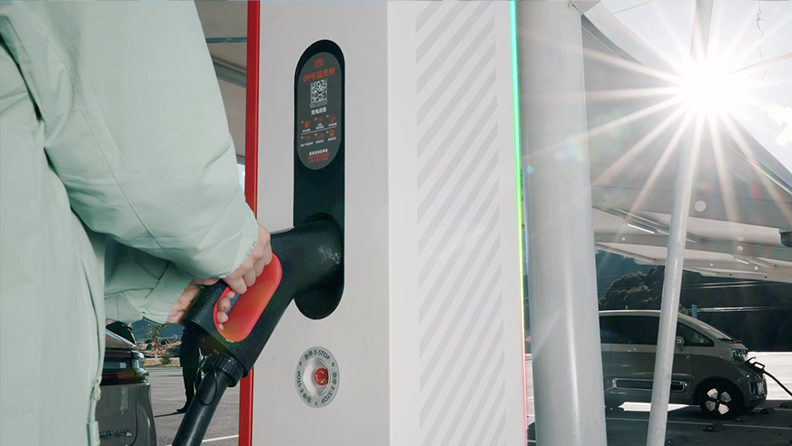
During continuous rainy weather, it is common to see electric vehicle owners hesitating in front of charging piles, worried that charging equipment might leak electricity, short - circuit, or pose other dangers when exposed to water. So, can you charge an electric car in the rain?
In fact, to determine whether electric vehicle charging equipment can be safely used in rainy days, we need to look at its IP rating. As a core standard for measuring the dust and water resistance of electrical equipment, the IP rating is not only the "key" to answering the question of charging safety in rainy days but also closely related to the safety of using various electronic devices in our daily lives.
What are the IP protection values?
IP protection values (also known as an Ingress Protection Rating or International Protection Rating) is used to ability of an electrical device's enclosure to resist the intrusion of solid foreign objects (such as dust and debris) and liquids (such as water).
Typically, an IP rating consists of the letters "IP" followed by two digits, where each digit represents a different dimension of protection.
What is an IP rating?
IP rating is standardized by the International Electrotechnical Commission (IEC), is widely applied across electronics, home appliances, industrial equipment, and other sectors to help users quickly assess a device’s protective suitability in specific environments (e.g., dust, water, or oil resistance).
Typically, IP ratings require standardized testing in accordance with IEC 60529(British BS EN 60529:1992-Degrees of protection provided by enclosures (IP Code) and European IEC 60509: 1989-Degrees of protection provided by enclosures (IP Code):
● Solid protection testing: Simulating foreign object intrusion using metal balls and probes;
● Liquid protection testing: Simulating environmental conditions through equipment such as drip devices, water spray guns, and immersion test chambers.
This system is critical for ensuring the continuous and stable operation of electronic and mechanical devices and their components in intended environments. By understanding IP classifications, designers, manufacturers, and users can evaluate whether equipment meets the requirements of specific environmental conditions.
In technical and engineering fields, IP ratings serve as a universal standard for measuring a device’s dust and moisture resistance, playing a key role in ensuring durability and reliability across diverse applications.
What do the digits after “IP” mean?
The first digit (X) represents the dust resistance level, ranging from 0 to 6. The larger the digit, the stronger the protection capability.
|
Grade
|
Description of Protection Capability
|
|
0
|
No protection; no special defense against solid foreign objects.
|
|
1
|
Prevents solid foreign objects with a diameter ≥ 50mm (e.g., accidental palm contact).
|
|
2
|
Prevents solid foreign objects with a diameter ≥ 12.5mm (e.g., finger insertion).
|
|
3
|
Prevents solid foreign objects with a diameter ≥ 2.5mm (e.g., tools, wires, etc.).
|
|
4
|
Prevents solid foreign objects with a diameter ≥ 1.0mm (e.g., thin wires, insects).
|
|
5
|
Dust-tight: Allows minimal dust ingress without affecting normal equipment operation.
|
|
6
|
Totally dust-proof: No dust can enter the interior of the equipment.
|
The second digit (X) represents the water resistance level, ranging from 0 to 9. The larger the digit, the stronger the water protection capability.
|
Grade
|
Description of Protection Capability
|
|
0
|
No protection; no special defense against liquids.
|
|
1
|
Vertical dripping water (e.g., condensation) has no effect.
|
|
2
|
When the equipment is tilted at 15°, vertical dripping water has no effect.
|
|
3
|
Water spray protection: No effect from water spraying within 60°in any direction (e.g., rain).
|
|
4
|
Splash protection: No effect from water splashing in any direction (e.g., splashing water, rain splashes).
|
|
5
|
Water jet protection: No effect from low-pressure water spraying in any direction (e.g., hose washing).
|
|
6
|
Protection against powerful water jets: No effect from high-pressure water spraying in any direction (e.g., stormy weather, ocean waves).
|
|
7
|
Short-term immersion protection: No water ingress when submerged in 1 meter of water for 30 minutes.
|
|
8
|
Continuous immersion protection: No effect from long-term immersion under specified pressure and depth (e.g., diving equipment).
|
|
9
|
Protection against high-temperature and high-pressure water jets: No effect from close-range high-pressure and high-temperature water flow impacts (e.g., industrial environment cleaning).
|
Which IP rating is suitable for outdoor applications?
Devices meeting the IP44 protection rating are suitable for outdoor use. Such equipment can prevent the intrusion of solid objects larger than 1 mm in diameter and withstand water splashes from any direction.
Can you charge an electric car outside in the rain? In extreme conditions such as heavy rainfall, prolonged storms, or long-term water immersion of equipment, it is recommended to prioritize EV charging piles with an IP54 protection rating or higher.
Take Huawei FusionCharge Liquid-Cooled Ultra-Fast Charging as an example:its IP rating reaches IP55, providing reliable assurance for charging in rainy conditions. The equipment features high vehicle compatibility, so users do not need to rush to find other charging stations in the rain.
In terms of charging efficiency, Huawei FusionCharge Liquid-Cooled Ultra-Fast Charging delivers a charging current of up to 500 A. Combined with a super-high charging efficiency of 99.5%, it can add over 200 km of range to a vehicle in just 5 minutes.*
Tips for Safe Charging in Bad Weather
● Pre-charging inspection: Confirm the IP rating label of the charging pile (usually on the equipment nameplate), and check whether the charging gun and interface are dry and free of foreign objects; if there is severe water accumulation around the charging pile, it is recommended to change the charging point.
● Protection details: Use an umbrella to shield the charging gun during plugging and unplugging to avoid direct contact between rainwater and the interface; if the vehicle's charging port is exposed to rain, dry it before connecting.
● Extreme weather avoidance: During thunderstorms, even if the charging pile's protection rating meets standards, it is recommended to suspend charging to prevent accidents caused by lightning strikes.
Conclusion
Can you charge an electric car in the rain?Today, with the increasing popularity of new energy travel, charging in rainy days starts with selecting charging piles with an IP54 protection rating or higher. Only by matching with standardized operation procedures can every charging become a reassuring journey.
FAQs
What kind of charging equipment has relatively good waterproof performance?
For EV charging, it is recommended to prioritize Huawei FusionCharge Liquid-Cooled Ultra-Fast Charging. With an IP55 protection rating, it ensures reliable safety for charging in rainy conditions while offering significant advantages in fast charging speed and high vehicle compatibility.
What is the IP protection rating?
IP protection rating stands for IP rating. The IP rating system rates and classifies the level of sealing effectiveness provided by mechanical casings and electrical enclosures for a specified object. The IP rating indicates the ingress protection of a product. A product’s IP rating can degrade after the product is dropped or when it gets exposed to environmental hazards that compromise the material's strength. These environmental hazards include a chemical spill, extreme temperatures, impact forces, or other factors due to distortion, cracking, and structural degradation that may occur.
What are the IP ratings for outdoor use?
Devices meeting the IP44 protection rating can be used outdoors, but they may still be damaged in situations such as heavy rainfall, prolonged storms, or long-term immersion in water. Therefore, in rainy weather, it is recommended to prioritize IP54 or higher protection ratings.
Is IP55 better than IP45?
The numerical values of IP protection ratings are solely used to quantify the protective capability of electrical equipment enclosures to resist the intrusion of solid foreign objects and liquids. IP55 is more suitable for harsh environments with high equipment protection requirements, while IP45 is applicable to environments with relatively low dust protection requirements but specific water protection needs.
* The data is based on theoretical values obtained by Huawei internal labs through tests carried out under specific conditions. Actual performance may vary due to differences between software versions, usage conditions, and environmental factors. All data is subject to actual usage.
Disclaimer: Any views and/or opinions expressed in this post by individual authors or contributors are their personal views and/or opinions and do not necessarily reflect the views and/or opinions of Huawei Technologies.