In the era of vigorous development of the digital economy, data is like a new type of "oil" and has become a core resource driving the development of various industries. Data center, which carry massive data storage and processing, are the "super hubs" behind this digital revolution. This article will take you to learn about what is a hyperscale data center and how do hyperscale data centers work.
How Do Hyperscale Data Centers Work?
● Network Architecture: Hyperscale data centers often adopt advanced architectures—such as the Clos topology—that support horizontal scaling. Leveraging NFV (Network Function Virtualization) and SDN (Software-Defined Networking) enables flexible management and rapid response to business requirements.
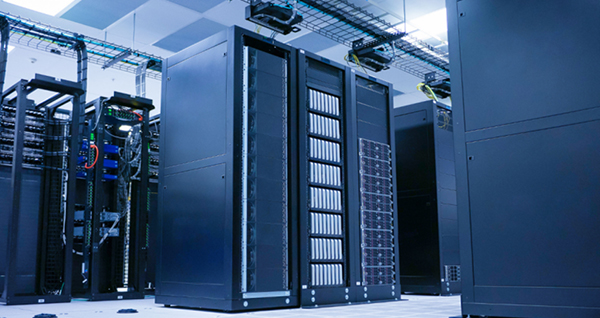
● Hardware Devices: High-density servers and storage devices are used, equipped with efficient cooling and power supply systems. Meanwhile, decoupling hardware and embracing white-box designs standardize network devices, reduce costs, and boost efficiency.
● Management, Operation and Maintenance: Characterized by automated and intelligent operation and maintenance, it covers aspects such as resource deployment and software upgrades. Through monitoring and predictive maintenance, failures and downtime are reduced.
● Energy and Sustainability: Energy efficiency is prioritized through energy-saving technologies, renewable power sources, and resource-recycling measures to lessen environmental impact.
Key Features of Hyperscale Data Centers
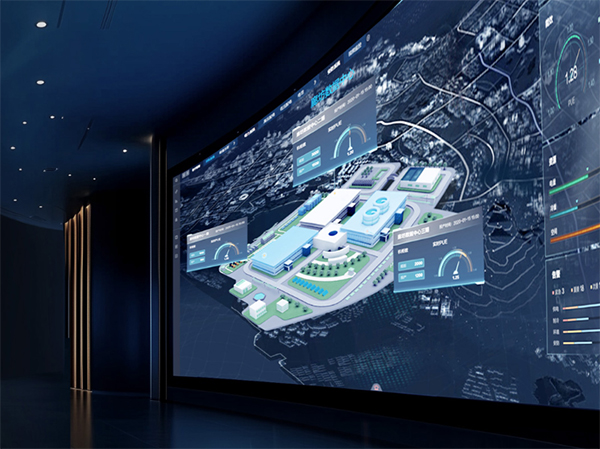
● Huge Scale: Covering tens of thousands to hundreds of thousands of square meters and housing thousands to tens of thousands of servers (and millions of VMs), with racks at 10-40kW density. The larger the scale of the data center, the higher the difficulty of operation and maintenance. The Huawei Smart Management System further simplifies operations and maintenance of the data center intelligent and professional.
● High-Performance Network Infrastructure: Enables low-latency transmission using 40G/100G Ethernet, dynamically management and optimization with the help of SDN.
● High Flexibility and Modular Design: The modular architecture is easy to expand and upgrade. It relies on automated tools to complete resource management and fault repair, and supports customized configurations.
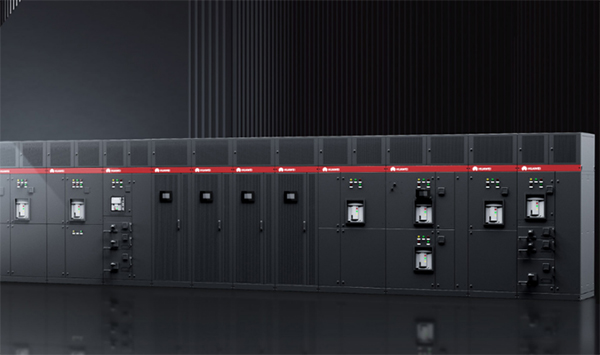
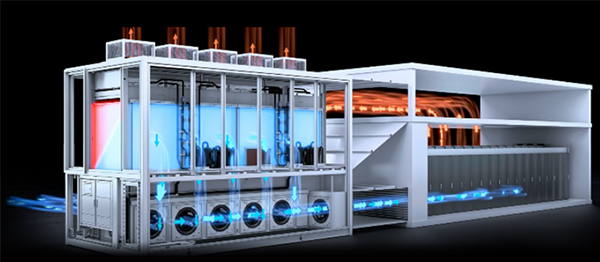
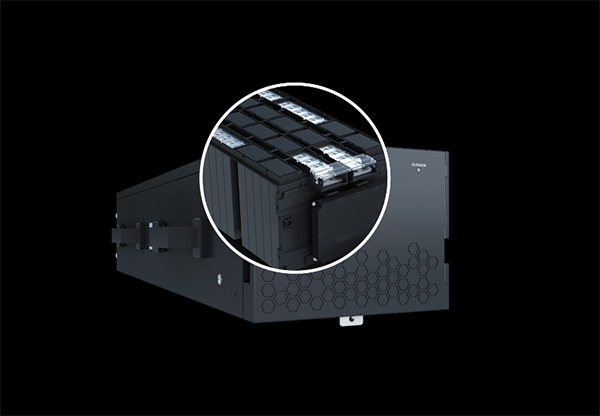
● Robust Power and Cooling Capabilities: Requires megawatt-level power delivery and advanced cooling. For example, the Huawei Smart Power Supply, with the support of AI, delivers a simple, green, smart and reliable power supply and distribution system for medium and large data centers. And Huawei Smart Cooling offers cooling solutions with extreme energy efficiency, rapid delivery, simple operation and maintenance, and reliability to create a green data center.
● Efficient Energy Utilization: Applies advanced technologies to maximize energy-use efficiency; many facilities now integrate renewable sources such as solar and wind to cut carbon emissions.
● High Data Storage and Processing Capacity: Uses distributed storage to manage massive datasets and parallel-processing frameworks (e.g., TensorFlow, Apache Spark) to accelerate computation.
Benefits of Hyperscale Data Centers
Through the above introduction, we can generally understand that hyperscale data centers have significant advantages in many aspects. In terms of scale and scalability, they can accommodate millions of servers and more virtual machines, meeting the future needs for the increase in data processing volume and speed. Due to their high popularity, they can attract more customers and partners, enhancing brand value and market competitiveness. The revenue from long-term contracts ensures a stable cash flow and reduces business risks. Moreover, at the technical level, hyperscale data centers adopt the latest technical equipment and possess leading innovation capabilities, enabling them to adapt to market changes.
The 5 Largest Hyperscale Data Centers
In reality, there is no universally fixed or officially ranked list of the world's top five hyperscale data centers. However, several facilities are widely recognized for their massive scale and global influence. Below are some of the most prominent examples:
● China Telecom Inner Mongolia Information Park Data Center: Located in Hohhot, Inner Mongolia, this data center covers an area of 10.7 million square feet, making it one of the largest in the world.
● Range International Data Center: Located in Langfang, China, it spans 6.3 million square feet—as large as 110 football fields and its floor area is equivalent to that of the Pentagon. Funded by public and private investors and designed, constructed, and supervised by IBM, it consumes 150 megawatts of power.
● China Mobile Harbin Data Center: Located in Harbin City, Heilongjiang Province, China, and owned by China Mobile. With a coverage area of over 7.1 million square feet, it is one of China Mobile's flagship facilities.
● Tulip Data Center: Owned and operated by Tulip Data Center Services Private Limited, it is located in Bangalore, India, and covers 1 million square feet. It has 12,000 server racks, each supported by 100 megawatts of power.
● Kolos Data Center, Norway: The Kolos facility in a small Norwegian village is the largest data center in Europe, covering 6.5 million square feet across four floors. Known as a hyper-scalable data center, it plans to consume up to 1,000 megawatts of power by 2027, powered entirely by renewable energy.
Conclusion
What is hyperscale data center? I hope this article has given you a clear answer. Looking ahead, hyperscale data centers are poised to play an increasingly important role across more sectors, providing solid support for emerging technologies such as AI and the Internet of Things, and helping industries achieve digital transformation and modernization.
FAQs
What is considered a hyperscale data center
A hyperscale data center hosts over 100,000 servers, covers tens of thousands of square meters, and offers massive computing and storage capacity. It supports high-demand data processing and cloud services with extremely high power consumption.
What is the difference between hyperscale and enterprise data centers?
Hyperscale data centers are large, self-built by tech giants, and offer standardized cloud services. In contrast, enterprise or colocation centers are smaller, run by third parties, and provide customizable services to various clients.
How long to build a hyperscale data center?
The time required to build a hyperscale data center is affected by various factors, and generally it takes about 18 to 24 months.
Disclaimer: Any views and/or opinions expressed in this post by individual authors or contributors are their personal views and/or opinions and do not necessarily reflect the views and/or opinions of Huawei Technologies.