Amid the rapid acceleration of the digital economy, in the AI era, the demand for computing power has grown exponentially, and global data centers have ushered in a construction boom, which also brings huge energy consumption challenges. What is the current status of data center energy consumption and AI data center energy consumption?
In this article, we will take a closer look at data center energy consumption forecasts, and explore how to reduce energy consumption in data centers. This research aims to provide enterprises with actionable blueprints for achieving carbon neutrality without compromising economic competitiveness.
Behind the AI Workload: Should We Worry About Data Center Energy Consumption?
In a world where data is growing exponentially, data centers-particularly AI data centers-play a pivotal role in digital transformation, this digital revolution conceals a significant cost: energy consumption.
The "Energy and AI" report released by the International Energy Agency (IEA) on April 10 highlights that the explosive growth of demand for AI-related computing power is a key variable in reshaping the global energy landscape.
The impacts of increased energy consumption in AI data centers primarily include the following aspects:
1. Surge in Electricity Demand
With the rapid advancement of AI technologies-particularly the proliferation of generative AI-the electricity demand of data centers has skyrocketed.
For example, training a large AI model like GPT-4 consumes over 1.7 million kilowatt-hours of electricity-equivalent to the annual power usage of 160 households.
2. Increased Strain on Power Grids
The growth in power demand from data centers has intensified the load on electrical grids, particularly in countries and regions where data centers are concentrated. This strain can lead to unstable power supplies and even grid failures in overburdened areas.
3. Rising Total Cost of Ownership (TCO)
To address power shortages, data centers may need to invest in costlier energy solutions, such as purchasing premium-priced electricity or building new power plants.
4. Exacerbated Environmental Impact
The operation of data centers requires massive energy inputs, including electricity and associated carbon emissions, both of which have a negative impact on climate change.
5. Challenges to Sustainable Development
To achieve carbon neutrality goals, data centers must adopt more renewable energy sources and technologies-such as liquid cooling systems and energy optimization technologies—to reduce their environmental footprint.
What are the main causes of data center energy consumption?
The main causes of high energy consumption in data center facility include:
Servers Running Non-stop
● Sustained Computational Demand: Data centers must continuously respond to user requests and process massive volumes of data-such as for search engines, online shopping, and video streaming services. Servers must operate 24/7 to ensure real-time data processing and fast response times, keeping their energy consumption consistently high.
● Data Storage and Backup: Vast amounts of data require storage and backup, meaning devices like hard drives and tapes must remain powered continuously to ensure data security and accessibility.Additionally,regular data backup operations are necessary to prevent loss, further increasing energy usage.
Equipment Cooling
Heat dissipation challenges have become a critical bottleneck restricting the performance of data centers. A survey shows that the energy consumed by cooling systems can account for up to 40% of the total energy consumption of data centers. In addition, the operating efficiency of cooling systems is affected by various factors such as equipment layout and air flow organization. If these factors are not reasonable, it will lead to an increase in cooling energy consumption.
Power Supply System
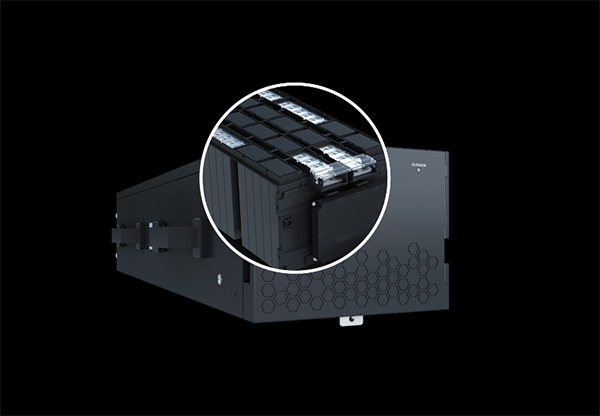
Data center power supply and distribution systems, including uninterruptible power supplies (UPS), lithium-ion batteries, and PowerPOD, also contribute to energy consumption. Inefficient power supply systems can lead to power losses during distribution and conversion, resulting in wasted energy. Additionally, the standby power consumption of these systems, even when not fully utilized, can add up over time. Ensuring that these systems are properly configured and maintained is crucial for reducing unnecessary energy use.
AI Power Demand Surges
Electricity is the cornerstone of computing power. A standard AI data center typically consumes as much electricity as 100,000 households, while some ultra-large-scale centers may use 20 times that amount.
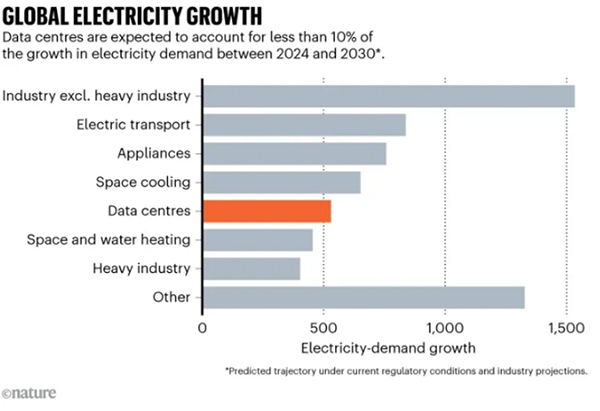
IEA data shows that global data center energy consumption is projected to double by 2030, accounting for approximately 3% of total electricity use that year.
How To Reduce Energy Consumption In Data Center?
1. High-Efficiency Power Supply
● Advanced Power Supply Systems: Deploy high-efficiency power supply system to enhance power conversion efficiency and minimize power loss during AC-to-DC conversion for servers.
● UPS Optimization: Modern lithium-ion battery-based UPS solutions offer higher energy density and lower self-discharge rates compared to traditional lead-acid batteries. They enable faster charging/discharging cycles, reducing overall energy consumption during backup operations.
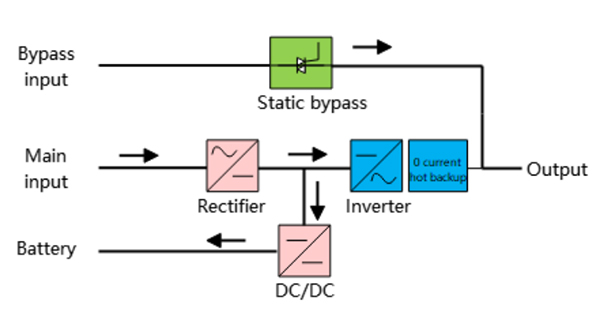
To enhance energy efficiency, it is crucial to prioritize parallel system efficiency over module efficiency and then implement the S-ECO mode on a broad scale. Take Huawei's modular UPS5000-H as an example. The efficiency of a single UPS and a parallel system is 97.5% and 97.3%, respectively. In S-ECO mode, the efficiency reaches 99.1%, achieving optimal energy efficiency.
2. Green Power Integration
● Renewable Energy Procurement via PPA: Lock in low-cost green power to meet ESG requirements.
● On-Site Renewable Generation: Such as photovoltaic systems or small wind turbines, reducing dependence on the power grid and further lowering carbon footprints.
3. Efficient Cooling Solutions
● Cooling Solution
Data center cooling solutions are engineered to address the thermal challenges posed by high-density IT equipment, ensuring reliable operations while optimizing energy efficiency.
Key categories include:
1. Air Cooling Solutions
2. Liquid Cooling Solutions
3. Free Cooling Solutions
4. Hybrid Cooling Solutions
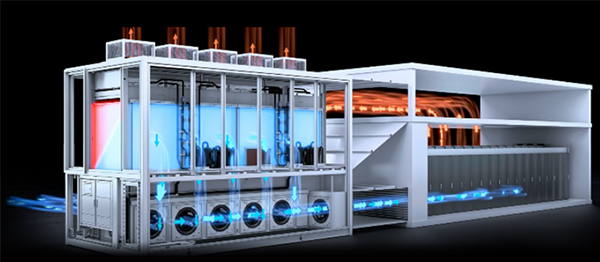
Currently, air-cooling solutions still dominate the mainstream application scenarios in data centers. On the cold-source side, compared with chilled-water systems, indirect evaporative cooling solutions have distinct advantages in terms of architecture, efficiency, and operation and maintenance. They are the most cost-effective and practical cooling solutions both currently and in the future.
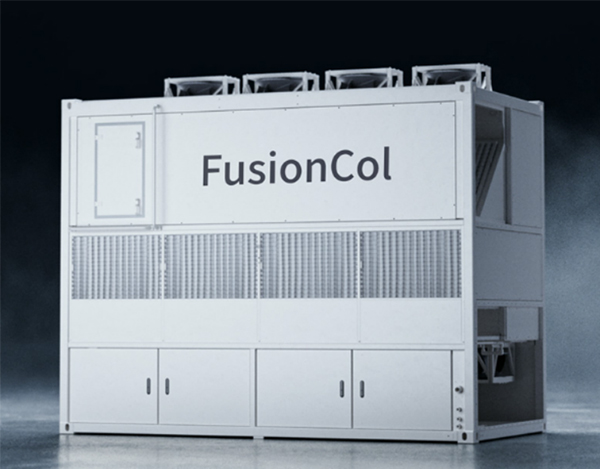
For example, Huawei's Indirect Evaporative Cooling FusionCol8000-E is an indirect evaporative cooling device. It achieves an extremely low Power Usage Effectiveness (PUE) by maximizing the utilization of natural cold sources.
For business scenarios with uncertain demands, the air-liquid integrated architecture will become the preferred choice for data centers that can adapt to future evolution.
● Cooling Technology
In the process of data centers meeting the surging demand, cooling technology has become both a key driver and a major pressure point. In general computing scenarios, air cooling technology can solve the heat dissipation needs, while intelligent computing scenarios rely on liquid cooling technology. Relatively speaking, liquid cooling is currently the general trend of the industry and the key to solving the high-density heat dissipation of AI data centers, but it is still in the transition period between general computing and intelligent computing.
During this transition period, Huawei launched a cooling technology solution that combines air cooling and liquid cooling to reduce the industry's energy consumption. In the future, for a long time, air cooling and liquid cooling will coexist for a long time. Air-liquid fusion and adjustable air-liquid ratio are the preferred green cooling solutions for AI data centers.
AI-driven energy efficiency optimization solutions
Deployment of the Huawei's iCooling@AI solution enables data centers to reduce energy consumption by 8-15% in the indirect evaporative cooling scenario, a substantial efficiency improvement that contributes to a greener, smarter future.
Conclusion
Data centers are an indispensable part of our digital economy. However, amid escalating sustainability pressures, data center energy consumption-particularly AI data center energy consumption-has become a major challenge for the industry. How to reduce energy consumption in data center? In essence, the tension between technological innovation iteration and its energy costs underscores a fundamental need to reconcile digital advancement with ecological sustainability. By integrating hardware innovations, digitalized operational optimization, and renewable energy adoption, we can effectively curb data center emissions and achieve net-zero goals, ensuring that the "intelligent future" does not succumb to an "energy paradox" and instead becomes a catalyst for sustainable development.
FAQs
How much energy is consumed by data centers?
The energy consumption of data centers varies significantly depending on the size of the data center and the configuration. Factors such as the number of servers, the type of workloads, the efficiency of cooling systems and power supply systems, all contribute to the overall energy consumption.
What is the forecast for data centers in 2030?
According to IEA data, the global data center energy consumption forecast indicates that electricity use is expected to double by 2030, accounting for approximately 3% of total global power consumption that year.
How Much Power Does a Data Center Use?
Data centers rely on electricity to power a diverse array of equipment, including servers, storage systems, and network hardware.
● Small Data Centers (approximately 1,000 square feet): Consume between 10 kW and 50 kW, equivalent to approximately 1,200 to 36,000 kWh per month.
● Medium-Sized Data Centers (10,000 to 50,000 square feet): May consume 500 kW to 2 MW, translating to 720,000 to 8.76 million kWh annually.
● Large Data Centers (50,000+ square feet) and hyperscale facilities: Can easily consume 10 MW or more, equivalent to 7.2 million kWh per month or 87.6 million kWh per year.
Disclaimer: Any views and/or opinions expressed in this post by individual authors or contributors are their personal views and/or opinions and do not necessarily reflect the views and/or opinions of Huawei Technologies.