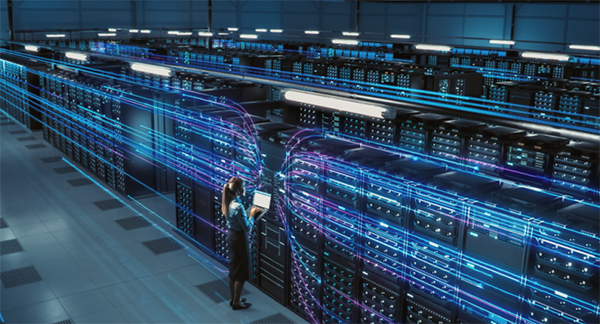
In the era of explosive growth in the digital economy, data centers, as the "computing power heart," are undergoing a silent energy revolution centered on data center power usage or AI data center power usage. As of 2024, global data centers consume 415 terawatt-hours (TWh) of electricity annually-1.5% of the world's total power usage and twice the annual electricity consumption of Malaysia. At the core of this challenge lies data center power usage effectiveness (PUE)-the critical metric defining how efficiently data centers convert electricity into compute power, making it the key to unlocking industry-wide breakthroughs.
In the following content, we will deeply dissect the underlying logic of PUE and explore innovative practices driving PUE into the "1.x era." Whether you are a data center operator optimizing data center power usage, a corporate technology decision-maker prioritizing efficiency, or a sustainability observer tracking green transitions, this exploration of "how to make every kilowatt-hour create value" will reveal the symbiotic code between the digital economy and a green future.
What is data center power usage effectiveness?
Power Usage Effectiveness (PUE), a core international metric for data center energy efficiency, is defined as the ratio of total data center energy consumption to IT equipment load energy consumption, accurately reflecting energy losses from non-IT systems such as power distribution and cooling.
The formula is:
PUE = Total Facility Power / IT Equipment Power
Here’s a breakdown of the components:
● Total Facility Power: This is the total power consumed by the data center. It includes everything from the cooling system, lighting, and the power used by the IT equipment itself.
● IT Equipment Power: This is the power consumed by the IT equipment only. This includes servers, storage systems, network equipment, and other devices directly involved in the data center’s primary computational work.
Theoretically, the ideal PUE value is 1.0, meaning all power is exclusively utilized by IT equipment. However, in practice, factors such as inefficient equipment, cooling technology limitations, and power losses in non-IT systems impact PUE, making it nearly impossible to achieve a PUE of 1.0. Therefore, the goal of data centers is to approach 1.0 as closely as possible-the lower the PUE value, the higher the energy efficiency and the more environmentally friendly the operations.
For example, a data center with a PUE of 1.5 consumes 1.5 kWh of energy to deliver 1 kWh to IT equipment, with 0.5 kWh lost to auxiliary systems like cooling and power distribution.
As a globally recognized core metric for energy efficiency assessment, PUE not only guides enterprises to focus on green data center development but also drives the deep transformation of data center energy management toward higher efficiency, lower carbon emissions, and sustainability.
What is the importance of data center power usage effectiveness?
The significance of Data Center Power Usage Effectiveness (PUE) is primarily embodied in two key aspects:
● Cost Reduction
1. Significant Electricity Bill Savings: Energy costs represent a major expenditure in data center operations. Lowering PUE directly enhances energy utilization efficiency, delivering tangible reductions in electricity expenses and boosting economic viability.
Take a concrete example: in a data center with a PUE of 2.0, for every ¥1 of electricity consumed by IT equipment, an equivalent ¥1 is wasted on cooling, power distribution, and other auxiliary systems—effectively doubling the total electricity expenditure.
2. Reduced Infrastructure Investment and Maintenance Costs: Optimizing PUE can significantly cut requirements for auxiliary systems like cooling and power distribution, lowering both capital expenditure (CAPEX) and operational expenditure (OPEX).
Take a concrete example: The inefficiency of high-PUE operations imposes a 30-50% premium on CAPEX for cooling and UPS infrastructure (Gartner, 2024), while OPEX grows by 12% YoY due to accelerated wear and tear. Retrofitting with advanced cooling solutions can decouple energy use from equipment count, delivering 20-35% savings in total lifecycle costs.
● Environmental Impact
1. Carbon Emission Reduction: Data centers are among the world’s largest energy consumers, and a high PUE directly correlates with excessive energy waste and greenhouse gas emissions, exacerbating carbon footprints. Reducing PUE values can significantly cut both energy consumption and carbon emissions, delivering tangible benefits for environmental protection.
Take a concrete example: Global data centers consume 415 terawatt-hours (TWh) of electricity annually (International Energy Agency, 2024), accounting for 1.5% of global power demand. If the average PUE drops from 1.6 to 1.2, this would eliminate 1.3 billion tons of CO₂ emissions per year-equivalent to:
● Taking 30 million fuel-powered vehicles off the road for a year;
● Planting 2 million hectares of new forests to absorb carbon.
2. Driving Sustainable Development: As major energy consumers, data centers are under increasing scrutiny for their energy efficiency. The EU's Data Center Energy Efficiency Code of Conduct mandates that new facilities built by 2030 must achieve a PUE ≤ 1.1. High-PUE operations face compliance risks such as carbon tariffs (e.g., CBAM) and power rationing, while low-PUE strategies not only enhance corporate ESG ratings but also accelerate the industry's transition toward greater efficiency and environmental stewardship.
Take a concrete example:
● Water Resources: High-PUE data centers evaporate 3–5 liters of cooling water per kWh (for thermal management). Reducing PUE by 0.5 could save over 5 million tons of water annually-equivalent to the volume of 2,500 standard swimming pools.
● E-Waste Reduction: Inefficient energy use accelerates hardware degradation. A 0.3 reduction in PUE can extend hardware lifespan by 15–20%, significantly cutting electronic waste generation.
How to improve energy efficiency of data centers and reduce energy consumption?
If your organization aims to reduce power consumption in data centers (including AI data centers) and improve Power Usage Effectiveness (PUE), consider starting with these strategic approaches:
1. Improve cooling systems
Objective: Reduce energy wasted on thermal management (typically 30–40% of total data center power).
Strategies:
● Deploy liquid cooling solutions (e.g., immersion or cold-plate cooling) for high-performance AI servers, cutting cooling energy use by 40–60% compared to traditional air cooling.
● Implement free-air cooling in moderate climates, using outdoor air for passive heat exchange to minimize mechanical refrigeration.
● Leverage AI-driven cooling optimization to dynamically adjust airflow based on real-time workloads, reducing fan energy by 15–25%.
2. Replace inefficient hardware
Objective: Eliminate "energy vampires" and right-size compute resources.
Strategies:
● Replace legacy servers with next-gen hardware that offer 30-50% better performance per watt.
● Virtualize or containerize workloads to consolidate servers, reducing idle hardware and achieving 20–30% higher utilization rates.
● Decommission or repurpose servers with PUE>1.8, as they often consume 50% more energy than modern equivalents (Uptime Institute, 2024).
3. Use an energy-efficient UPS
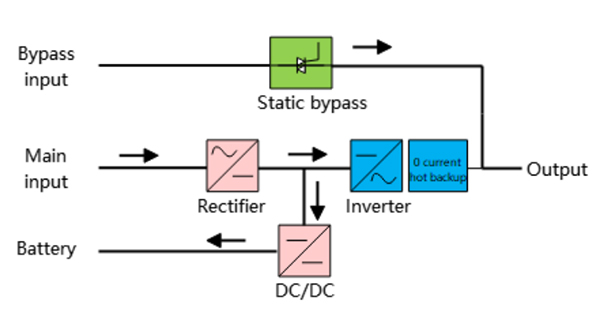
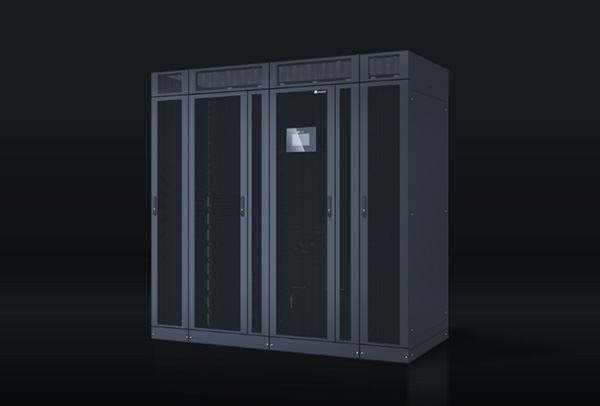
UPS are the backbone of data center power supply systems. They ensure stable power quality for mission-critical applications and provide emergency power during outages. However, while delivering reliability, UPS systems account for nearly 10% of total data center energy consumption—underscoring the urgent need for efficiency upgrades. To address this, Huawei has developed the advanced S-ECO Mode for UPS systems.
The S-ECO mode provides the following benefits:
● Zero transfer time between different operation modes
● High efficiency in the full load range
● High-voltage surge suppression
● Active harmonic compensation
S-ECO Mode, a TÜV-certified feature of Huawei's UPS systems, delivers up to 99.1% efficiency in power supply system. As documented in UPS S-ECO Technology White Paper, this innovation enhances UPS system efficiency by 3–4% and lowers data center PUE by 0.03–0.04—amounting to 1.5 to 2 million kWh in annual electricity savings for a typical facility. Scaled across all data centers with 10 MVA or larger UPS systems, this technology could drive billions of kWh in global energy savings annually, positioning it as a cornerstone of sustainable data center infrastructure.
What is the new development trend of the data center industry?
The data center industry is undergoing a profound transformation driven by technological innovation and global sustainability imperatives. Four key development trends are reshaping its landscape, integrating advanced technologies with environmental responsibility to meet the growing demands of the digital economy.
1. AI-Powered Operation and Energy Efficiency Optimization
AI technologies are increasingly integrated into every phase of data center management, from planning and design to operation and maintenance.
For example, AI-driven energy optimization technology enhance efficiency by analyzing IT power consumption, room temperature, and other key parameters. It adjusts cooling strategies in real time, ensuring cooling as needed and minimizing energy waste. Additionally, AI enables predictive fault diagnosis, identifying potential issues before they escalate to minimize downtime and improve operational reliability.
2. Modular/Prefabricated Construction
Modular data centers offer significant advantages such as rapid deployment, flexible scalability, and ease of maintenance, making them ideal for building data centers of varying scales and requirements. Modular design/architecture supports rapid delivery, meets the needs of rapid business launch, and save time to market,,lowering long-term operational costs through efficient resource utilization.
3. Green and Low-Carbon Initiatives with PUE Optimization
As significant energy consumers, data centers are increasingly adopting renewable energy sources such as solar and wind power to reduce carbon emissions and lower Power Usage Effectiveness (PUE). Data center operator now enter into long-term power purchase agreements (PPAs) with renewable energy plants or install on-site solar panels and wind turbines, directly integrating clean energy into their operations to enhance sustainability.
4. Specialized Services and Life-Cycle Management
The industry is increasingly shifting toward specialized end-to-end services spanning the entire data center lifecycle. Huawei’s disruptive AI data center solutions—which integrate cutting-edge hardware with open ecosystem partnerships—have set a new benchmark for the industry. As AI-driven workloads surge and global carbon neutrality deadlines approach, Huawei’s dual focus on technological excellence and ecological sustainability will not only accelerate its market leadership but also define the next generation of data centers:reliable,agile and sustainable
Conclusion
With data centers consuming 1.5% of global electricity—and AI data centers alone projected to triple energy demand by 2030—the evolution of Power Usage Effectiveness (PUE) from a niche metric to a boardroom-level KPI underscores a seismic shift: data center power usage is no longer a technical detail but a strategic liability. Every inefficient watt in AI training clusters or edge computing nodes not only inflates OPEX by 15–25% but also adds 0.5–1 tons of CO₂ per server annually (EPA, 2024). At the intersection of exponential compute growth and global decarbonization goals, PUE optimization emerges as the only viable path to reconcile silicon-driven innovation with the finite resources of our planet.
FAQs
What is the annual average PUE of a data center?
Currently, the average Power Usage Effectiveness (PUE) in the data center industry is approximately 1.5. This means IT equipment consumes 67% of a data center's total power, while the remaining 33% is used by other systems such as cooling.
Which systems consume the most power in a data center?
Servers are the primary power consumers in data centers, driven by their computational workloads and the need for thermal management. Cooling systems often account for 30–40% of total energy use, as they maintain optimal temperature (20–25°C) and humidity levels critical for server reliability.
While auxiliary systems like lighting, physical security, and fire suppression do consume power, their combined impact on total energy consumption is generally <10% compared to servers and cooling infrastructure.
How many kW·h of electricity does a data center consume on average?
The average electricity consumption of data centers varies significantly depending on factors like size, location, efficiency (PUE), and workload.
● Medium-Scale Data Centers: A typical medium-sized data center (5–10 MW) consumes 43.8–87.6 million kW·h/year (calculated at 8,760 hours/year of operation).
● Hyperscale Data Centers: The largest facilities (100+ MW) can consume 876 million+ kW·h/year, enough to power ~80,000 households.
How do you calculate average power consumption?
To manually calculate your power consumption, use the following steps:
- Calculate the watts your devices and appliances use per day.
- Add up the total amount of watts.
- Convert the watts to kilowatts. There are 1,000 watts in one kilowatt.
- Estimate the cost by multiplying monthly kilowatts by your electric rate.
Disclaimer: Any views and/or opinions expressed in this post by individual authors or contributors are their personal views and/or opinions and do not necessarily reflect the views and/or opinions of Huawei Technologies.