When people ask "how many terabytes are in a data center," it is crucial to clarify that the capacity and quantity of data storage devices are closely linked to the overall energy consumption of the data center. For example, large data centers house a greater number of storage units, driving up electricity use and demanding more stable power delivery. Higher storage density also increases cooling requirements, requiring more efficient thermal management. Let's now explore essential data center infrastructure and how enterprises can build reliable facilities.
What Layers Does the Data Center Business Include?
The main business layers of data centers include:
L0: Infrastructure Construction – Covers site selection, civil engineering and building works that establish the physical shell.
L1: Basic Infrastructure – Encompasses all critical support systems—power supply and distribution, cooling, fire suppression and building management—to keep operations running around the clock.
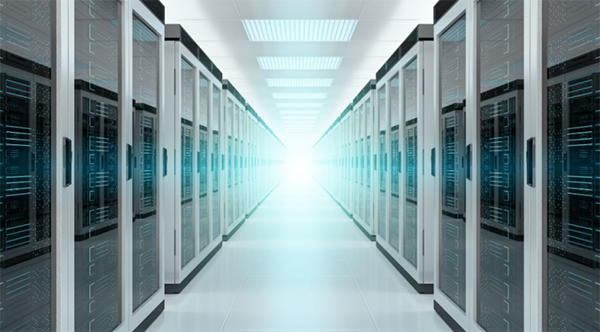
L2: ICT Equipment – Consists of servers, storage arrays, network switches and other hardware that perform core data processing and connectivity.
L3: Software Platform – Includes virtualization platforms, orchestration tools and management software that automate resource allocation and workload scheduling.
L4: Business Applications – Hosts end-user services such as IaaS, PaaS and SaaS offerings that deliver direct value to customers.
Among these layers, data-center energy solutions—power supply and distribution system, cooling system, and smart management system—fall squarely into L1: Basic Infrastructure, forming the backbone for every higher layer.
What Are the Core Businesses and Solutions of Data Center Infrastructure?
1. Core Businesses
At its heart, data center infrastructure must guarantee uninterrupted service. Its primary responsibilities are:
● Power Assurance: Providing clean, reliable electricity via utility feeds, UPS modules, backup generators and smart battery systems.
● Environmental Control: Regulating temperature and humidity through precision cooling, airflow management and heat-extraction technologies.
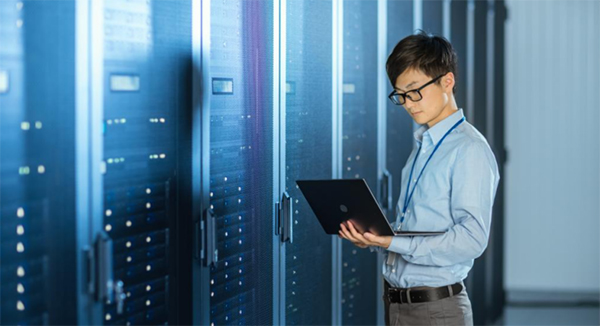
● Operations Management: Detecting and automating maintenance tasks—leveraging AI-driven alerts and full redundancy—to prevent outages and minimize human intervention.
Together, these functions ensure that IT equipment operates 24/7 without interruption, safeguarding against data loss and downtime.
● Core Solutions
● Three Major Data Center Systems
- Power Supply System: Includes uninterruptible power supply (UPS), smart lithium-ion battery, PowerPOD and other equipment.
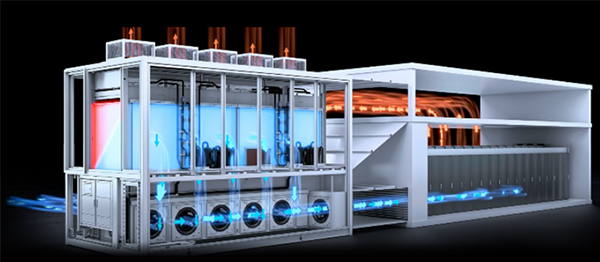
- Temperature ControlCooling System: Ranges from indirect evaporative cooling and chilled water fan wall to room-level precision air conditioners, all designed for tight temperature control.
- Management System: Features include AI predictive early warning, full redundancy management, intelligent energy efficiency optimization, and other functions, enabling unified detecting, operation, maintenance, and optimization of systems such as power supply and cooling.
● Two Types of Data Center Solutions
- Modular Data Centers: Compact, indoor-ready enclosures that integrate power, cooling, cabinets and detecting into a single module—effectively a modular data center that can be deployed rapidly.
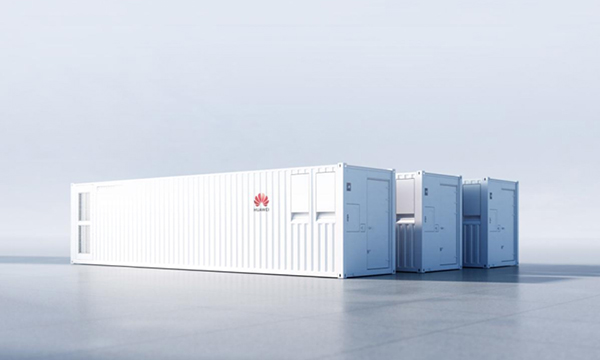
- Prefabricated Modular Data Centers: Using outdoor, containerized designs, these modules integrate power, climate control, batteries, and IT equipment. Once delivered, they stack layer by layer—up to five levels high—to form a complete data center, ideal for remote sites or rapid capacity expansion.
How can enterprises build intelligent and reliable data centers?
Select an Appropriate Power Supply and Distribution System
Choose power-supply solutions based on your data center’s size and criticality.
For large data centers, opt for integrated power modules that combine transformers, distribution cabinets, UPS units, and feeder panels into a single, streamlined solution.
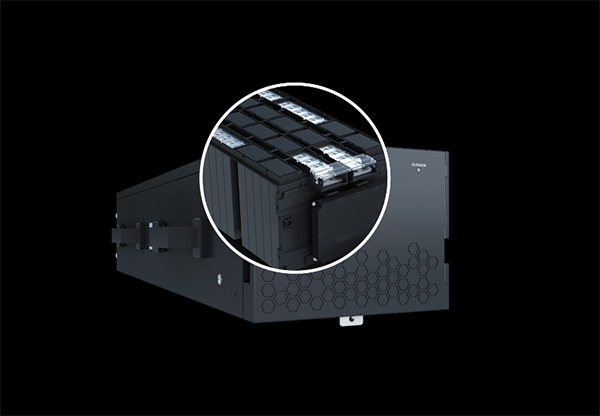
Medium and smaller data centers can rely on uninterruptible power supplies (UPS) paired with Huawei SmartLi intelligent lithium-ion batteries to boost uptime and resilience.
Adopt Advanced Cooling Solutions
Efficient heat dissipation is critical for long-term reliable operation. Tailor your cooling strategy to local conditions—Huawei EHU indirect evaporative cooling technology leverages natural wind to reduce data center temperatures, effectively maintaining optimal conditions for equipment and ensuring stable operation.
Implement Modular Data Center Solutions
Modular approaches allow flexible adaptation to business scale and deployment environments, reducing construction and expansion costs:
● Indoor Data Centers: Huawei Modular Data Center solutions integrate power supply and distribution, cooling, cabinets, and monitoring into a single, prefab module—ideal for phased rollouts and retrofits.
● Outdoor Data Centers: Choose prefabricated modular solutions. Huawei prefabricated modular data center feature a "1+4+N" architecture. A unified framework centered on four core modules (IT, power supply, battery, and temperature control) and collaborate with N premium partners to achieve rapid delivery.
Intelligent Management
Leverage digital platforms for real-time monitoring and AI-driven control of power and cooling systems. Automated alerts, predictive maintenance, and centralized dashboards reduce manual intervention, optimize energy use, and ensure seamless operation.
Conclusion
In summary, the storage capacity of a data center—the answer to "how many terabytes are in a data center"—quantifies its underlying infrastructure strength. As storage density rises, so do cooling demands, requiring more advanced thermal solutions. Meanwhile, a large number of storage devices places higher demands on power stability. When designing a data center, technology choices and system integration at every tier determine the data volume a center can handle. Whether hosting a few hundred terabytes in small deployments or millions of terabytes in major hubs, the goal remains the same: establish a secure, reliable digital foundation through layered design and intelligent management.
FAQs
What are the key data center metrics?
PUE: Measures overall energy efficiency—ideal values approach 1.
SUE: The ratio of deployable IT cabinets per unit of building floor space in a data center. A higher SUE indicates more cabinets can be housed within the same area.
WUE: Assesses water-use efficiency in cooling and related processes.
CUE: A metric for quantifying the carbon emissions associated with operating a data center. It measures the kilograms of CO₂ emitted per kilowatt-hour of IT energy usage.
What are the types of data centers?
By Scale & Performance: Small, medium, and large data centers.
By Application Scenario: Enterprise data centers, Internet data centers, cloud computing data centers, and edge data centers.
What is the primary purpose of the data center?
The primary purpose of a data center is to centrally store, process, and manage data, providing stable and efficient computing, storage, and network services for businesses while ensuring data security and business continuity.
Disclaimer: Any views and/or opinions expressed in this post by individual authors or contributors are their personal views and/or opinions and do not necessarily reflect the views and/or opinions of Huawei Technologies.