In the digital era, data centers serve as the backbone of modern enterprise. They securely store vast amounts of data, enable efficient processing and analysis, maintain system stability, and support remote work and intelligent decision-making. As a result, they’ve become essential infrastructure for boosting competitiveness and ensuring sustainable growth. So, what is a data center? What is in a data center? How do data centers operate? We will answer each of these questions in turn.
What Is a Data Center?
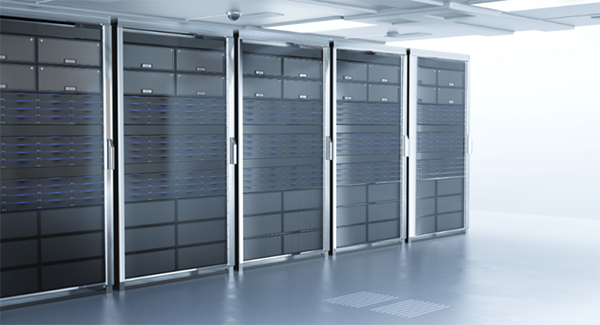
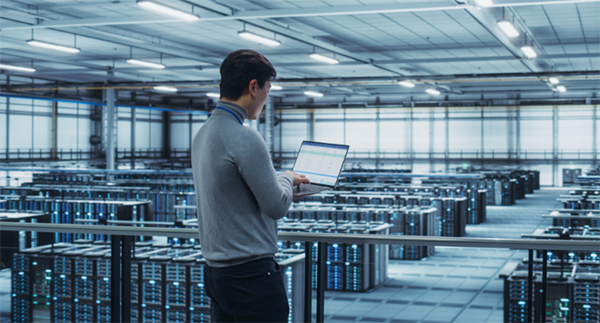
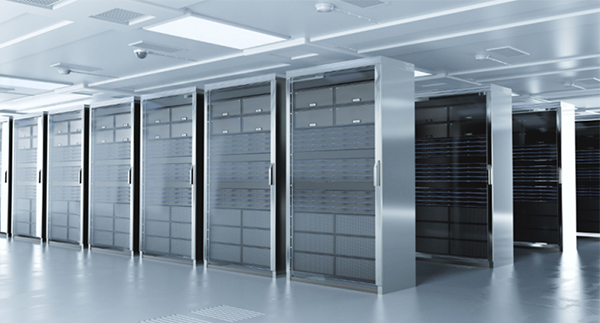
As a critical component of digital infrastructure, a data center is a facility that provides an operating environment for centrally located electronic information equipment. It can consist of one or more buildings, or part of a building, including the main computer room, auxiliary areas, support area, and administrative management spaces. A data center houses core IT equipment such as servers, storage arrays, network switches, and firewalls, and is equipped with precise power supply, cooling, heat dissipation, and security systems.
How Do Data Centers Operate?
The efficient operation of a data center depends on the coordinated operation of multiple systems. What is in a data center? Primary data center components include IT equipment—servers, routers, switches, and firewalls—as well as essential infrastructure systems for power delivery and cooling.
● Servers: As the core computing device of the data center, it is responsible for data storage, processing and application running to meet diverse business needs.
● Routers: The hub that connects different networks selects optimal path to forward data packets through routing algorithms, enables communication between networks, and ensures efficient data transmission.
● Switches: Rapidly exchange data frames within the LAN, accurately forward data based on MAC addresses, boosting internal data throughput and reducing latency.
● Firewalls: A barrier to network security that monitors and filters traffic in and out of the network according to predefined rules to resist illegal access and cyberattacks.
● Power Equipment: Provide continuous power supply to data center equipment, equip UPS and other equipment to deal with power outages, ensure stable operation of equipment, and prevent data loss.
● Cooling Equipment: HVAC systems that regulate temperature and humidity, preventing performance degradation or hardware damage caused by overheating.
What Are the Key Subsystems of a Data Center Infrastructure?
The key subsystems of data center infrastructure fall into two main categories.
● IT Equipment: Serves as the core component for data processing and transmission, including servers, networking devices, and storage devices.
● Infrastructure System: Provide the essential support for stable operation, encompassing power supply, cooling, fire safety, and related services.
What Are the Levels of Data Centers?
According to the TIA-942 standard by the U.S. Telecommunications Industry Association, data centers are classified into four tiers—T1 to T4—based on their availability, stability, and security:
T1: Basic equipment, no redundancy, ~99.671% availability.
T2: Partial redundancy, ~99.741% availability.
T3: Fully redundant, maintainable without downtime, ~99.982% availability.
T4: Fully fault-tolerant, withstands multiple failures, ~99.995% availability.
What Are the Standards for Data Center Infrastructure?
Data centers are tiered from L0 through L4. Each level has its specific functions and roles. In terms of implementation standards, the requirements of each level in infrastructure and operations are very different.
● L0 (Shell & Core): The basic physical space of the data center, covering building construction, interior decoration and lighting design, to ensure the subsequent installation and operation of facilities.
● L1 (Infrastructure): Critical systems including power distribution, cooling, management, fire suppression, and security that ensure operational reliability.
● L2 (ICT Equipment): The compute and networking layer, comprising servers, switches, storage arrays, and firewalls that process and secure data.
● L3 (Software): The cloud management platform layer, which realizes unified resource allocation and operation and maintenance, intelligently manages resources such as servers and storage, and improves the operational efficiency and flexibility of data centers.
● L4 (Applications): User-facing SaaS and other cloud services that deliver end-to-end digital solutions for tasks like productivity, marketing, and innovation.
Data centers of different tiers may vary in specific standard requirements. When constructing a data center, it is necessary to design, construct, and accept the project in accordance with relevant standards and specifications based on actual needs and business characteristics, so as to ensure the safe, reliable, and efficient operation of the data center.
Benefits of Data Centers
Data centers offer a range of advantages across several key areas:
● Centralized Management: Centralize IT equipment resources such as servers and storage devices, reducing management costs.
● Resource Integration and Sharing: Integrate various hardware resources, flexibly allocate and share resources, and improve resource utilization.
● High-Performance Computing: Meet the needs of high-performance computing such as large-scale data processing, security analysis, and simulation.
● Robust Data Security: Through professional software such as firewalls, intrusion detection systems, data encryption, and backup and recovery, reduce the risk of data loss and leakage.
● High Availability & Reliability: Use redundant power, network, storage and other equipment, as well as have fault-tolerant mechanisms and fault-switching functions, so that the service will not be affected when some equipment fails.
● Flexible Scalability: According to the development of enterprise business and changes in demand, add, upgrade, and expand hardware equipment to adapt to business growth.
● Energy Efficiency: Adopt advanced cooling technologies, energy-saving equipment, and energy management systems to reduce energy consumption costs and achieve green operation.
Best Practices for Data Center Security
Security best practices include deploying multi-layered physical access controls; using network protections such as firewalls and intrusion detection; encrypting and storing data and backing it up regularly; establishing a complete security management system and standardizing personnel operation procedures; strengthening employee security training to improve security awareness; and conducting regular security assessments and emergency drills to promptly detect and handle potential security risks.
For example, Huawei data center has brought solutions to many companies. Huawei Digital Power combines advanced digital technologies with power electronics to deliver a secure, reliable, resilient, and low-carbon full-scenario data center solution, empowering operators and enterprises to fast-track their digital transformation.
Conclusion
What is a data center? It integrates compute, storage, networking, power, and cooling systems, Huawei ensures seamless collaboration between servers, data transmission, thermal management, and power delivery. At the same time, adherence to rigorous design standards and robust security measures—such as physical access controls and data encryption—guarantees uninterrupted operation and supports enterprises on their digital transformation journey.
FAQs
What exactly does a data center do?
A data center stores, processes, and manages data. It uses servers, storage, and networks, with cooling and power support, and provides an environment for cloud and AI applications, driving digital business and decision-making.
What are the three types of data centers?
There are three main types of data centers: cloud data centers, intelligent computing centers, and supercomputing centers. Each has its unique functions and application scenarios, jointly supporting the informatization and intelligence process of modern society.
Who owns data centers?
The ownership and operation models of data centers are diverse and dynamically changing. They can be owned and operated by governments, telecom operators, or market-oriented entities, and are subject to the regulation and guidance of relevant policies and regulations.
What are the services in a data center?
Data centers provide a variety of services, including secure storage of massive amounts of data through advanced storage devices; data processing and analysis via high-performance servers; support for cloud computing models such as IaaS, PaaS, and SaaS; high-speed, stable network connectivity; and comprehensive security measures like physical protection and data encryption to safeguard both data and infrastructure.
Disclaimer: Any views and/or opinions expressed in this post by individual authors or contributors are their personal views and/or opinions and do not necessarily reflect the views and/or opinions of Huawei Technologies.