Pakistan stands at a pivotal moment in its energy transition. In Lahore, a factory has introduced Huawei's Smart PV system to reduce energy consumption and environmental impact. This move highlights the immense potential of PV power in alleviating energy challenges and driving industrial upgrades. Solar energy is emerging as a powerful force for economic, social, and environmental progress.
Amid the deafening roar of machinery, the air in Lahore often carries a lingering haze of smoke and dust. As Pakistan's second-largest city, Lahore is home to numerous plastic bag factories, many of which have long-running production lines relying on outdated devices. These devices emit black smoke, exacerbating the city's smog and burdening factory owners with hefty electricity bills.
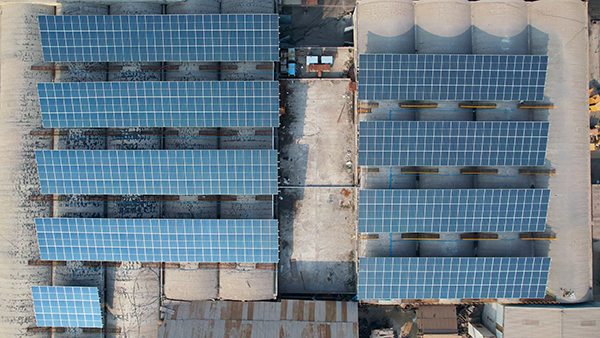
Here, energy is not an invisible overhead—it's a daily, heavy expense. That was the reality until a new light began to shine from the rooftops. In partnership with its partner, Huawei helped install a 1.2 MW Smart PV system atop the factory.
Since then, sunlight has been precisely captured and converted into clean energy to generate 5,000 kWh green electricity daily, totaling around 145,000 kWh per month. This has saved the factory approximately PKR6.4 million (about USD23,000) in electricity costs. The savings have been reinvested into upgraded devices, higher employee benefits, and better workshop environment. Pollution has decreased, productivity hasrisen, and profits continue to grow steadily.
This transformation is not just about abstract economic figures—it's reflected in the small, tangible moments of everyday life: workers breathing cleaner air, factory lights staying on thanks to a stable power supply, and children seeing less fatigue and more joy on their fathers' faces. More importantly, the PV system reduces CO2 emissions by 1,200 tons annually: the equivalent of planting 57,000 trees.
The factory is doing its part to ease the burden of a city's polluted air. On the rooftops of Lahore, "light drives out darkness," which is true in the most literal way.
Energy Challenges and the PV Solution
Zooming out from a single factory reveals the broader complexities and challenges of Pakistan's energy landscape.
With a population of 240 million, this developing country has long relied on fossil fuels to power its economy. The country heavily relies on imports for coal, oil, and natural gas, while its power facilities and grid systems remain outdated. As a result, the electricity sector struggles to keep up. Power outages and load shedding are common in many regions, and more than half of the rural population lacks reliable access to electricity.
However, Pakistan is blessed with another resource: sunlight. Located on the South Asian subcontinent, the country enjoys rich solar resources, making it an ideal environment for PV development. As the global energy transformation gains momentum, Pakistan has set clear goals: By 2030, it will cease using imported coal for power generation, source 60% of its electricity from renewables, and ensure that nonhydro renewables account for 30% of total renewable power generation.
Against this backdrop, Huawei Digital Power's solution offers a feasible path for Pakistan. The plastic bag factory in Lahore, for example, adopted Huawei's SUN2000-150K commercial and industrial (C&I) inverters, acknowledged in the industry for its well-rounded capabilities. It achieves a high conversion efficiency of 98.8%, millisecond-level proactive safety protection, a lifespan exceeding 20 years, and simplified maintenance—all while delivering better cost effectiveness.
For a country like Pakistan—where grid stability and O&M capabilities are critical—these products are not just a set of devices, but are a key to the future. And they are unlocking new possibilities for countless similar factories and households: In the face of high electricity costs and inadequate power supply, sunlight becomes the most dependable "new fuel"; under economic strain and environmental pressure, PV power emerges as the most sensible "new solution."
On this sun-drenched land, the value of PV power is being redefined.
From a Single Factory to a Country's Future
Energy transformation is not some abstract national strategy—it's a series of real, unfolding stories. The plastic bag factory in Lahore is just one small example, yet it offers a glimpse into the broader future of Pakistan.
When factory lights no longer flicker out due to power outages, when production lines run steadily and efficiently, and when workers are more secure in their livelihoods, changes become visible. As rooftop PV panels begin to appear on rural schools and urban neighborhoods, energy equity and accessibility are no longer just slogans—they become the sunlight streaming through windows each morning.
This is the living embodiment of Huawei Digital Power's vision: "Light that changes lives." As well as helping save money, PV power is vital to improving lives, restoring the environment, and advancing society. It serves as the catalyst for industry upgrades, guardian of air quality, and symbol of hope for a brighter future.
Huawei's Smart PV solution uses AI algorithms to analyze power generation efficiency, energy storage status, and loads in real time, enabling precise dispatching of power generation, storage, and consumption. Additionally, selfsufficiency in electricity has significantly increased, easing peak power gaps and reducing reliance on the external grid by over 40%. With more stable power supply, companies have confidence to expand investments and add shifts, creating new job opportunities.
In recent years, Huawei Digital Power has continued to collaborate with partners across Pakistan, igniting one beacon of hope after another in a land urgently in need of light. This is more than just the application of technologies—it's a shared journey toward sustainability, social responsibility, and a digital future.
It's easy to envision a tomorrow where more schools, hospitals, and agricultural hubs adopt similar solutions. That means classrooms can stay lit through the night, operating rooms can run reliably, and farmers can irrigate their fields whenever needed. Energy accessibility is quietly transforming every corner of daily life.
As Lahore's sky begins to clear, as workers labor in welllit workshops, and as the country's energy mix is gradually reshaped by sunlight, a new chapter for Pakistan is quietly unfolding. This is the power of sunlight—it revives a factory, inspires a country, and reminds the world that energy transformation is not just a technological choice, but a shared human imperative.
Light is illuminating Pakistan.
Disclaimer: The views and opinions expressed in this article are those of the author and do not necessarily reflect the official policy, position, products, and technologies of Huawei Digital Power. If you need to learn more about the products and technologies of Huawei Digital Power, please visit our website at digitalpower.huawei.com or contact us.