Huawei FusionCharge is defining a new standard for high-quality electric vehicle (EV) charging. Its five-dimensional verification system—spanning design, R&D, testing, certification, and all-scenario validation—establishes a new industry benchmark.
According to the International Energy Agency (IEA), global electric vehicle (EV) stock is projected to surge to 300 million by 2030. The booming EV market is creating massive demand for charging infrastructure. Despite rapid industry growth, trust remains under strain. Charging infrastructure faces persistent challenges: inaccessible charging, slow charging speeds, recurring failures, and safety concerns that can lead to fire hazards. Furthermore, intense price competition is eroding user trust and hindering sustainable industry progress.
In response, Huawei Digital Power is prioritizing quality and safety to redefine high-quality EV charging. It has established a five-dimensional verification system— spanning design, R&D, testing, certification, and allscenario validation—that is integrated into every stage of development, setting a new industry benchmark.
High-Quality Design: Building a Foundation of Safety
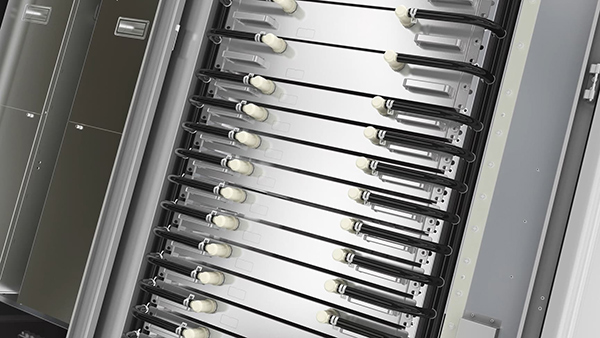
Huawei FusionCharge begins its high-quality journey with design, infusing reliability and safety into every product detail. To address challenges such as insufficient heat dissipation, suboptimal protection, and a short service life, Huawei has adopted the complex yet promising liquid cooling technology.
· Coolant-electricity isolation: Huawei's liquid cooling design moves beyond the simple "sandwich" structure with an innovative top-down isolation approach, fully separating the cooling plate from electrical components. The liquid cooling system is validated to the most rigorous automotive standards, eliminating the risk of electric leakage at the source.
· Long service life: Huawei ensures the quality of core components by adhering to industry-leading standards. For example, the water pump is designed for a lifespan of 30,000 hours—twice the industry average. The structural elements of the charging connector balance heat dissipation and dustproofing. Huawei's specially formulated coolant is the first in the industry to deliver a 10-year service life.
· Strong resilience: Huawei has engineered every detail to withstand extreme environments, from freezing cold to high altitudes. For example, the liquid cooling port is sealed with a data-center-grade bidirectional shut-off valve, far surpassing industry standards and ensuring performance even in freezing conditions. The highly integrated design consolidates dozens of discrete parts into a single high-reliability component, reducing the risk of failures in high-altitude and high-radiation environments.
High-Quality R&D: Pooling Power to Maximize Value
Excellent design is built on advanced technologies. Huawei FusionCharge is committed to delivering a premium charging experience for EV users while maximizing value for charge point operators (CPOs).
· Ultimate compatibility: Huawei has conducted extensive research and testing across a wide range of vehicle models. In full compliance with China's national safety standards, Huawei has built a vehicle-charger compatibility testing database and harnessed advanced algorithms to achieve a first-attempt charging success rate exceeding 99%.
· Power pooling: Traditional chargers operate at fixed power levels, often leading to idle resources. Huawei's innovative power-sharing matrix dynamically allocates power from all charging modules in a station, creating a flexible power pool. This ensures that each charging module is fully utilized, maximizing the return on investment (ROI) for CPOs.
· Charging ecosystem: Huawei has joined hands with industry partners to support sustainable industry growth. By collaborating with automakers and battery manufacturers, Huawei has standardized charging interface protocols and developed megawatt charging solutions for heavy goods vehicles (HGVs). This provides an ultra-efficient charging option for logistics fleets.
High-Quality Testing: Forging Reliability Through Relentless Trials
High-quality design and R&D define a product's potential, while rigorous testing forges its reliability. Supported by a comprehensive and precise testing system, Huawei FusionCharge delivers products that comply with the most demanding standards.
· Component testing: Cornerstone of uncompromising quality
Huawei FusionCharge has developed a comprehensive testing system that covers every component. Its battery-emulation testing platform replicates more than 95% of real vehicle battery characteristics, ensuring stable performance under all typical conditions. The weak-grid simulation platform accurately models real-world scenarios, including voltage dips and harmonic distortion, to validate device immunity. The extreme-exception testing platform proactively triggers hundreds of faults— including air duct blockages, output short circuits, and even arcing—to ensure products do not cause personal injury, fire, or explosion under any circumstance. The automated performance testing platform rigorously verifies all key parameters, from voltage accuracy to current harmonics, ensuring every metric meets design expectations.
· System testing: Examination of integrated performance
In structural reliability testing, the liquid cooling pipeline undergoes 250,000 high- and low-temperature coolant channel pulses, and the charging cable is tested for 1,000 hours in an environment with 85°C temperature and 85% humidity. For environmental durability, the ultra-fast charger endures more than 1,300 temperature cycles from –35°C to +50°C, and the power module is tested for 2,000 hours under temperature cycles from –40°C to +70°C. In charging compatibility testing, vehicle-charger compatibility exceeds 99%, with a charging initialization time of about 15 seconds. To improve grid adaptability, over 230 libraries of abnormal grid waveforms worldwide is used, ensuring the charger's stable operation in extreme scenarios.
· Hardware-in-the-loop (HIL) simulation: Booster of efficiency
Huawei leverages the RT-LAB simulation platform to build a high-precision digital twin of the power grid, charging system, and battery, reducing testing cycles from months to days. For example, power dispatch testing efficiency is enhanced by more than 12-fold through the simulation of over 60,000 permutations of dispatch logic.
· Extreme environment field testing: The ultimate challenges by the nature
Huawei FusionCharge has established five core field testing bases in Wanning (Hainan), Xishuangbanna (Yunnan), Dunhuang (Gansu), Lhasa (Xizang), and Mohe (Heilongjiang). These sites span extreme environments including high salt fog, intense humidity and mold, scorching heat, heavy dust, high altitude with strong radiation, and severe cold. In these conditions, Huawei FusionCharge products are validated by nature's ultimate challenges.
· Reliability testing: Long-term quality assurance
To validate product performance over a decade, Huawei conducts rigorous salt spray tests to replicate the long-term erosion in marine environments and wet dust tests to simulate component wear in dusty environments. Additionally, a suite of high-temperature aging and thermal cycle tests—including highly accelerated life test (HALT) and temperature humidity bias (THB) test— proactively uncovers potential defects during the R&D phase, enabling design improvements and ensuring longterm reliability.
High-Quality certification: The Mark of Excellence
High-quality products are defined by objective and impartial standards. Huawei FusionCharge has undergone rigorous testing by leading international certification bodies. Evaluations conducted by the China Automotive Technology and Research Center (CATARC), TÜV SÜD, and DEKRA have certified Huawei FusionCharge as a brand of excellence.
It has successfully passed CATARC's "charging safety test" (voltage dipping to a safe range within 10 ms upon grid failures) and "extreme environment test" (withstanding level-12 winds and operating continuously for 1,000 hours at 55°C), achieving excellent results. certifications such as the CCTA Charging Compatibility Star and the PREMIUM High-Quality certification highlight Huawei's commitment to providing high-quality charging services to EV users.
Huawei FusionCharge leads the industry as the first to obtain certifications in five critical domains, from charging quality and safety to extreme environment performance, and is also the pioneer in achieving megawatt charging certification.
All-Scenario Validation: A Pledge to Excel on Any Road
All-scenario validation completes the five-dimensional verification process, proving that Huawei FusionCharge delivers reliable, high-quality charging on any road, not just in the laboratory.
Over the past few years, Huawei FusionCharge has demonstrated outstanding performance in extreme environments. At Turpan's Flaming Mountains, it withstands the scorching heat of 45°C. In Yakeshi, it ensures reliable charging even at –35°C. At Mount Qomolangma's base camp, 4,300 meters above sea level, it operates smoothly under high-altitude conditions. Along coastal regions, it resists salty winds and salt fog, maintaining consistent reliability.
Summary
From meticulous design planning to groundbreaking R&D innovations, from rigorous validation to authoritative certifications, and ultimately through real-world trials in extreme environments, Huawei FusionCharge has set an industry-recognized benchmark of quality with its five-dimensional verification system.
This system is more than a product development methodology; it represents a core value that shapes the high-quality evolution of charging infrastructure. Huawei remains steadfast in its commitment to safety, relentless pursuit of quality, and dedication to customer experience—jointly charging the road ahead.
Disclaimer: The views and opinions expressed in this article are those of the author and do not necessarily reflect the official policy, position, products, and technologies of Huawei Digital Power. If you need to learn more about the products and technologies of Huawei Digital Power, please visit our website at digitalpower.huawei.com or contact us.