No rivers, yet vegetables and fruits flourish. No power grid, but the electricity supply is stable and uninterrupted. Huawei Digital Power and Shouguang Vegetable Industry Holding Group have partnered to integrate PV systems, energy storage systems (ESSs), and intelligent management, leveraging renewable energy to support modern agricultural production. This collaboration provides a replicable green model for arid regions and opens new possibilities for cultivating oases in the desert.
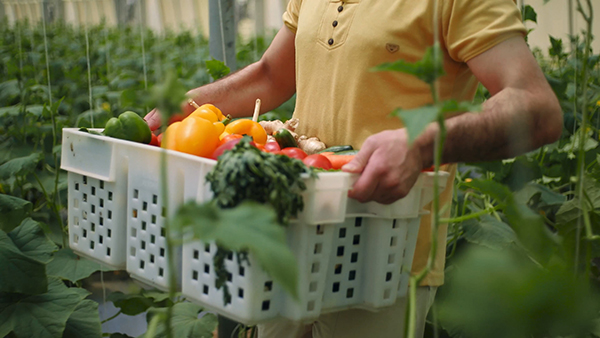
In the afternoon, the Abu Dhabi desert is scorching and dry. However, rows of greenhouses stand resilient amid the sand. Inside, vegetables thrive and fruits hang heavy on the vines. With a tap on their phones, farmers can remotely adjust temperature and humidity; irrigation and fertilization are handled automatically by the system with precision.
For centuries, deserts and agriculture were considered incompatible. Now, technology is redefining that relationship. The desert farm, jointly developed by Huawei Digital Power and Shouguang Vegetable Industry Holding Group, is bringing life to the sands of Abu Dhabi. The fusion of smart energy and modern agriculture is transforming desert sunlight into abundant harvests.
Technology Rewrites the "Desert Equation"
Agriculture is humanity's oldest industry. For millennia, crop yields have depended heavily on climate and water—a reliance often described as "at the mercy of the elements." As the saying goes, "Food is the foremost necessity of the people." In arid regions like the Middle East, achieving food self-sufficiency has long been a persistent challenge.
In recent years, innovative approaches such as greenhouses and vertical farms have been widely adopted across the Middle East, as in other parts of the world. These systems create optimal growing conditions for crops by artificially controlling light, temperature, humidity, and nutrients. Yet the greatest challenge remains energy. Energy costs often account for half or more of total production expenses. And with fossil fuels still dominating the energy mix, this drives up costs and raises concerns about carbon emissions.
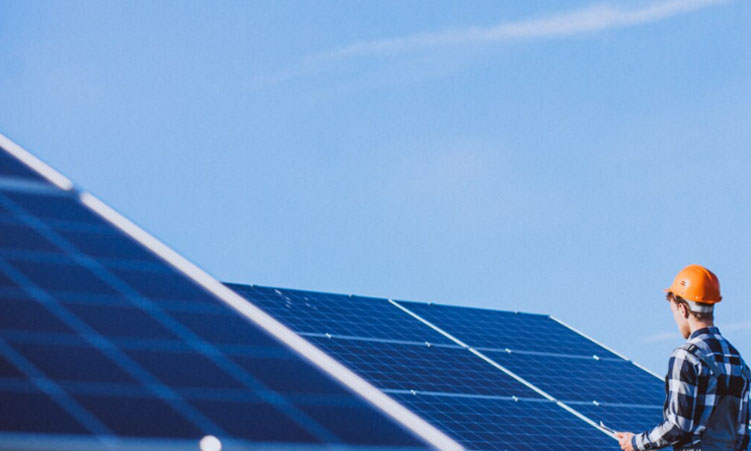
However, within this challenge lies an opportunity. The Gulf region receives abundant sunlight—over 3,000 hours annually—making it one of the world's most favorable regions for solar energy development. Integrating renewable energy with modern agriculture could offer a fundamental solution to this dilemma.
Shouguang Vegetable Industry Holding Group possesses extensive experience in greenhouse agriculture, having successfully verified technologies and promoted models across various climate zones worldwide. Huawei Digital Power, meanwhile, has built deep expertise in PV+ESS microgrids and intelligent energy management. Their collaboration has transformed the desert farm from an innovative experiment into a model of cross-industry synergy.
Solving the Desert Farm's "Energy Challenge"
If a desert farm relies on diesel generators, it faces significant drawbacks: disruptive noise, heavy pollution, and a constant need for fuel resupply—resulting in high operational costs. The project ultimately adopted the off-grid PV+ESS microgrid solution provided by Huawei Digital Power.
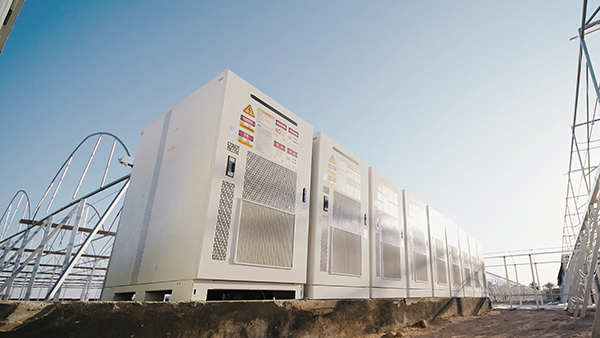
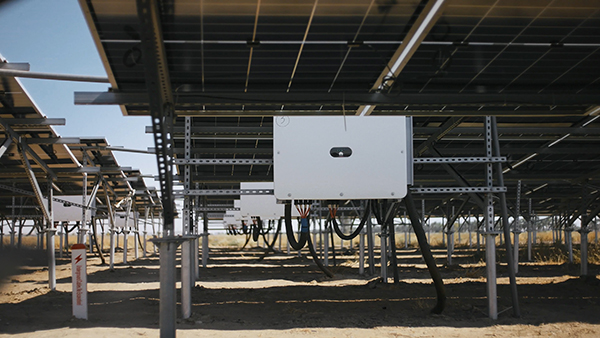
Zhou Wei, Director of Huawei Digital Power UAE, said: "The desert farm uses Huawei's high-quality Smart PV+ESS solution, including string inverters and hybrid cooling ESSs. Even in extreme heat and sandstorms, the solution ensures a stable and efficient renewable energy supply to meet agricultural power demands."
The solution offers three key advantages:
∙ PV+ESS Integration and Stable Grid Forming
Fruit and vegetable cultivation demands precise environmental control. Diverse loads—for lighting,temperature regulation, drip irrigation, and ventilation— require a continuous power supply. Thus, stability is the top priority.
Nine Huawei 215 kWh ESSs and eleven 115 kW inverters are deployed in the desert farm to form an integrated PV+ESS power supply system. The ESSs store solar energy during the day and release the energy at night and on cloudy days, ensuring a stable power supply year-round. This project is the world's first 215 kWh off-grid commercial and industrial (C&I) PV+ESS project implemented by Huawei.
∙ High efficiency and Reliability
Huawei string inverters used in the farm deliver higher power generation efficiency. It is estimated that the annual energy yield can reach 3 million kWh, sufficient to meet the farm's energy demand. The IP66 rating ensures operational reliability in extreme environments, including high temperatures and sandstorms.
Additionally, Huawei's hybrid cooling ESSs support a 2:1 PV-to-ESS ratio, ensuring operational continuity and reducing energy costs. The 10-year coolant replacementfree design further minimizes maintenance frequency, reducing lifecycle costs.
∙ Intelligent Management and Streamlined O&M
Farmers can obtain the energy system's operating status in real time using the FusionSolar SmartPVMS. The voltage, temperature, and state of health (SOH) of each battery pack are clearly displayed, enabling timely issue detection and rapid resolution. This streamlined O&M approach significantly lowers the skill threshold, allowing farm operators to manage complex energy systems with ease.
This energy system not only addresses the operational viability of the desert farm but also provides a replicable model for other arid regions worldwide.
From "Going Global" to "Local Integration"
The significance of the desert farm extends far beyond turning barren land green. It represents an evolution in how companies expand internationally.
In the past, companies "went global" primarily by exporting goods or services in a one-way flow. Today, Huawei and Shouguang Vegetable Industry Holding Group are exporting entire industrial chains, technologies, and solutions through the integration of smart agriculture and smart energy, deeply embedding themselves in local economies.
The integration is reflected in several aspects:
1. Industry integration: Agriculture and energy are developed together, forming a new model.
2. Talent cultivation: The project provides local training in agricultural and energy technologies.
3. Job creation: Local employment opportunities are generated, boosting regional economic growth.
This innovative model not only addresses food security challenges but also promotes the global adoption of green energy and intelligent agriculture.
The success of the desert farm offers three key highlights:
∙ Food security and energy transition are interlinked.
Agricultural modernization and renewable energy are not separate paths. Their integration delivers powerful sustainability benefits.
∙ Technology transforms deserts into productive land.
Harsh environments are no longer off-limits for agriculture. The combination of PV+ESS microgrids and facility agriculture brings hope to regions like the Sahara and the Middle East.
∙ The global value of innovative solutions is demonstrated.
From the renewable energy microgrid in Saudi Arabia's The Red Sea destination to the smart desert farm in the UAE, Huawei is promoting green technology practices worldwide, showcasing the responsibility and commitment of tech enterprises in sustainable development.
In the future, this model is expected to expand to more regions, offering technology-driven solutions to global food security challenges and accelerating the deep integration of green agriculture and renewable energy.
New Oases for Humanity's Future
Oases have long been seen as miracles of life in the desert.
Today, deep in the sands of Abu Dhabi, a new oasis nurtured by technology is emerging. The combination of smart energy and modern agriculture is not only transforming the landscape but also charting a new course for addressing global food security and the transition to sustainable energy.
Huawei and Shouguang Vegetable Industry Holding Group are sowing seeds of hope in the desolate sand sea with the power of innovation. In the near future, we may witness similar patches of green flourishing across deserts and arid regions worldwide—testaments to even greater possibilities. This is more than cross-industry innovation. It marks a new chapter in humanity's relationship with nature.
Deserts are being reshaped into new oases for humanity's future.
Disclaimer: The views and opinions expressed in this article are those of the author and do not necessarily reflect the official policy, position, products, and technologies of Huawei Digital Power. If you need to learn more about the products and technologies of Huawei Digital Power, please visit our website at digitalpower.huawei.com or contact us.