A stable power supply is vital not only for counties, cities, and factories, but also for every community and household. It is indispensable for Nicole, a Brazilian girl whose life depends on a ventilator and a pulse oximeter.
The greatness of technology lies not only in data processing capability and efficiency, but also in its thoughtful concern for human life.
Nicole, daughter of an ordinary Brazilian family, lives with a chronic disease that requires her to use a ventilator and a pulse oximeter around the clock.
Already burdened by steep medical expenses, her family faced constant anxiety over high electricity costs for powering these devices—bills exceeding 300 reais (about US$56) forced them to reallocate their monthly living expenses.
This situation changed dramatically when Virtron Energia Solar partnered with Huawei to bring sunlight into their home. The solution turns sunshine into a stable power supply for Nicole's life-critical medical devices. Using a Smart Energy Controller, Huawei's residential Smart PV solution integrates an AI-powered active arc protection system that automatically cuts off abnormal arcs within 0.5s. The solution also features a three-level EMC protection design, ensuring that no electromagnetic interference affects household appliances and medical devices.
Thanks to Huawei FusionSolar, Nicole can now use her ventilator safely at home without fearing that a power outage would force her back to the hospital. Her family is relieved from day-and-night anxiety over electricity bills.
The family's story exemplifies technological implementation and reflects the far-reaching impact of Huawei Digital Power on social livelihood. PV systems are now more than just a power generation tool for industrial parks; they have become part of household life in a more meaningful way.
Value and Social Significance of Energy in Brazil
Brazil, known as the Land of Samba, is home to over 200 million people. Continuous changes in the Amazon rainforest have caused water levels of reservoirs in Brazil to drop below the 30% warning threshold in recent years. Consequently, power generation from hydropower stations has plummeted by 50%, plunging many villages into frequent darkness. Brazil is suffering from an invisible energy crisis.
During the dry season of 2024, water levels at major hydropower stations in Brazil dropped to their lowest in nearly two decades. Once-raging tributaries of the Paraná River exposed vast stretches of cracked riverbed, causing the country's hydropower contribution to the national grid to nosedive from a usual level of 65% to 42%. To fill the gap, the government had to urgently activate oil-fired power generation, driving Brazil's monthly energy import costs up by US$1.2 billion.
Falling water levels at hydropower stations and rising fuel prices are placing a heavy burden on ordinary citizens. More distressing is the imbalance in energy distribution. In the economically developed southeastern region, power outages are controlled to one hour at most per day, whereas some indigenous communities in the northern Amazon state endure darkness for 4–6 hours each day.
As early as the 1990s, Brazil began to explore solar power generation at the regulatory level. However, constrained by technological costs and the dominance of hydropower, the PV industry failed to grow. Since 2015, the landscape has changed significantly. PV power has gradually become the second largest source of electricity in Brazil, accounting for 19% of the country's total installed capacity. By the first half of 2024, Brazil's cumulative installed PV capacity reached 44 GW, with distributed PV generation accounting for 68% and residential PV for 33%.
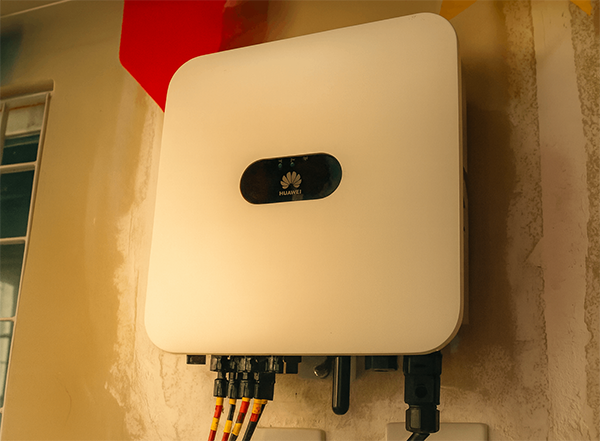
Huawei FusionSolar inverters and residential solutions are well-positioned to play a significant role in this vast, diverse, and energy-hungry market. For households, they deliver reliable, cost-effective power and autonomy over electricity usage. For commercial and industrial (C&I) customers, Huawei FusionSolar SUN2000-150K inverters reduce system construction and maintenance costs, improve return on investment (ROI), optimize power quality, and ensure grid stability through the use of highly efficient, reliable, and intelligent operations and maintenance (O&M) tools.
More importantly, the application of Huawei FusionSolar in Brazil provides a replicable technical pathway. Whether for homes, hospitals, schools, or industrial parks, smart PV and energy storage systems ensure an efficient, safe, and stable power supply. This means that in Brazil and other populous countries, clean energy is not only a national strategy but also a powerful force for improving people's livelihood and enabling a better life.
Stable and Reliable All-Rounder
Energy is vital to modern civilization.
We have long believed that "knowledge is power." In the new era, energy itself has become a key force for social progress and improved quality of life. As the world advances toward clean and low-carbon solutions, PV energy is emerging as an indispensable force. In Brazil, a stable and reliable solution is critically needed for the country's shift toward renewable energy.
The Huawei FusionSolar SUN2000-150K inverter, hailed by the industry as an all-rounder, is a go-to choice for many C&I PV projects worldwide. It features higher yield, active safety, long-term reliability, simplified O&M, lower balance of system (BOS) costs, and grid-friendliness. Each of these advantages addresses key pain points in traditional PV systems.
Its rated output power is 150 kW, with a maximum power of 165 kW. It is equipped with seven MPPTs, each supporting three PV strings. The maximum input current is 48 A. The SUN2000-150K is applicable to both large C&I parks and diversified PV module combinations.
The inverter achieves a power generation efficiency of up to 98.8%. Powered by intelligent algorithms, it delivers a maximum dynamic MPPT efficiency of 99.839%. Its builtin PID recovery solution counters module degradation, improving energy yield by 3%, as verified by TÜV.
In active safety, the SUN2000-150K implements millisecond-level smart string-level disconnection, intelligent DC-to-ground protection, and terminal temperature checking, significantly reducing device failure risks. The intelligent arc protection technology automatically cuts off abnormal arcs within 0.5s to prevent fires.
For long-term reliability, Huawei adheres to the Integrated Product Development (IPD) process and joint component customization and conducts over 1,400 rigorous tests. This ensures that the inverter achieves 99.999% availability in extreme environments and that the service life of major components exceeds 25 years.
Furthermore, the inverter features simplified O&M and lower BOS costs. Module-level insulation detection and intelligent design tools make design, installation, and O&M more efficient and economical, maximizing ROI.
As the world moves toward low-carbon development and energy diversification, Huawei FusionSolar, through its technological innovations, paints a vision of clean, reliable, and smart energy for Brazil.