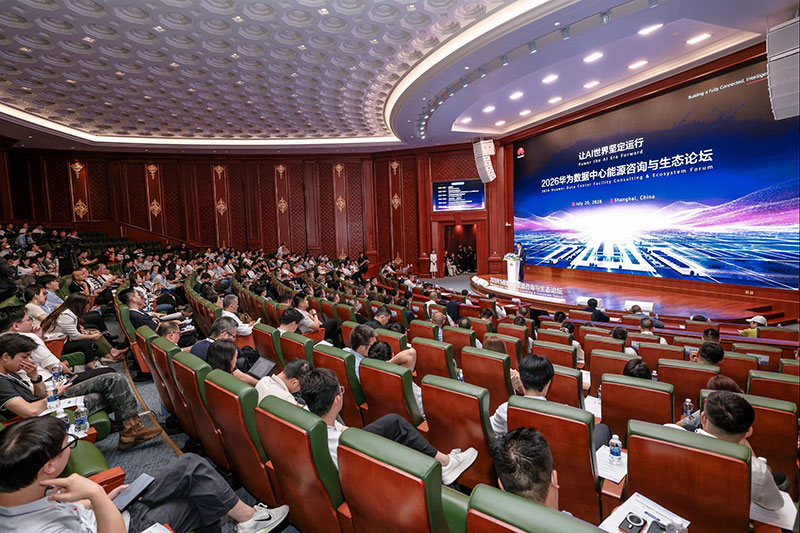
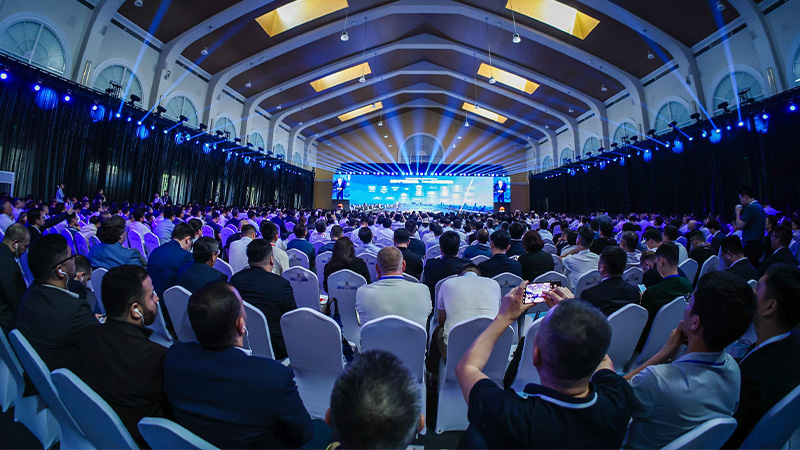
On July 20, 2026, the 2026 Huawei Data Center Facility Consulting & Ecosystem Forum was held in Shanghai, with the theme of "Powering the AI Era Forward." The forum brought together more than 200 experts from top OTT players, consulting firms, design institutes, integrators, and solution partners across the data center industry. Together, they explored new AIDC construction modes, shared cutting-edge solutions and innovative practices in power supply and liquid cooling. The event aimed to unite industry forces and promote ecosystem collaboration, fostering shared prosperity in the intelligent computing era.
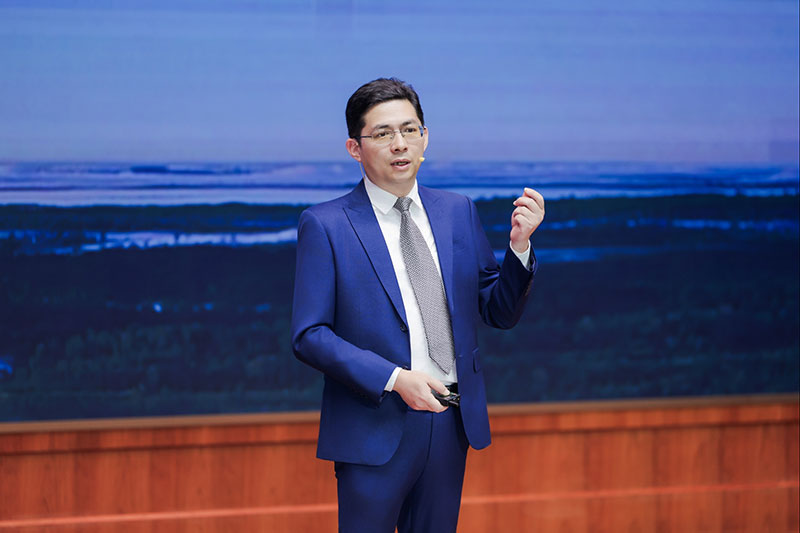
Bob He, Vice President of Huawei Digital Power, delivered the opening speech, stating that the demand for tokens in the AI era is growing exponentially and AIDC infrastructure is undergoing fundamental changes. Huawei drives "3+1" innovations around "Watt, Heat, Bit, and Construction" and builds grid-interactive AI data centers (AIDC) to maximize tokens per watt.
Bob He, Vice President of Huawei Digital Power
According to Mr. He, AIDC construction involves diverse fields, including planning, design, power supply and distribution, energy storage, thermal management, engineering delivery, and O&M. Therefore, close collaboration across the industry chain is necessary. Huawei will continue to focus on core technologies, system architecture, and product innovation. It will collaborate with partners to build reference architectures, unified interfaces, and industry standards, and jointly create verifiable, replicable, and deliverable overall solutions. AIDC industry advancement cannot be achieved overnight. All parties should embrace a long-term approach, and build solid competitiveness centered on safety, reliability, energy efficiency, delivery quality, and full-lifecycle value, to jointly promote the healthy and sustainable development of the AIDC industry and power the AI era forward.
Steve Kim, President of Data Center Facility & Critical Power Marketing, Sales and Services, Huawei Digital Power
Steve Kim, President of Data Center Facility & Critical Power Marketing, Sales and Services, Huawei Digital Power, shared Huawei's ecosystem cooperation strategy. He stated that the rapid expansion of the AI industry has driven the AIDC market into a super cycle, presenting unprecedented opportunities. AIDC faces challenges such as fast delivery, cost-effectiveness, and high quality. Therefore, industry ecosystem collaboration is imperative. Huawei believes that ecosystem cooperation should evolve from ecosystem connectivity to value co-creation. By driving value growth through capabilities, markets, and brands, Huawei aims to build a long-term, sustainable industry ecosystem and promote the industry to transition from fast progress to long-term advancement.
● Joint capability building: While evolving from individual cooperation to ecosystem synergy, Huawei shares its experience and technologies and works with industry chain partners to accurately meet customer needs and develop end-to-end solutions.
● Joint market expansion: Huawei collaborates with partners to expand the market and grow the pie through unified solution architecture, unified supply collaboration, and unified delivery.
● Joint brand marketing: Huawei, together with partners, unify value propositions and launch products, solutions, and industry white papers jointly to drive industry consensus and continuously enhance influence across the industry.
Paul Yao, President of Data Center Facility Domain, Huawei Digital Power
Paul Yao, President of Data Center Facility Domain, Huawei Digital Power, delivered an insightful speech. The AI era is witnessing dramatic changes in AIDC, driven by high-density and diversified computing. The rack power will jump to the megawatt scale, and the campus power will reach the gigawatt scale. Weak power grids are coupled with severe load fluctuations. To address these challenges, power generation-grid-load-storage synergy has become an inevitable choice for AIDC. By leveraging "3+1" innovations, Huawei builds grid-interactive AIDC solutions that are reliable, energy-efficient, fast-delivered, and grid-friendly to maximize tokens per watt.
● Watt innovation: Alternating current and direct current power will coexist for a long time. Huawei develops the TaiShan UPS, which features high density, high efficiency, and grid forming capabilities, to lead the innovation of alternating current power supply. For the high-voltage direct current architecture, Huawei's HengShan direct current UPS supports flexible evolution from 270 V to 800 V, flexibly meeting AIDC requirements for high-density power supply.
● Heat innovation: Liquid cooling has entered the era of reliability, which requires not only ensuring equipment reliability, but also building safety and reliability throughout the entire life cycle. Huawei's AI-enabled liquid cooling system supports diversified computing. It delivers high reliability and intelligent features to ensure reliable and controllable cooling.
● Bit innovation: Reshaping full-lifecycle operations by forging a digital twin foundation. AI can empower data centers, digitalizing the entire process from design, delivery, to operations, and making the entire chain visible and controllable, thus improving operations and maintenance (O&M) efficiency.
● Construction innovation: Reshaping the AIDC construction mode from onsite integration to product-based fast delivery. Unlike existing prefabrication practices in the industry, Huawei's product-based delivery solution features a 90% prefabrication rate, which is made possible through standardized core architectures and unified interfaces. The solution simplifies onsite operations and shortens the time to market (TTM) from 12–18 months to 3–6 months. Additionally, Huawei's core products ensure solution deliverability and high quality through design simulation and system solution verification in advance.
Chen Xieming, CTO of Huawei Digital Power Grid Solutions
Chen Xieming, CTO of Huawei Digital Power Grid Solutions, stated that AIDC is not an ordinary load. Its load changes in milliseconds. When voltage fluctuates and the UPS is disconnected from the power grid, AIDC may cause sudden drops in the grid. Grid-forming energy storage enables AIDC to stay connected to the power grid during fault ride-through and to suppress fluctuations without disturbing the grid. Grid forming has evolved from an optional feature to a must-have for grid connection in the AI era.
Yang Chao, Deputy General Manager of Beijing Rainspur Technology Co., Ltd
Yang Chao, Deputy General Manager of Beijing Rainspur Technology Co., Ltd., stated that in the AIDC era, the heat density increases sharply, making thermal management of data centers critical to their survival. CFD simulation is an indispensable key tool for both new data centers and the reconstruction of old facilities. In the design phase, it helps predict risks and optimize solutions. In the O&M phase, it helps locate problems and explore energy-saving potential. In the future, it will be deeply integrated with AI to build a digital twin system for data centers.
Huang Huanwen, Technical Specialist of Huawei Digital Power
Huang Huanwen, Technical Specialist of Huawei Digital Power, shared how Huawei engages in engineering design for liquid cooling from an end-to-end perspective, deeply integrates intelligent features with engineering practices, and implements overall liquid cooling solutions through ecosystem partnership to ensure high-quality delivery.
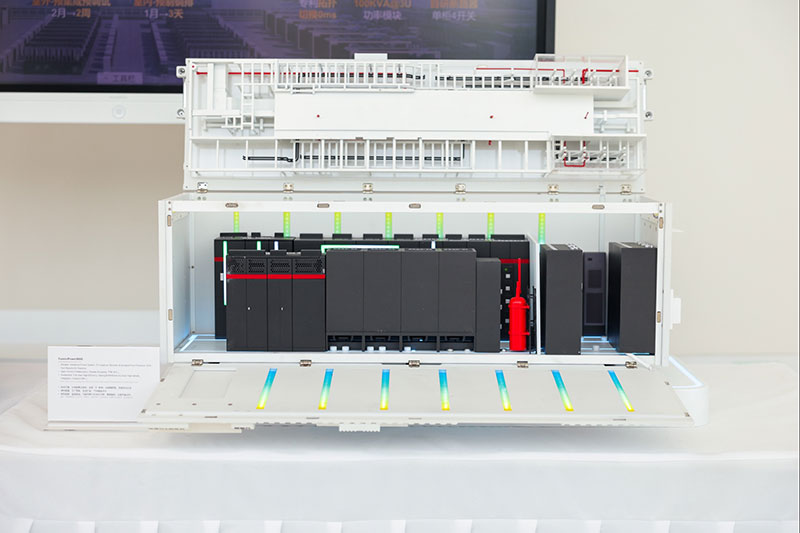
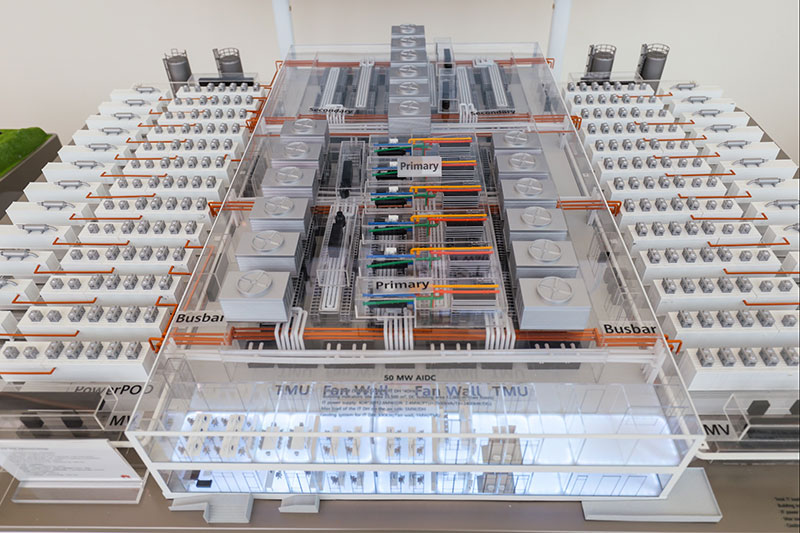
In the AIDC ecosystem exhibition area, Huawei showcased innovative technologies and cutting-edge solutions for AIDC power supply and thermal management as well as one-stop solutions for AI inference. Huawei, together with more than 20 industry ecosystem partners, comprehensively demonstrated AIDC full-stack solutions, covering high- and medium-voltage power distribution, gensets, integrated chiller plants, and secondary pipe modules, highlighting the tremendous achievements of ecosystem collaboration.
A thriving ecosystem empowers the AIDC industry to ride out the cycles. Looking ahead, Huawei will work with more ecosystem partners to advance the AIDC industry, deepen technical synergy, strengthen solution implementation, and maximize commercial returns. The collaborative efforts will grow industry value, maximize tokens per watt, and power the AI era forward.