Asia Pacific
Europe
Latin America
Middle East & Africa
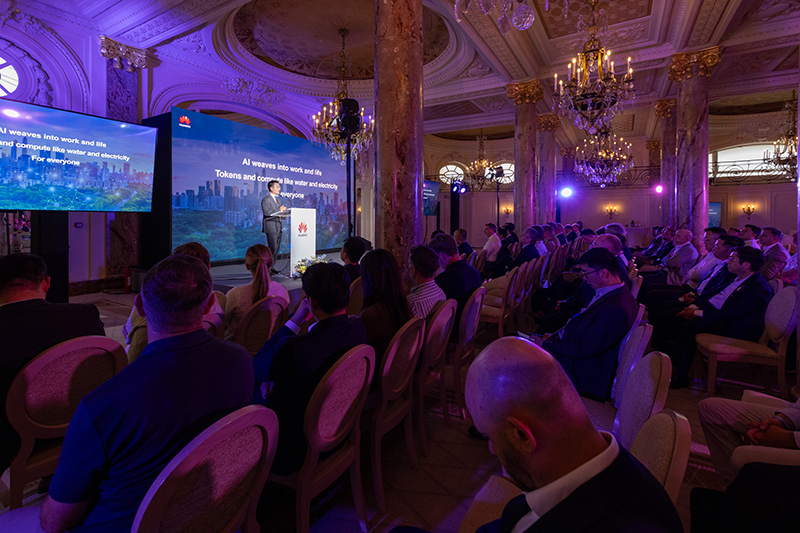
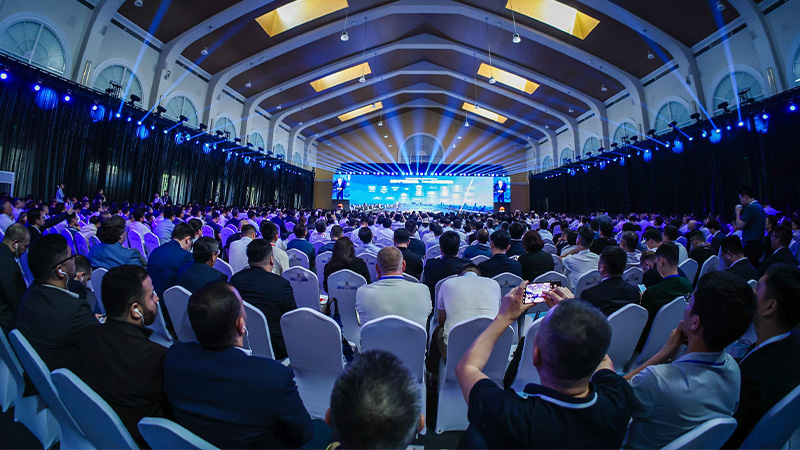
[Cannes, France, June 2, 2026] During the DataCloud Global Congress 2026, the Huawei European AI Data Center Summit 2026 themed "Power the AI Era Forward" was held in Cannes, France. The summit gathered global industry leaders and technical experts from the energy, intelligent computing and carrier sectors. They exchanged insights into emerging trends and cutting-edge technological innovations in AI Data Centers (AIDC), shared practical experience, and witnessed the launch of Huawei's grid-interactive AIDC strategy and a full series of solutions, leading the industry into a new era of AIDC.

"3+1" innovations: Maximizing Tokens Per Watt
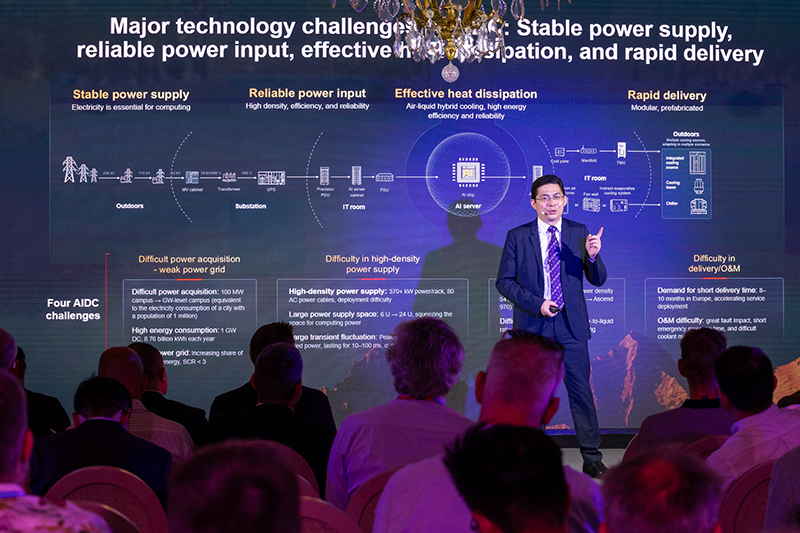
The AI industry is expanding rapidly, with token demand soaring and accelerating AIDC construction. However, AIDC facilities face key challenges including higher power density, larger campus scale, and grid stability.
In response, Huawei launched a grid-interactive AIDC strategy centered on "3+1" innovations — Watt, Heat, Bit, and Construction.
● Watt Innovation: Reshaping the power supply from grid to chips. AC and DC power will coexist long term, and by leveraging solid-state transformer (SST) technology, Huawei will build an integrated grid-forming energy router centered on the multiple-input multiple-output (MIMO) power supply architecture.
● Heat Innovation: Reshaping full-lifecycle thermal management reliability from chips to outdoor environments. Huawei has built an innovative AI-powered MW-level liquid cooling system, shifting from single-point reliability to system-level reliability.
● Bit Innovation: Reshaping full-lifecycle operation by empowering data centers with AI, enabling full-link visibility, full-link reliability, and efficient full-lifecycle O&M.
● Construction Innovation: Reshaping the construction model through engineering productization, shifting design, production, testing, and verification to the factory stage so onsite work is simplified, significantly shortening time‑to‑market (TTM) and ensuring high‑quality delivery.
Based on this strategy, Huawei launched a series of grid-interactive AIDC solutions. Huawei 800kVA UPS and PowerPOD 5.0 continue to lead the industry with their efficient and reliable power supply architecture. Huawei SmartLi 5.0 boosts capacity and availability, ensuring higher reliability for AIDC backup power. The AI-powered MW-level Thermal Management Unit (TMU) empowers liquid cooling systems to scale from mere availability to long-term reliability.
Industry Leaders Convene to Define Next-Generation AIDC

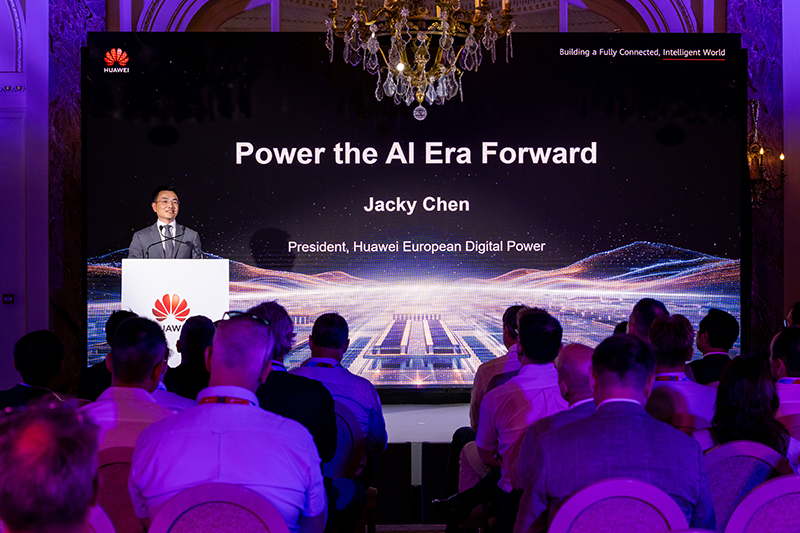
Jacky Chen, President of Huawei European Digital Power, delivered the opening speech "Power the AI Era Forward." He noted that the ceiling of computing is power, and energy underpins AI's long-term development. High-voltage, power-electronic, and DC-native architectures are evolving to support AIDC compute densification. Grid-forming capability is the core enabler of grid friendliness and service stability.
Huawei has contributed 44 technical proposals to 11 newly released EU and national grid codes, supporting European grid stability and technological advancement. Built on power semiconductors, control algorithms, and thermal management, Huawei Digital Power innovates in renewable generation, grid-forming integration, and grid simulation. The company will partner with customers and industry allies to drive high-quality, sustainable, and innovative AIDC growth.

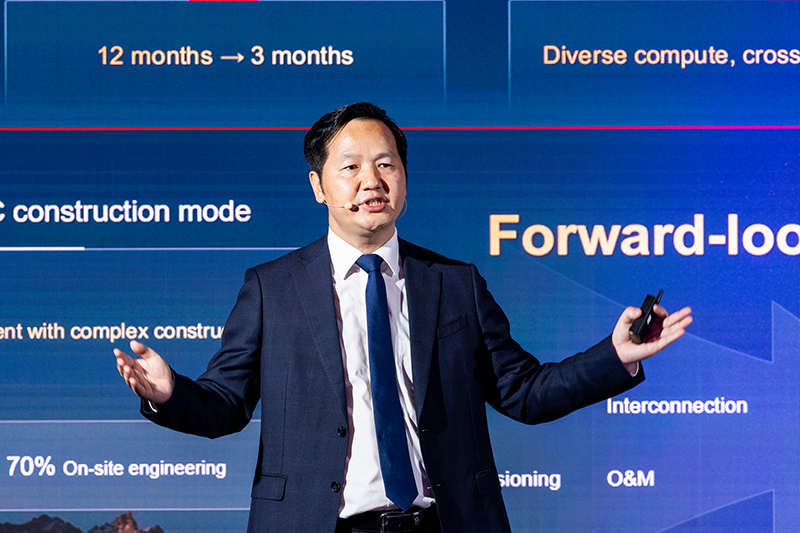
Steve Kim, President of Data Center Facility & Critical Power Marketing, Sales and Services, Huawei Digital Power, delivered a keynote speech titled "Building Grid-Interactive AIDC, Maximizing Tokens per Watt." He noted that the rapid growth of the global AI industry is driving exponential increases in token demand, accelerating the transition of AIDCs into the “Token Factory” era.
The increasing density and diversification of computing power are placing unprecedented demands on AIDC power density, scale, and load fluctuation management. At the same time, the large-scale integration of renewable energy into power grids, combined with highly dynamic AI workloads, is intensifying grid volatility and creating new reliability challenges for AIDCs.
In response, Huawei officially launched its grid-interactive AIDC strategy, centered on a “3+1” architecture redesign. The strategy aims to deliver highly reliable, energy-efficient, fast-deployment, and grid-friendly AIDC solutions integrating power generation, grid, load, and energy storage systems — maximizing tokens per watt.

Yao Quan, President of Huawei Data Center Facility Business, unveiled Huawei’s latest portfolio of power and cooling solutions designed for the AI era. The launch includes next-generation UPS systems, SmartLi 5.0 batteries, PowerPOD 5.0, LUNA energy storage systems, and TMU liquid cooling technologies, providing end-to-end support for diverse AI computing scenarios.
Addressing industry challenges such as grid access, high-density power distribution, liquid cooling reliability, and rapid deployment, Huawei’s grid-interactive AIDC solution integrates these innovations within its 3T+1 architecture.
Yao also highlighted the use of standardized PODs and prefabricated modules to accelerate deployment, simplify expansion, and reduce costs, while ensuring full-lifecycle reliability through intelligent O&M and comprehensive service capabilities.
At the summit, global data center leaders shared insights and experiences, focusing on innovative AIDC practices that support fast deployment.

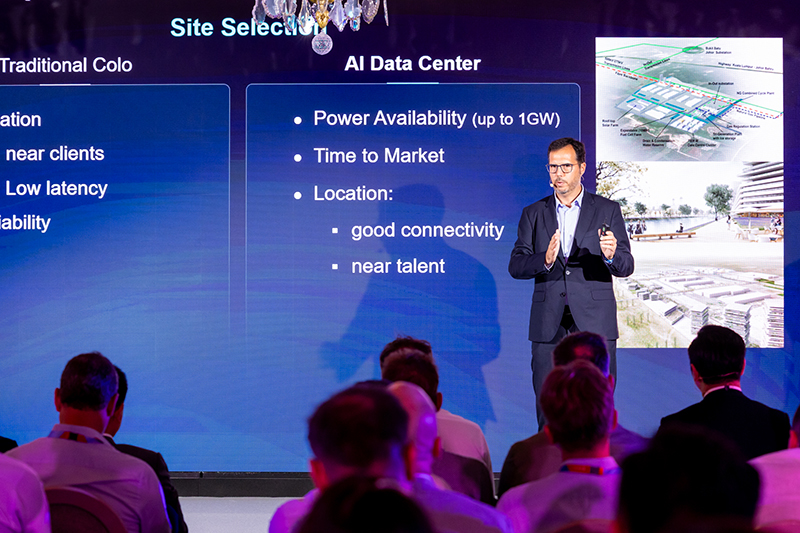
Carles Cortadas, Co-CEO of B-Global Tech, shared insights into how AI is accelerating the transformation of data center architecture and infrastructure planning across Europe. He emphasized that power availability, electricity pricing, time-to-market, and grid integration are emerging as critical considerations in AI data center development. Cortadas also highlighted how the rise of high-density computing and liquid cooling technologies is fundamentally reshaping facility design requirements. Drawing on B-Global Tech’s experience across Europe, Asia-Pacific, and the Middle East, he underscored the growing need for flexible, future-ready infrastructure capable of supporting evolving AI workloads and increasing energy demands.

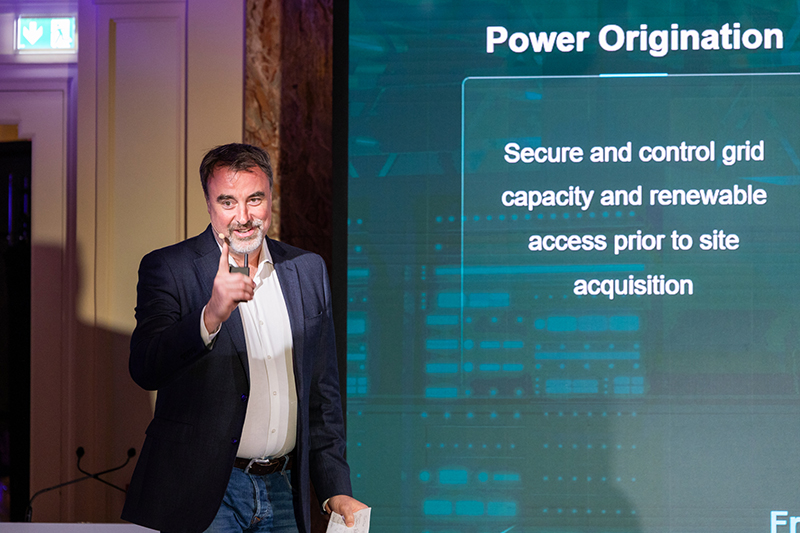
Damien Gaynor, Chief Marketing Officer of Echelon Data Centres, discussed the industry’s transition toward a “Power First Strategy” for next-generation AI data centers. He noted that factors such as power availability, grid resilience, equipment procurement lead times, and advanced cooling infrastructure have become decisive elements in deployment planning and operational success. Damien also highlighted the increasing adoption of modular architectures and PowerPOD solutions, which are enabling faster deployment cycles, enhanced scalability, and greater operational flexibility for AI-driven infrastructure environments.

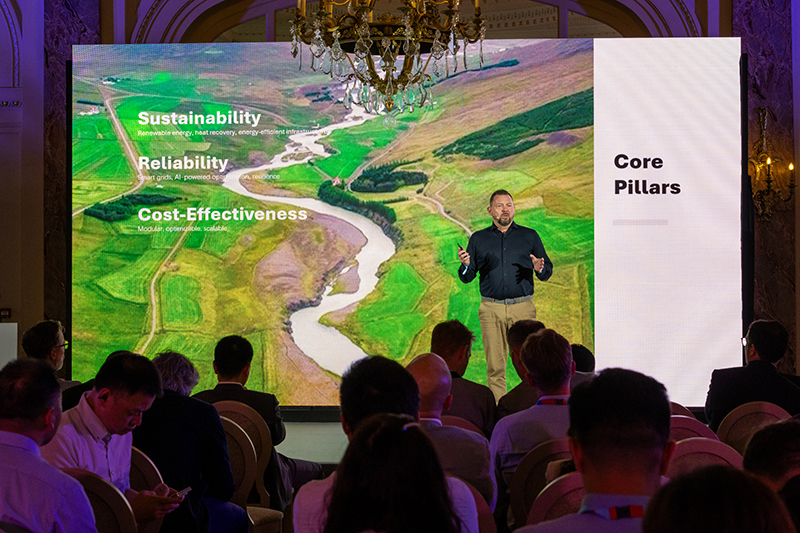
Halldór Sæmundsson, Chief Commercial Officer of Borealis Data Center, addressed the growing impact of AI workloads on global data center capacity, energy consumption, and operational resilience. He highlighted the strategic advantages of the Nordic region, including abundant renewable energy resources, naturally cool climates, and robust power infrastructure, which together provide a sustainable and scalable foundation for future AI and high-performance computing deployments.
Showcasing Cutting-edge AIDC Solutions


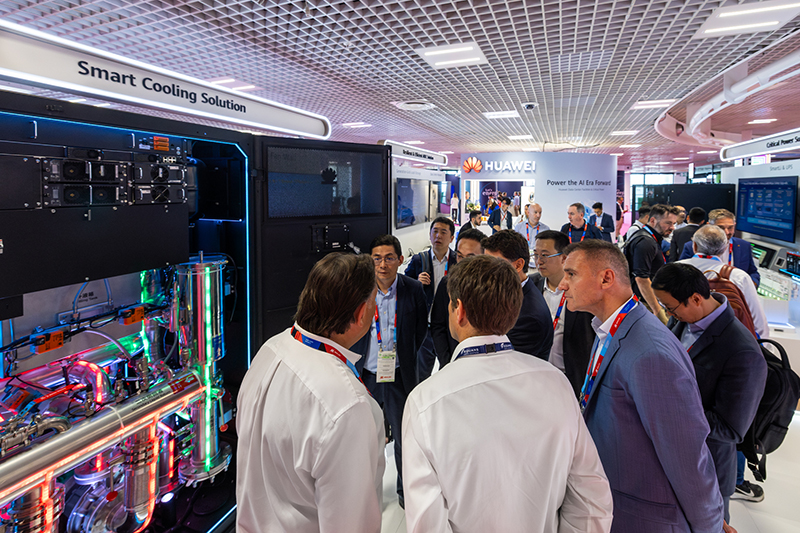
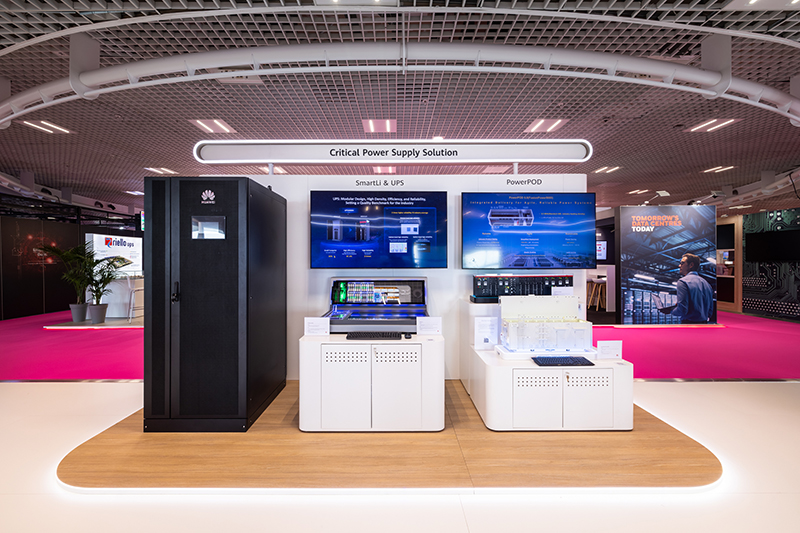
At the exhibition booth, Huawei showcased all-scenario AIDC solutions, which cover power supply and distribution, thermal management and energy storage.
● Power supply system: Huawei PowerPOD features one power system per container, with a maximum capacity of up to 3.2 MW. It supports outdoor deployment and reduces TTM from 24 weeks to 18 weeks, serving as an ideal power supply solution for AIDC.
● Thermal Management: Huawei TMU serves as the heart of liquid cooling systems. Featuring dual AC/DC architecture and modular maintenance design, it ensures uninterrupted operation and improves overall system reliability.
Looking ahead, Huawei will continue to develop industry-leading AIDC solutions based on its technological expertise and innovation strengths to build reliable, agile and sustainable AIDCs, maximize tokens per watt, and power the AI era forward.

[Cannes, France, June 2, 2026] During the DataCloud Global Congress 2026, the Huawei European AI Data Center Summit 2026 themed "Power the AI Era Forward" was held in Cannes, France. The summit gathered global industry leaders and technical experts from the energy, intelligent computing and carrier sectors. They exchanged insights into emerging trends and cutting-edge technological innovations in AI Data Centers (AIDC), shared practical experience, and witnessed the launch of Huawei's grid-interactive AIDC strategy and a full series of solutions, leading the industry into a new era of AIDC.

"3+1" innovations: Maximizing Tokens Per Watt
The AI industry is expanding rapidly, with token demand soaring and accelerating AIDC construction. However, AIDC facilities face key challenges including higher power density, larger campus scale, and grid stability.
In response, Huawei launched a grid-interactive AIDC strategy centered on "3+1" innovations — Watt, Heat, Bit, and Construction.
● Watt Innovation: Reshaping the power supply from grid to chips. AC and DC power will coexist long term, and by leveraging solid-state transformer (SST) technology, Huawei will build an integrated grid-forming energy router centered on the multiple-input multiple-output (MIMO) power supply architecture.
● Heat Innovation: Reshaping full-lifecycle thermal management reliability from chips to outdoor environments. Huawei has built an innovative AI-powered MW-level liquid cooling system, shifting from single-point reliability to system-level reliability.
● Bit Innovation: Reshaping full-lifecycle operation by empowering data centers with AI, enabling full-link visibility, full-link reliability, and efficient full-lifecycle O&M.
● Construction Innovation: Reshaping the construction model through engineering productization, shifting design, production, testing, and verification to the factory stage so onsite work is simplified, significantly shortening time‑to‑market (TTM) and ensuring high‑quality delivery.
Based on this strategy, Huawei launched a series of grid-interactive AIDC solutions. Huawei 800kVA UPS and PowerPOD 5.0 continue to lead the industry with their efficient and reliable power supply architecture. Huawei SmartLi 5.0 boosts capacity and availability, ensuring higher reliability for AIDC backup power. The AI-powered MW-level Thermal Management Unit (TMU) empowers liquid cooling systems to scale from mere availability to long-term reliability.
Industry Leaders Convene to Define Next-Generation AIDC

Jacky Chen, President of Huawei European Digital Power, delivered the opening speech "Power the AI Era Forward." He noted that the ceiling of computing is power, and energy underpins AI's long-term development. High-voltage, power-electronic, and DC-native architectures are evolving to support AIDC compute densification. Grid-forming capability is the core enabler of grid friendliness and service stability.
Huawei has contributed 44 technical proposals to 11 newly released EU and national grid codes, supporting European grid stability and technological advancement. Built on power semiconductors, control algorithms, and thermal management, Huawei Digital Power innovates in renewable generation, grid-forming integration, and grid simulation. The company will partner with customers and industry allies to drive high-quality, sustainable, and innovative AIDC growth.

Steve Kim, President of Data Center Facility & Critical Power Marketing, Sales and Services, Huawei Digital Power, delivered a keynote speech titled "Building Grid-Interactive AIDC, Maximizing Tokens per Watt." He noted that the rapid growth of the global AI industry is driving exponential increases in token demand, accelerating the transition of AIDCs into the “Token Factory” era.
The increasing density and diversification of computing power are placing unprecedented demands on AIDC power density, scale, and load fluctuation management. At the same time, the large-scale integration of renewable energy into power grids, combined with highly dynamic AI workloads, is intensifying grid volatility and creating new reliability challenges for AIDCs.
In response, Huawei officially launched its grid-interactive AIDC strategy, centered on a “3+1” architecture redesign. The strategy aims to deliver highly reliable, energy-efficient, fast-deployment, and grid-friendly AIDC solutions integrating power generation, grid, load, and energy storage systems — maximizing tokens per watt.

Yao Quan, President of Huawei Data Center Facility Business, unveiled Huawei’s latest portfolio of power and cooling solutions designed for the AI era. The launch includes next-generation UPS systems, SmartLi 5.0 batteries, PowerPOD 5.0, LUNA energy storage systems, and TMU liquid cooling technologies, providing end-to-end support for diverse AI computing scenarios.
Addressing industry challenges such as grid access, high-density power distribution, liquid cooling reliability, and rapid deployment, Huawei’s grid-interactive AIDC solution integrates these innovations within its 3T+1 architecture.
Yao also highlighted the use of standardized PODs and prefabricated modules to accelerate deployment, simplify expansion, and reduce costs, while ensuring full-lifecycle reliability through intelligent O&M and comprehensive service capabilities.
At the summit, global data center leaders shared insights and experiences, focusing on innovative AIDC practices that support fast deployment.

Carles Cortadas, Co-CEO of B-Global Tech, shared insights into how AI is accelerating the transformation of data center architecture and infrastructure planning across Europe. He emphasized that power availability, electricity pricing, time-to-market, and grid integration are emerging as critical considerations in AI data center development. Cortadas also highlighted how the rise of high-density computing and liquid cooling technologies is fundamentally reshaping facility design requirements. Drawing on B-Global Tech’s experience across Europe, Asia-Pacific, and the Middle East, he underscored the growing need for flexible, future-ready infrastructure capable of supporting evolving AI workloads and increasing energy demands.

Damien Gaynor, Chief Marketing Officer of Echelon Data Centres, discussed the industry’s transition toward a “Power First Strategy” for next-generation AI data centers. He noted that factors such as power availability, grid resilience, equipment procurement lead times, and advanced cooling infrastructure have become decisive elements in deployment planning and operational success. Damien also highlighted the increasing adoption of modular architectures and PowerPOD solutions, which are enabling faster deployment cycles, enhanced scalability, and greater operational flexibility for AI-driven infrastructure environments.

Halldór Sæmundsson, Chief Commercial Officer of Borealis Data Center, addressed the growing impact of AI workloads on global data center capacity, energy consumption, and operational resilience. He highlighted the strategic advantages of the Nordic region, including abundant renewable energy resources, naturally cool climates, and robust power infrastructure, which together provide a sustainable and scalable foundation for future AI and high-performance computing deployments.
Showcasing Cutting-edge AIDC Solutions


At the exhibition booth, Huawei showcased all-scenario AIDC solutions, which cover power supply and distribution, thermal management and energy storage.
● Power supply system: Huawei PowerPOD features one power system per container, with a maximum capacity of up to 3.2 MW. It supports outdoor deployment and reduces TTM from 24 weeks to 18 weeks, serving as an ideal power supply solution for AIDC.
● Thermal Management: Huawei TMU serves as the heart of liquid cooling systems. Featuring dual AC/DC architecture and modular maintenance design, it ensures uninterrupted operation and improves overall system reliability.
Looking ahead, Huawei will continue to develop industry-leading AIDC solutions based on its technological expertise and innovation strengths to build reliable, agile and sustainable AIDCs, maximize tokens per watt, and power the AI era forward.