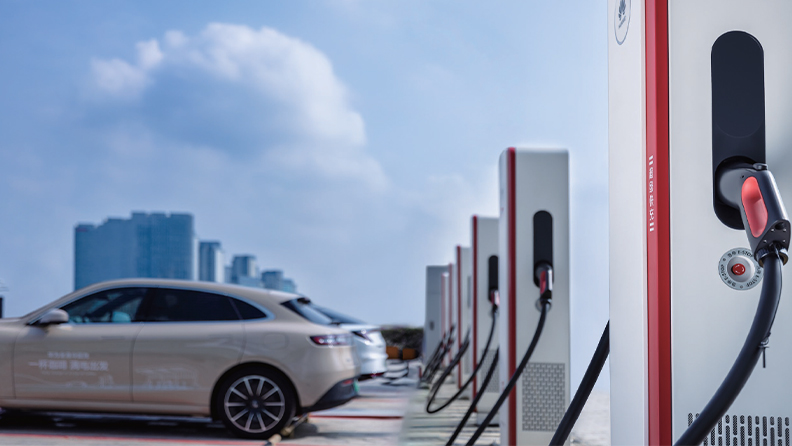
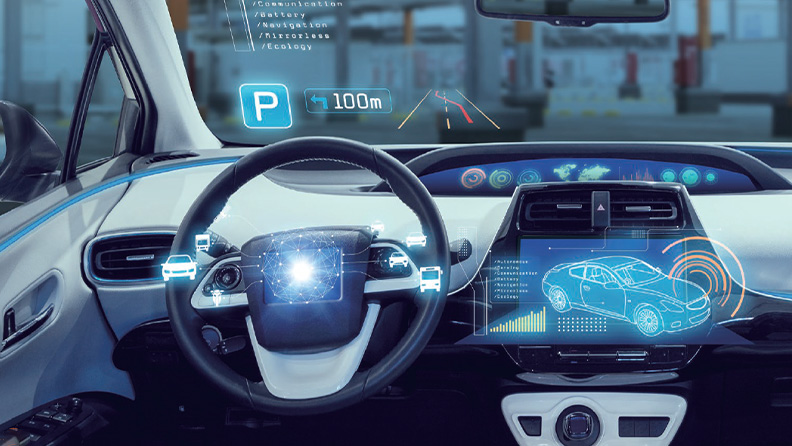
As the largest market for new energy vehicles (NEVs), China had 16.2 million NEVs by the end of June 2023, a 4.9% market share. However, the charging infrastructure issue can hinder the NEV market's expansion. In response to this challenge, Huawei unveiled its fully liquid-cooled ultra-fast charging technology in April 2023, which enables a maximum charging power of 600 kW and supports ultra-fast charging. This innovative solution has the potential to overcome the charging barrier and facilitate the growth of the NEV market. As for the technology itself, it is a cutting-edge charging system that utilizes liquid-cooling technology to achieve ultra-fast charging speeds. It's worth noting that the actual charging power may vary slightly due to factors such as vehicle models, software versions, power consumption, operating conditions, and environmental factors.
A revolutionary leap toward refueling-speed charging
Currently, the biggest concern for potential NEV users is inconvenient charging, which also presents a structural challenge to the rapid growth of the NEV market. Users face negative charging experiences due to insufficient charging stations, unevenly distributed facilities, and slow charging speeds. The Survey Report on Consumption and Use of Public Charging Piles of New Electric Vehicles, released by the China Consumers Association in March 2023, identifies insufficient charging stations, poor accessibility, and lack of chargers as the main pain points for NEV charging. During the May Day holiday in 2023, people queued for an average of 2.7 hours, with some queuing up to 4 hours at the busiest charging stations in China to charge their NEVs. For operators, existing charging facilities have a short lifespan, unbalanced usage efficiency, and cannot evolve, leading to higher costs and reduced profits. In response to these challenges, Huawei Digital Power aims to facilitate the growth of the NEV industry and accelerate mobility electrification by integrating digital and power electronics technologies and providing a refueling-speed charging experience. Huawei's innovative technology provides a charging experience unseen in the past. Consumers can now charge their NEVs at a maximum power of 600 kW, allowing them to fully charge their vehicles while taking a coffee break.
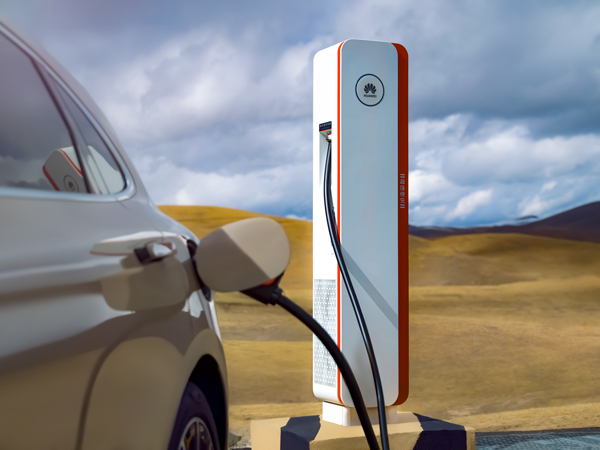
From an operator's perspective, fully liquid-cooled ultra-fast charging technology outperforms traditional solutions under the same working conditions. This is because it can double the turnover rate and reduce OPEX by 46% for charging stations. If we evaluate the ROI of highway and urban public charging stations using charging levelized cost of energy (C-LCOE), Huawei's innovative charging solution has a 60% lower C-LCOE than traditional solutions.
You may wonder what fully liquid-cooled ultra-fast charging technology is all about.
What is the key to its rapid charging capability?
This solution uses liquid cooling technology in the charging power cabinet and dispensers. With integrated PV and energy storage, Huawei has established a fully liquid-cooled ultra-fast charging architecture that enables synergy between vehicles and chargers and power grids and networks. Huawei's fully liquid-cooled ultra-fast charging technology can generate high power and speed up charging by increasing current and voltage. Compared to traditional chargers, chargers based on Huawei's technology can bear a current and voltage upper limit of 600 A and 1000 V, significantly improving from the 250 A and 750 V of traditional chargers. During this process, liquid cooling technology determines current and voltage safety, product availability, charging noise, and equipment lifespan.
Traditional charging solutions face challenges in increasing charging power by boosting current and voltage. These solutions are also limited in their cooling capabilities, particularly with naturally-cooled technologies. As a result, as the current increases, more heat is generated during charging, which can shorten the lifespan of NEV batteries and even cause fires due to short circuits. Additionally, higher current levels mean heavier charging cables, with some fast charging cables weighing several kilograms and negatively impacting user experience.
In contrast, Huawei's solution offers quick cooling of charging devices and is equipped with lightweight charging cables, making it a convenient option for female drivers. Furthermore, traditional charging solutions often negatively impact insulation, heat dissipation, and battery safety when voltage increases. Huawei's solution uses DC protection components that can withstand high temperatures and high voltage, sealed with ceramics that offer double the insulation capability of epoxy resin. Thermal insulation materials are also applied to dissipate heat in a more organized way, enhancing protection against thermal diffusion and ensuring device safety when charged at high voltages.
Moreover, Huawei's liquid cooling technology reduces charging noise and extends the lifespan of charging power cabinets and dispensers by 10 to 20 years. Despite these benefits, concerns remain regarding whether fast charging speeds may damage NEV batteries. In response to these concerns, Huawei's fully liquid-cooled ultra-fast charging technology can adapt to the charging curves of batteries from different NEV models without causing overload, ensuring the battery lifespan is not negatively impacted.
When will NEV drivers be able to enjoy an excellent charging experience?
Huawei Digital Power believes that charging networks are vital to NEV energy infrastructure. As a provider of power systems and charging networks, Huawei Digital Power envisions ubiquitous charging facilities by integrating PV + ESS + Charger. This proven technology has already been put into commercial use since 2023.
To achieve this vision, Huawei Digital Power has focused on two aspects. First, it conducted interconnection tests with vehicle manufacturers to ensure that chargers using its technology can adapt to different brands (GB/T interface). Second, Huawei Digital Power collaborated with customers and partners to develop ultra-fast charging solutions across China in hundreds of thousands of gas stations, highway rest areas, and urban public areas with a high density of electric vehicles. It aims to establish a unified highway and city network.
In the future, Huawei's innovative solutions will support access to AC/DC energy storage for intelligent peak shaving, eliminating the need to reconstruct the mains supply, and generating additional revenues for operators. Along with facilitating the high-quality development of charging networks, Huawei Digital Power aims to create business value for the mobility electrification industry by offering various business models, ensuring its sustained growth.
Many cities in China are now accelerating the development of charging networks. Guangzhou, located in southern China, plans to construct a city-wide charging and battery-swapping capacity of 4 million kilowatts and 1000 ultra-fast charging stations by 2024. Shenzhen, a special economic zone in Guangdong province, has set an ambitious goal to become an "ultra-fast charging city" and has announced plans to construct over 2000 ultra-fast charging stations by 2035. Other Chinese cities, including Chengdu, Mianyang, Yibin, Taiyuan, Zhengzhou, and Guilin, are also actively pursuing the development of ultra-fast charging networks.
The National Development and Reform Commission of China and nine other government departments have provided policy assurance that China will have a charging infrastructure system of 6.543 million chargers to meet the charging demand of 20 million EVs by 2025. As opportunities arise for the entire industry, Huawei Digital Power is confident that its fully liquid-cooled ultra-fast charging technology will enhance the charging experience for NEV drivers, expedite mobility electrification, and promote carbon neutrality in transportation.