Base stations are evolving into "power plants!"
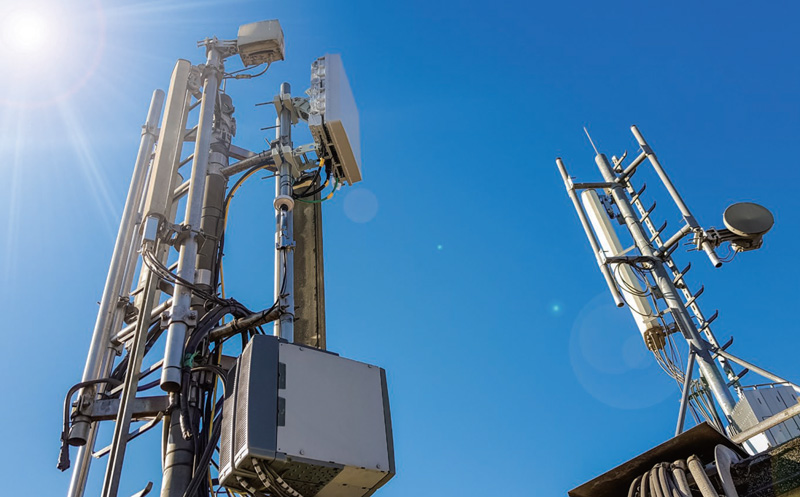
With the widespread adoption of 5G technology, the number of telecom sites is increasing, leading to higher energy consumption. According to the Research Report on Global 5G Standard Essential Patent and Standard Proposals (2024) released by the China Academy of Information and Communications Technology (CAICT) Center for Intellectual Property Rights and Innovation Development, by June 2023, 320 telecom operators in 119 countries and regions had launched 5G networks. The number of 5G base stations has reached 5.94 million, and the number of 5G users is over 1.87 billion. To deal with the high energy consumption, telecom operators are upgrading their power systems and batteries and using intelligent management methods to create virtual power plants (VPPs) from widely distributed base stations. The VPPs reduce telecom operators' electricity costs and carbon emissions. Meanwhile, they can sell stored green energy to power grids during peak hours to relieve power supply pressure and increase revenue.
Development Opportunities for VPPs
The concept of a VPP originated in Europe during the 1990s, with the aim of addressing the instability and uncontrollability of power generation from renewable energy sources. According to predictions by Spherical Insights & Consulting, the global VPP market is expected to grow to $13.7 billion by 2032.
Currently, countries around the world are making progress in implementing VPPs. Since 2010, North American electric power companies have been studying the application of VPPs and have established multiple VPP demonstration projects. These projects virtually aggregate scattered solar, wind, and energy storage devices, realizing intelligent energy management and optimization.
In Europe, where power generation resources are scattered, VPPs are primarily used for power supply. By aggregating distributed power generation resources, VPPs enable the stable integration of renewable energy into the power grid, coordinating power generation. Germany's Renewable Energy Sources Act requires that each renewable energy power generation project with a capacity of more than 100 kW participates in the electricity market. In Germany, VPPs are now fully commercialized, playing a crucial role in the country's transition to a more sustainable energy system.
Since June 2024, China has implemented the Measures for the Supervision of the Electricity Market, which clearly designates VPPs as the primary entities for electricity transactions. The Action Plan for Accelerating the Construction of New Power Systems (2024-2027), jointly issued by the National Development and Reform Commission, the National Energy Administration, and the National Data Administration, aims to establish and enhance the technical standards system for VPPs. Additionally, the action plan seeks to improve market access, safe operation standards, and transaction rules.
Undoubtedly, the development of VPPs will effectively drive the adoption of new power systems, facilitate the transformation of energy supply structures, expedite the transformation of the energy industry, and contribute to the timely achievement of carbon neutrality objectives.
The rapid advancements in digitalization and intelligence are laying a robust technical foundation for the emergence of VPPs. These technologies enable VPPs to seamlessly integrate and optimize communications and software, enabling them to coordinate and optimize the distribution of energy resources effectively. Consequently, VPPs participate flexibly in electricity market adjustments and grid operations, enhancing the overall efficiency and reliability of the power system. Economic and societal development have led to an ever-increasing demand for electricity. In recent years, the emergence of green energy and new energy storage technologies has improved the traditional, centralized power generation model and enabled advanced resource control and adjustment mechanisms. This has helped to resolve the conflicts between power supply and demand, making the power grid more resilient and efficient. Therefore, VPPs, with their flexible, cost-effective, and environmentally friendly characteristics, have emerged as a new favorite in the market.
VPPs play a crucial role in overcoming space limitations and bridging the gap between energy producers and consumers. By facilitating a transition from the conventional one-way flow of energy to an interactive and collaborative feed-in and two-way flow, VPPs offer significant opportunities and pose unique challenges. Exploring the social values that VPPs bring to telecom operators is an important area for further investigation.
VPPs Are Integral to Telecom Operators' Energy Transformation
With the rapid advancement of 5G technology and the changing telecom landscape, operators are now facing unprecedented pressure and challenges across multiple fronts. An urgent issue that operators must address is the transformation of their energy sources. In the 5G era, the energy consumption of networks has increased exponentially. As 5G-Advanced becomes commercially available, the energy consumption of operators' sites is expected to escalate further, presenting operators with challenges in terms of building green sites, enhancing site energy efficiency, maximizing site value, and increasing revenue.
Considering the looming energy crisis and the need for sustainable environmental development, operators are faced with rising electricity prices, significant operational expenditures (OPEX), and an unreliable power supply. Consequently, many operators have recognized the strategic importance of developing their green energy systems. From the perspective of achieving carbon neutrality, operators must prioritize energy conservation and carbon reduction through service innovation and optimization. These efforts serve as an essential requirement for operators to achieve sustainable development and also represent a social responsibility that operators must embrace.
VPPs play a crucial role in enabling operators to transition from being energy consumers to becoming prosumers. The energy transformation of operators encompasses two key aspects: Power for ICT and ICT for Power. Power for ICT refers to operators shifting their focus from solely providing power supply for communications equipment to enhancing site energy efficiency and reducing capital expenditure (CAPEX) and OPEX. This can be achieved through initiatives like constructing energy-efficient sites and equipment rooms. On the other hand, ICT for Power highlights that operators not only consume energy but also generate and regulate green electricity. The primary objective is to produce greener, safer, and more efficient electricity, while also leveraging site resources to facilitate additional services like VPPs and residential power supply.
VPPs are revolutionizing conventional power production and supply processes, driving the shift towards more sustainable energy consumption. By actively participating in VPPs, operators can implement bidirectional energy interaction and consume energy on demand, leading to enhanced energy utilization and reduced consumption costs. Additionally, VPPs are transforming both technology and business models. Energy storage, once solely used for backup power, is now being harnessed by operators as active participants in the electricity market. This allows them to benefit from subsidies obtained through market participation, paving the way for the integration of onsite energy generation and electricity services. Consequently, the transition from backup power to a combination of backup power and energy storage will unlock the full potential of onsite energy resources.
With access to a wide range of resources, VPPs can be a part of diverse markets, including electric energy, ancillary electricity, and capacity markets. As business models continue to evolve, operators can leverage their energy storage resources to participate in a broader range of services, ultimately increasing their revenue streams and transitioning from cost-saving measures to profit-generating opportunities. For instance, operators can aggregate their energy storage resources to support ancillary electricity services, such as power grid frequency regulation and peak shaving, which can lead to obtaining subsidies for electricity services. This transformation enables pure backup power resources to serve as energy storage facilities, thereby maximizing asset utilization and unlocking the full potential of each site. The ability to achieve this represents the fundamental value proposition of VPPs.
Build a Solid Foundation for VPPs
To achieve energy transformation, integrate site energy storage and electricity services, and participate in electricity market scheduling, it is essential to build a simplified, intelligent, and integrated site energy storage system.
It is imperative that electricity market services should not interfere with site power backup, necessitating the decoupling of batteries from existing services. Given that existing power systems come from multiple vendors and have different specifications, the compatibility between power systems and batteries must be considered when deploying a VPP, which adds to the complexity. By decoupling batteries from power systems during VPP deployment, the efficiency of deployment can be significantly improved, allowing existing power systems to participate in VPPs and maximize the utilization of site resources. Therefore, simplicity plays a crucial role in the successful deployment of VPPs.
The effective management of a large number of site energy storage resources necessitates the implementation of a robust, quick, and efficient scheduling capability. To meet the demands of electricity service capacity, a resource pool comprising thousands of sites is essential for comprehensive scheduling. Furthermore, the ability to respond within seconds and intelligently regulate frequency is crucial for rapid scheduling, especially when dealing with service bursts. Additionally, precise scheduling is imperative to ensure high accuracy in electricity service provisioning, with some countries and regions requiring precision levels of over 95%.
Ancillary electricity services encompass a diverse range of offerings, including frequency regulation markets in Europe and peak shaving and frequency regulation markets in China. To reduce deployment costs, operators should implement an integrated system that supports multiple services and facilitates long-term evolution.
Huawei is dedicated to collaborating with partners to explore energy management and optimization solutions. Huawei has proven expertise in constructing simplified, intelligent, and integrated site energy storage systems. Its groundbreaking VPP solution for telecom sites is powered by a unique intelligent algorithm and high-performance hardware. The solution integrates digital and power electronics technologies to enhance power grid stability and safety significantly. Additionally, the solution offers self-networking capabilities, operates independently of existing equipment, and simplifies deployment without disrupting the current architecture, ensuring streamlined installation and rapid delivery. The energy management platform provides big data analysis and intelligent site selection capabilities, working seamlessly with the VPP intelligent gateway and high-performance intelligent lithium batteries to achieve cloud-network synergy and intelligent scheduling. The solution implements multi-service integration, encompassing peak staggering, peak shaving, and frequency regulation services within a single system. Widely implemented across various regions, particularly in Europe, Huawei's VPP solution empowers operators to participate in electricity markets and optimize energy storage assets successfully.
As a leading technical enabler, Huawei is committed to driving innovation in site energy storage systems. Huawei's concept of "site power backup + peak staggering + VPP" enables operators to seamlessly evolve their asset investments, embrace clean, low-carbon, safe, efficient, flexible, and intelligently integrated energy applications, and accelerate their transformation from energy consumers to prosumers.
Balance Power Grids, Save Energy, Reduce Carbon Emissions, and Accelerate Transformation
According to Fortune Business Insights, the global VPP market reached a value of US$1.42 billion in 2023, and it is projected to grow at a compound annual growth rate (CAGR) of 37.7% from 2024 to 2032. As the global energy structure continues to transform and electricity markets undergo reforms, VPPs are expected to play a crucial role in aggregating energy and participating in electricity market scheduling. The energy infrastructure is shifting from a cost-centered to a value-centered approach, with energy operations like peak staggering and VPPs maximizing the value of site/base station energy infrastructure.