Uninterruptible Power Supply (UPS) are critical devices that ensure stable power supply in data centers and guarantee business continuity. Standby UPS and line-interactive UPS are two common types of UPS. UPS power supply standby vs line interactive, what are the similarities and differences? How to choose?
Similarities between Standby and Line-interactive UPS
Both types of UPS are designed to deal with abnormal mains power and provide temporary power support to connected devices, preventing data loss and equipment damage caused by power problems such as power outages and voltage sags, and safeguarding the operational safety of various electronic devices ranging from personal computers to office network servers.
Working principle: Under normal conditions, the mains electricity powers the load and charges the battery. In the event of a power failure, the system switches to battery inverter power supply.
Application scenarios: Both are suitable for scenarios where the requirement for power stability is not high, such as small offices and homes.
Protection features: Both UPS types are equipped with overvoltage and short-circuit protection, providing a certain level of protection to the connected devices.
Key Differences between Standby and Line-interactive UPS
1. Working Modes
Standby UPS: Under normal conditions, the mains power directly supplies power to the load and charges the battery simultaneously. When the mains power is interrupted, the UPS will switch to the battery-inversion state to provide backup power to the load, with a certain switching time.
Line-Interactive UPS: Under normal conditions, the UPS stabilizes the voltage and frequency of the mains power through a bidirectional converter and then supplies power to the load. It also monitors the state of the mains power and charges the battery. When the mains power fluctuates, the UPS will immediately adjust the working state of the bidirectional converter to stabilize the output voltage, rather than directly switching to the battery-inversion mode like the standby UPS. It will only switch to the battery-inversion power supply when the mains power abnormality exceeds a certain range, and the switching time is relatively short.
2. Functions
Standby UPS: It has a simple structure and low cost, and can meet the basic need of preventing power outages, providing power for a few minutes to a dozen or so minutes, which is enough for the computer to save data and shut down.
Line-Interactive UPS: In addition to the basic function of preventing power outages, it can accurately stabilize the voltage, and provides better protection for areas with large voltage fluctuations or for precision equipment.
1. Range of Application
Standby UPS: It is suitable for occasions such as homes and small offices, as well as equipment with low power requirements, such as home computers, ordinary lighting equipment, televisions, etc.
Line-Interactive UPS: It is suitable for office places with certain requirements for power stability, such as small and medium-sized enterprises and server rooms, and is suitable for equipment with moderate power, such as office computers and small servers.
UPS Power Supply Standby vs Line Interactive: How to choose the right UPS?
1. Determine the UPS power rating and capacity
In the first place, it is necessary to determine the total power of the devices that need to be powered by the UPS. You can check the power information on the nameplate of the devices and add up the powers of all devices to obtain the total load power. Generally, to ensure the stable operation of the UPS and leave a certain margin, the rated power of the UPS should be 1.2 to 1.5 times the total load power.
2. Select the Right UPS Type for Your Needs
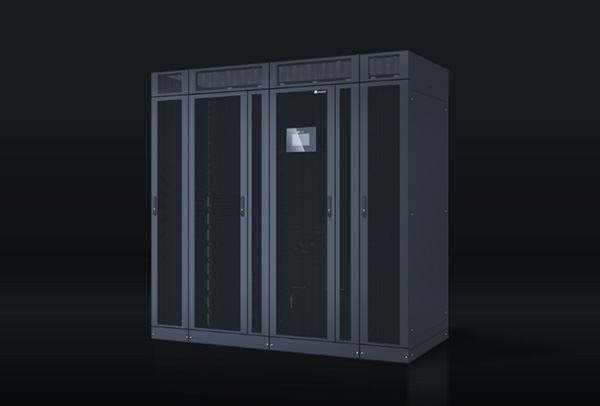
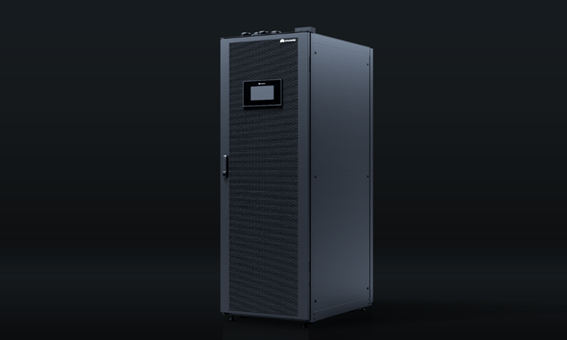
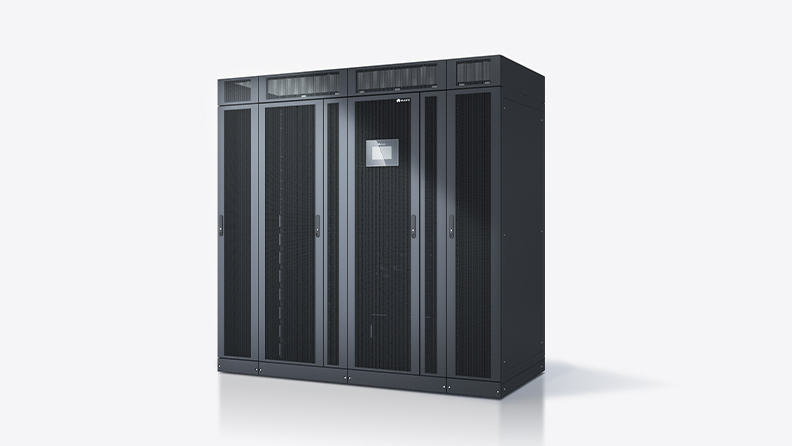
Based on your specific use cases and power requirements, choose between a standby UPS and a line-interactive UPS. If it is a scenario with high-power requirements such as medium-to-large-scale data centers and critical power supply in the industry, an online UPS can be selected. For example, Huawei UPS5000-H has the characteristics of 0-ms switching in the S-ECO mode, high-system efficiency (the link efficiency in the online double-conversion mode can reach 97%, and the S-ECO link efficiency in the intelligent online mode is as high as 99.1%), and full-redundancy design of key components, which can provide stable and reliable power protection for scenarios such as medium-to-large-scale data centers and critical power supply in the industry.
FAQS
What are the advantages of line-interactive UPS?
The advantages of line-interactive UPS systems are mainly reflected in the following aspects: Cost-Effective Solution, Voltage Stabilization, Energy Efficiency, Compact and Lightweight, and Reliable for Moderate Power Issues.
What is the typical life of a standby UPS?
The service life of a standby UPS is affected by factors such as the battery and the operating environment. High-temperature and humid environments can shorten its service life. Generally, the battery needs to be replaced every 3 to 5 years. Under the condition of reasonable use and regular discharge for maintenance once a month, it can be used for 5 to 8 years. After that, the capacity will decrease significantly, and it will be necessary to consider replacing the UPS power supply.
Disclaimer: Any views and/or opinions expressed in this post by individual authors or contributors are their personal views and/or opinions and do not necessarily reflect the views and/or opinions of Huawei Technologies.