From post-flood recovery to being designated as one of the first decarbonization pilotzones, what has driven Kuma Village's green transition? How did Kuma Village achieve a win-win outcome for both economic and environmental benefits?
In 2022, Kuma Village in southern Kumamoto Prefecture, Japan, was hit by torrential rains and devastating floods, leaving the entire village on the brink of destruction. Infrastructure, including houses, schools, public facilities, and forestry processing plants, was destroyed by the floods, and residents faced severe living challenges.
The first major challenge in post-disaster reconstruction faced by the local government and residents was clear: Should they continue relying on traditional energy models, or explore a sustainable, low-carbon, and resilient development path? Without much hesitation, Kuma Village chose the latter and launched a pioneering lowcarbon recovery model.
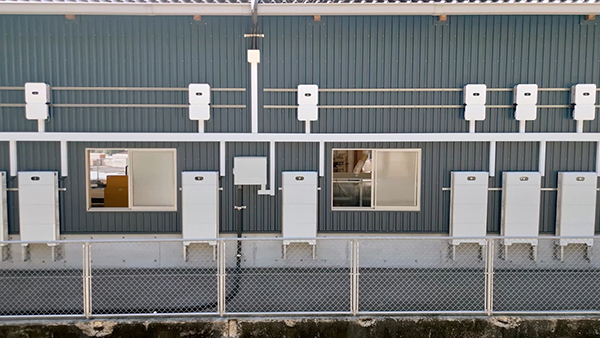
This led to a zero-carbon village initiative, rooted in the dual vision of decarbonization and creative recovery. The project focused on rebuilding public housing and facilities. It integrated a self-consumption distributed PV+energy storage system (ESS) into post-disaster planning, successfully achieving multiple goals: energy localization, a shift to renewable energy, and enhanced disaster resilience.
In 2022, Kuma Village was designated by Kumamoto Prefecture as one of the first decarbonization pilotzones. Through an innovative power purchase agreement (PPA) model, Kuma Village deployed distributed PV and gridforming ESSs across the entire region, emerging as a national benchmark for zero-carbon revitalization in Japan and attracting widespread attention from the industry and global community.
Broad Application of Huawei FusionSolar Smart PV+ESS Solution
As one of the key project partners, Kuma Village's KUMAMURA Shindenryoku Inc. implemented Huawei FusionSolar Smart PV+ESS Solution. The project deployed the PV+ESS solution from Huawei Digital Power across 23 post-disaster public housing sites, rooftops of public facilities, abandoned farmland, and forestry processing plants, establishing a village-wide, self-sufficient energy network.
With a forest coverage rate of 88%, forestry is one of the main economic pillars of Kuma Village. By deploying Huawei FusionSolar Smart PV+ESS Solution, Kuma Village ensured post-disaster livelihood and industrial recovery. This solution enabled the production of "zero-carbon building materials," providing green energy support for its forest resources and core industries.
Nakajima Takafumi, CEO of KUMAMURA Shindenryoku Inc., recalled, "We had previously used Huawei inverters in our projects, and deeply appreciated their multiple advantages, including high conversion efficiency, easy installation, and high reliability. Thanks to Huawei's consistent focus on high quality, its ESSs offer excellent multi-scenario adaptability backed up by technical consulting and after-sales services. This is the reason we implemented Huawei FusionSolar Smart PV+ESS Solution for this revitalization project without hesitation."
Modular deployment capability is one of the unique features of Huawei FusionSolar Smart PV+ESS Solution: It can be flexibly adapted to a range of scenarios, from residential rooftops to MW-scale power plants, enabling comprehensive distributed energy coverage. Nakajima Takafumi emphasized, "This is not just about installing PV and ESS devices. Through the PPA model, we have integrated energy cost reduction, industrial revitalization, and enhancement of disaster resilience into a complete value chain, enhancing the village's overall resilience and capacity for self-sustaining development."
Post-Disaster Resilience and Energy SelfSufficiency
Previously, the power system in Kuma Village had limited capacity, restricting the grid integration of PV power. Even with the introduction of PV devices for self-consumption, surplus electricity could not be fed into the power grid. Huawei FusionSolar Smart PV+ESS Solution adopts a local generation and local consumption model, enabling the village to meet 70%–80% of its electricity needs through self-sufficiency. For Kuma Village, which has endured severe torrential rains and urgently needs to strengthen its disaster resilience, this distributed PV system (independent of external power grids), together with ESS technology, enhances the village's resilience and provides a solid foundation for secure, stable living for its residents.
Following the project's implementation, Kuma Village underwent a fundamental transformation in its energy mix. PV installations across public facilities, residential buildings, and forestry processing plants are equipped with ESSs, significantly reducing electricity costs for residents. Data shows that energy consumption at timber mills has decreased by approximately 30%–40%, substantially lowering carbon emissions and achieving a win-win outcome for both economic and environmental benefits.
Huawei FusionSolar Smart PV+ESS Solution not only addressed Kuma Village's urgent post-disaster needs but also provided green momentum for industrial upgrade.
Green Energy for Every Village Resident
Matsuno Shogo, Director of the Kuma Village Revival Support Team, said, "From the village office, seniors' center, and school, to the hot spring resort and wood processing plant, PV installations are now everywhere in Kuma Village. This village is accelerating decarbonization and improving its disaster resilience. As the benefits of green energy reach everyone, more young people are choosing to move here."
Through Huawei FusionSolar Smart PV+ESS Solution, Kuma Village has achieved balanced development across economic, social, and environmental dimensions: reduced living costs for residents, improved public service resilience, and accelerated green transformation of local industries. The village has gradually become a model for integrating post-disaster recovery with green energy, offering a replicable zero-carbon rural development experience for Japan and the world.
Smart Village and Low-Carbon Lifestyle
Looking ahead, KUMAMURA Shindenryoku Inc. in Kuma Village plans to introduce Huawei's commercial and industrial (C&I) Hybrid Cooling Grid Forming ESS Solution and Smart String Grid Forming ESS Solution to develop renewable energy supply models aligned with regional power demands. The revenue generated from Huawei's PV+ESS solution will continue to be invested in rural digital infrastructure, positioning Kuma Village as Japan's first energy self-sufficient and digitally managed smart village. Nakajima Takafumi said, "I believe that, with Huawei's support, Kuma Village's efforts toward zerocarbon revitalization will continue to advance."
Kuma Village's experience demonstrates the deep integration of post-disaster reconstruction, green energy, low-carbon living, and smart rural development. Against the backdrop of global climate change and extreme weather, this project is an innovative model for zero-carbon rural development in Japan and a valuable example for the world in disaster response and advancing sustainability. Through technological innovation, social engagement, and policy support, Kuma Village is steadily achieving a zero-carbon rebirth, transforming from the shadow of disaster to a model of green resilience.
Disclaimer: The views and opinions expressed in this article are those of the author and do not necessarily reflect the official policy, position, products, and technologies of Huawei Digital Power. If you need to learn more about the products and technologies of Huawei Digital Power, please visit our website at digitalpower.huawei.com or contact us.