Search
History

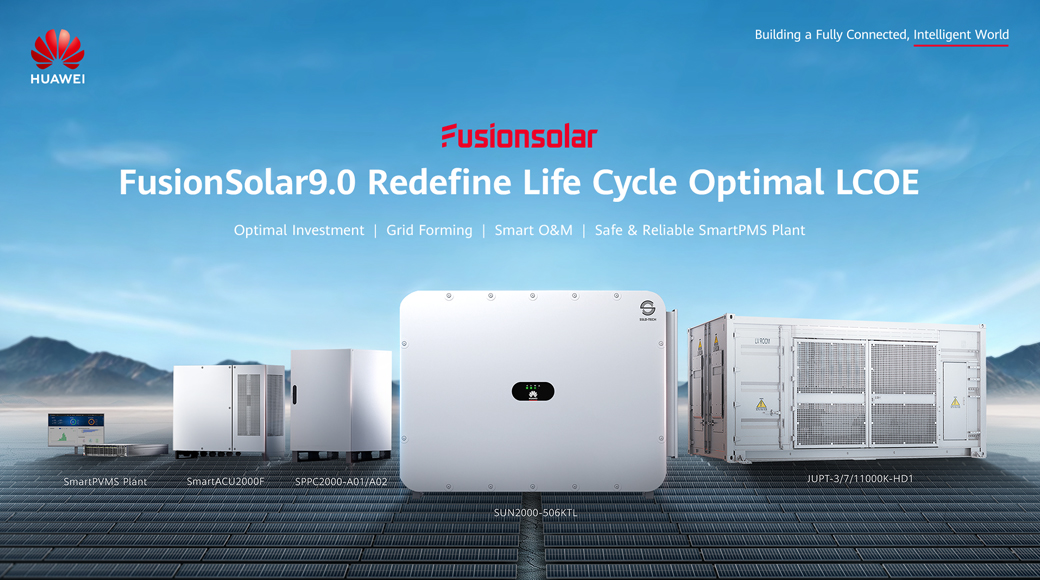
Huawei’s FusionSolar9.0 solution aims to redefine optimal LCOE for utility-scale solar projects

Jun 20, 2026

Lead: The company’s new FusionSolar9.0 solution boost yield and reduce LCOE for the full lifecycle of large-scale power plants, according to Zhang Xingzhong, President of Utility,Commercial & Industrial Solar Business, Huawei Digital Power.


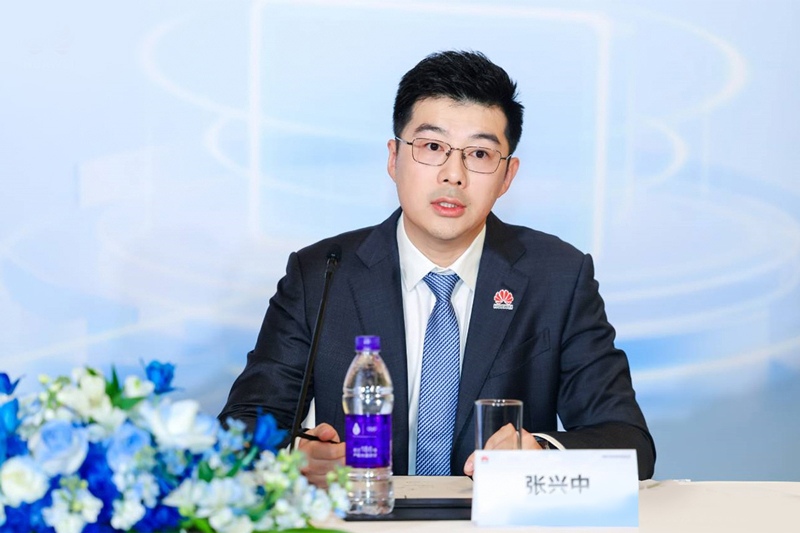
Zhang Xingzhong, President of Utility,Commercial & Industrial Solar Business, Huawei Digital Power

What are the current challenges facing utility-scale solar PV projects?

Zhang: One of the major challenges is the return-on-investment, which need to consider over 20 years lifecycle, not only the initial CAPEX. The second challenge is how to ensure stable grid operation, given the massive amount of renewable energy that is now being connected to the grid.

Third is as the increased scale of power plants, the conventional manual O&M can’t deal with the challenge, and must turn to digital solution to improve efficiency. The fourth challenge is ensuring long-term reliability and safety, which is always the foundation.


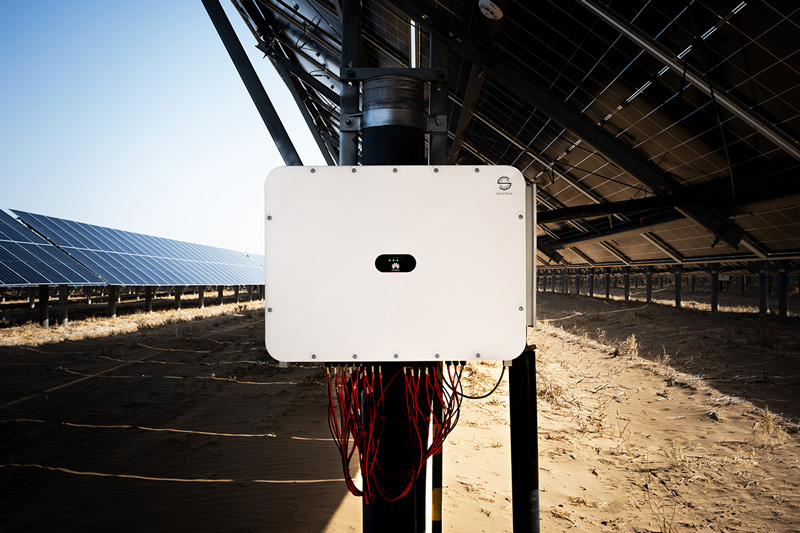
Huawei inverter

How have recent technological advances in Huawei's FusionSolar9.0 solution improved the LCOE for utility-scale solar?

Zhang: LCOE considers factors like investment, yield, and O&M costs etc.

Firstly, Huawei leverages the innovation in electronics to minimize the Balance-of-System (BOS) of solar projects. Through breakthroughs in the new IGBT, the new thermal design, the new generation of 506kW smart string inverter – the flagship product of FusionSolar9.0 solution, realized a 40%+ increase in power density compared with last gen., and pioneering the 1000Vac application in solar PV system. The FusionSolar9.0 solution can decrease BOS by 0.3- 0.6 US cents per watt in 11MW array design, by contrast of the conventional solution of 9MW+ array with 300+kW inverters.

FusionSolar9.0 also boosts energy yield with the 506kW inverter’s longer PV string design and a wider working range for MPPT voltage. This means it allows the system to start earlier and shut down later—another contributor to increased power yield. In projects of China, the 506kW inverter delivers ~1% higher yield versus conventional solution.

Moreover, The 506kW inverter has equipped the fans with innovative self-cleaning and anti-icing technologies to adapt to diverse environments and weather conditions, which can reduce manual O&M and prevent energy losses.

All the features above can bring considerable economic benefits.

What advances has Huawei made to enable high power and voltage while maintaining high reliability?

Zhang: To achieve higher power and voltage while maintaining high reliability, it depends on Huawei’s sustained investment in and breakthroughs in fundamental technologies, mainly in 3 perspectives:

First, the new-generation IGBT module boosts voltage withstand capacity by 25%, reduces power loss by 10%, and increases maximum junction temperature by 20%.

Second, the innovative Smart Hybrid Cooling System enhances heat dissipation capability by 30% without compromising the overall size and dimensions.

Third, it is because of the new production line with all the key processes are 100% automated and empowered by AI inspection in every manufacturing procedures , which guarantee the strong production capacity with excellent quality.

Can you introduce the grid forming capabilities of Huawei’s FusionSolar 9.0 solution?

Zhang: I can summarize these into five capabilities:

Firstly, the Smart Internal Potential Construction Algorithm can cope with transient voltage instability by generating reactive power within 10ms, while it takes around 30ms for the conventional grid-following inverters;

secondly, the 0-20s Smart Virtual Inertia can support frequency stability;

Thirdly, it can enhance short-circuit-ratio (SCR) of PV plant, which brings in stronger renewable energy transmission capability, as the two factors are positive correlation.

Fourthly, the grid-forming inverter can realize auto-recovery of reactive power at nighttime after the power failure is recovered.

Last, it can provide off-grid power supply during commissioning phase of solar farm and use self-generated PV power for equipment commissioning and testing due to its voltage-source characteristic, which is more cost saving, environment friendly, and socially beneficial, and ennable faster grid-connection compared with diesel generator solution.

 

Related Recommendations
Huawei’s FusionSolar9.0 solution aims to redefine optimal LCOE for utility-scale solar projects

Jun 20, 2026

Lead: The company’s new FusionSolar9.0 solution boost yield and reduce LCOE for the full lifecycle of large-scale power plants, according to Zhang Xingzhong, President of Utility,Commercial & Industrial Solar Business, Huawei Digital Power.


Zhang Xingzhong, President of Utility,Commercial & Industrial Solar Business, Huawei Digital Power

What are the current challenges facing utility-scale solar PV projects?

Zhang: One of the major challenges is the return-on-investment, which need to consider over 20 years lifecycle, not only the initial CAPEX. The second challenge is how to ensure stable grid operation, given the massive amount of renewable energy that is now being connected to the grid.

Third is as the increased scale of power plants, the conventional manual O&M can’t deal with the challenge, and must turn to digital solution to improve efficiency. The fourth challenge is ensuring long-term reliability and safety, which is always the foundation.


Huawei inverter

How have recent technological advances in Huawei's FusionSolar9.0 solution improved the LCOE for utility-scale solar?

Zhang: LCOE considers factors like investment, yield, and O&M costs etc.

Firstly, Huawei leverages the innovation in electronics to minimize the Balance-of-System (BOS) of solar projects. Through breakthroughs in the new IGBT, the new thermal design, the new generation of 506kW smart string inverter – the flagship product of FusionSolar9.0 solution, realized a 40%+ increase in power density compared with last gen., and pioneering the 1000Vac application in solar PV system. The FusionSolar9.0 solution can decrease BOS by 0.3- 0.6 US cents per watt in 11MW array design, by contrast of the conventional solution of 9MW+ array with 300+kW inverters.

FusionSolar9.0 also boosts energy yield with the 506kW inverter’s longer PV string design and a wider working range for MPPT voltage. This means it allows the system to start earlier and shut down later—another contributor to increased power yield. In projects of China, the 506kW inverter delivers ~1% higher yield versus conventional solution.

Moreover, The 506kW inverter has equipped the fans with innovative self-cleaning and anti-icing technologies to adapt to diverse environments and weather conditions, which can reduce manual O&M and prevent energy losses.

All the features above can bring considerable economic benefits.

What advances has Huawei made to enable high power and voltage while maintaining high reliability?

Zhang: To achieve higher power and voltage while maintaining high reliability, it depends on Huawei’s sustained investment in and breakthroughs in fundamental technologies, mainly in 3 perspectives:

First, the new-generation IGBT module boosts voltage withstand capacity by 25%, reduces power loss by 10%, and increases maximum junction temperature by 20%.

Second, the innovative Smart Hybrid Cooling System enhances heat dissipation capability by 30% without compromising the overall size and dimensions.

Third, it is because of the new production line with all the key processes are 100% automated and empowered by AI inspection in every manufacturing procedures , which guarantee the strong production capacity with excellent quality.

Can you introduce the grid forming capabilities of Huawei’s FusionSolar 9.0 solution?

Zhang: I can summarize these into five capabilities:

Firstly, the Smart Internal Potential Construction Algorithm can cope with transient voltage instability by generating reactive power within 10ms, while it takes around 30ms for the conventional grid-following inverters;

secondly, the 0-20s Smart Virtual Inertia can support frequency stability;

Thirdly, it can enhance short-circuit-ratio (SCR) of PV plant, which brings in stronger renewable energy transmission capability, as the two factors are positive correlation.

Fourthly, the grid-forming inverter can realize auto-recovery of reactive power at nighttime after the power failure is recovered.

Last, it can provide off-grid power supply during commissioning phase of solar farm and use self-generated PV power for equipment commissioning and testing due to its voltage-source characteristic, which is more cost saving, environment friendly, and socially beneficial, and ennable faster grid-connection compared with diesel generator solution.


Related Recommendations