In modern society, data centers underpin server operations, data storage, connectivity, and communication, serving as an indispensable backbone for all industries. However, data centers generate enormous amounts of heat during operation, and ineffective cooling can impair their performance. Next, we will explore the importance of data center cooling methods and how does refrigeration in data centers work.
Why Are Data Center Cooling Methods Important?
The continuous operation of high-performance IT equipment (such as servers and storage devices) in data centers generates substantial heat, and overheating can lead to:
● Equipment Malfunctions & Downtime: Overheated components may throttle performance or shut down entirely, disrupting services.
● Safety Hazards: Excess heat increases the risk of fires and component failures, endangering both hardware and personnel.
● Higher Operational Costs: Frequent repairs, replacements, and emergency interventions drive up maintenance budgets.
● Reduced Equipment Lifespan: Prolonged exposure to elevated temperatures accelerates wear and degrades reliability.
To avoid these issues, mastering data center cooling methods is crucial.
It can be seen that data center cooling methods are not only a crucial link to ensure the normal operation of data centers, but also a key means to achieve energy conservation, environmental protection, and maximize economic benefits.
How Does Refrigeration in Data Centers Work?
The primary purpose of data center cooling methods is to maintain environmental conditions suitable for the operation of IT equipment. Their working principle involves using multiple key components and strategies to sustain optimal conditions for the equipment, including:
● Server Cooling: Reduces the temperature of IT equipment by removing heat generated by individual components such as processors and memory.
● Data Hall Cooling: Maintains uniform temperature and humidity in server rooms by using mechanical cooling or natural cooling sources, preventing overheating and ensuring the reliable operation of IT equipment .
● Airflow Management: Controls the direction, speed, and quality of air through HVAC systems to deliver cold air where it’s needed and expel excess hot air.
● Heat Exhaust: Transfers heat generated by servers and other IT equipment from inside the data center to external environments.
● Fluid Regulation: Tempers, filters, treats, and circulates coolants (such as water, refrigerants, or ethylene glycol) to ensure effective heat absorption and transfer.
● Humidity Control: Adjusts moisture levels in data center air using humidifiers or dehumidifiers and monitors conditons with hygrometers and sensors to maintain optimal humidity.
Current Data Center Cooling Technologies
● Evaporative Cooling: Also known as swamp cooling or wet-air cooling; this method sprays water onto surfaces or into airflows, using evaporation to absorb heat and lower temperatures.
● Liquid Cooling: A server-level technology that circulates water or specialized coolants to remove excess heat directly from electronic devices, offering precise temperature control—ideal for HPC environments.
● Free Cooling: Also called indirect evaporative cooling; it utilizes outdoor natural cooling sources to lower the data center's temperature, reducing reliance on mechanical chillers and refrigerants.
● Adiabatic Cooling: Adiabatic cooling in data centers refers to the process of cooling air through changes in internal air pressure that affect temperature, without heat exchange with the external environment.
● Geothermal Cooling: Circulates heat-absorbing fluids through buried, closed-loop pipes, tapping into the stable subsurface temperature to efficiently dissipate heat.
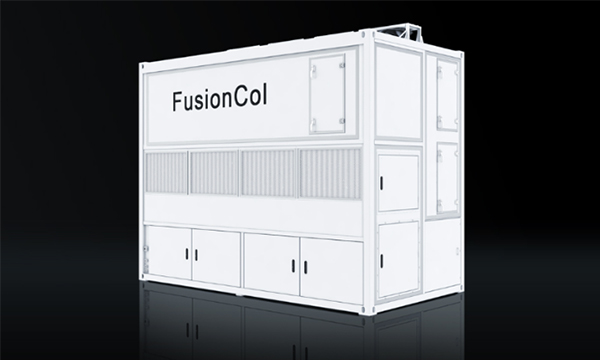
You can choose the appropriate cooling technology based on your data center’s conditions. For indirect evaporating cooling, consider the Huawei indirect evaporative cooling FusionCol8000-E system, which cools the data center by directly utilizing the natural cold air at lower outdoor temperatures, thereby significantly reducing refrigeration energy consumption. Meanwhile, this system features dual power supplies that automatically switch between active and standby modes to maintain continuous, stable cooling with zero ambient temperature fluctuations.
What Is the Ideal Data Center Temperature?
According to the American Society of Heating, Refrigerating and Air-Conditioning Engineers (ASHRAE), servers and storage hardware should operate within 64.4 °F to 80.6 °F (18 °C to 27 °C) in data-processing environments. Staying in this range helps you:
● Improve the overall energy efficiency of data centers by reducing the energy consumption of refrigeration systems.
● Extend equipment lifespan by preventing thermal stress and component wear.
● Maintain performance stability and lower the risk of heat-related failures.
Conclusion
From the above analysis of how does refrigeration in data centers work, it’s clear that cooling technology has evolved in response to the dual demands of the digital economy and sustainable development. Traditional refrigeration solutions predominantly rely on mechanical refrigeration, which involves long refrigeration chains and high energy consumption. In contrast, indirect evaporative cooling technology maximizes the utilization of natural cold sources for heat dissipation, offering a more energy-efficient and effective solution, thus becoming the preferred refrigeration approach for data centers.
FAQs
How does HVAC work in a data center?
HVAC systems in data centers primarily ensure stable operation of IT equipment and optimize energy efficiency by precisely controlling temperature, humidity, and airflows.
What are the cooling solutions for data centers?
Common data center cooling solutions include evaporative cooling, liquid cooling, free cooling, adiabatic cooling, and geothermal cooling. Each method is selected based on the facility’s climate, water availability, power density, and efficiency requirements.
How do chillers work in a data center?
Traditional data centers often adopt mechanical refrigeration solutions. Taking the chilled-water system as an example, it includes several major equipment items: chillers, cooling towers, cold storage tanks, and cooling water pumps. The working principle of the chiller is as follows:
The compressor compresses the refrigerant into a high-temperature and high-pressure gaseous state. After heat dissipation through the condenser, the refrigerant turns into a liquid state. Then, it passes through the expansion valve to reduce pressure and temperature. In the evaporator, the refrigerant absorbs the heat of the chilled water to cool it down. The chilled water is used to cool IT equipment, and the evaporated refrigerant vapor re-enters the compressor to start a new cycle.
Do data centers use water or air cooling?
The choice between water-cooling and air-cooling solutions for data centers requires a comprehensive consideration of factors such as climatic conditions, water resources, energy efficiency targets, and construction costs. It should be noted that while traditional water-cooling systems (e.g., chilled water systems) were once the mainstream choice for large-scale data centers, they have limitations such as high energy consumption and complex maintenance requirements, making them increasingly ill-suited for current high-density computing scenarios.
The current mainstream cooling solutions for data centers include liquid cooling, hybrid air-liquid cooling, and indirect evaporative cooling (a form of air cooling).
What are the advantages of air-cooled solution compared with water cooling solution?
Compared with water-cooling solutions, air-cooled solutions are highly energy-efficient, convenient for installation and operation & maintenance, factory-preassembled with short construction cycles, and safe and reliable, making them suitable for large-scale data center scenarios.
Will liquid cooling become the primary cooling technology for data centers?
Liquid cooling represents an inevitable trend and can effectively address the high heat dissipation challenges in AI data centers. However, as we are currently in the transition period between general computing and intelligent computing, air cooling and liquid cooling will coexist for a long time, and air-liquid hybrid cooling solutions are more adaptable to the evolution of AI businesses.
Disclaimer: Any views and/or opinions expressed in this post by individual authors or contributors are their personal views and/or opinions and do not necessarily reflect the views and/or opinions of Huawei Technologies.