Search
History

Huawei Sets New Standards in Solar Innovation with Groundbreaking POC and EMC Lab Tests in Thailand, with Testing Conducted by Polytechnology, KlangSolar by Globaltronic, and EnergyDD

Feb 05, 2026

[Bangkok, Thailand, February 5, 2026] As residential solar power adoption grows across the Asia-Pacific, a clear divide is forming in the market: some systems simply work, while others are built to last, perform, and ensure safety. A series of Proof of Concept (POC) trials and Electromagnetic Compatibility (EMC) tests in Thailand from December 2024 to October 2025 have highlighted this difference, proving that not all solar brands are the same.

The initiative is a collaboration between local partners including Polytechnology, KlangSolar by Globaltronic, and EnergyDD, sought to benchmark performance under "real-world" conditions. By testing 8 different solar residential configurations side-by-side, the trials provided clear data on how advanced technologies perform in Southeast Asia’s hot and humid environment, driving improvements in energy efficiency, safety, and performance across Asia.

The Safety Imperative: Why Standards Matter More Than Price

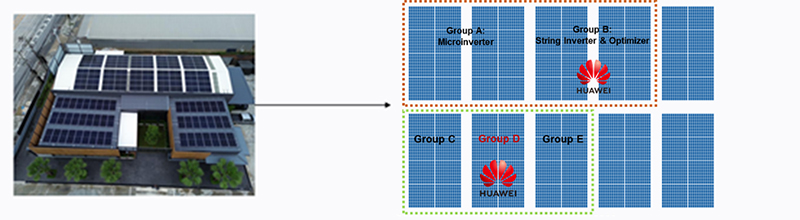
For homeowners and installers, the primary concern must shift from initial cost to total cost of ownership and operational safety. The recent trials tested various configurations including Huawei’s integrated solution (Group B&D), microinverter-only systems (Group A), and mixed-brand setups (Group C&E), against Thailand’s strict new rooftop safety standards Engineering Institute of Thailand (EIT). The POC test focused on comparing the safety, performance, and energy yield of solar systems across three scenarios to assess the advantages of Huawei’s integrated Inverter, Optimizer, and Battery Energy Storage solutions over other solutions in the market.


Huawei Sets New Standards in Solar Innovation with Groundbreaking POC and EMC Lab Tests in Thailand, with Testing Conducted by Polytechnology, KlangSolar by Globaltronic, and EnergyDD

The most alarming finding involved Arc Fault Circuit Interrupters (AFCI), which are essential for preventing electrical fires. Despite safety claims, many brands cannot detect DC arc faults, rendering protection impossible. Therefore, the test results favoured systems that adhere to the IEC 63027 international standard for PV arc detection.

Huawei’s AI-driven AFCI technology was tested against the rigorous requirements. The regulatory limit for shutting down a system upon detecting an arc is 2.5 seconds. Huawei’s system achieved rapid shutdown in just 0.5 seconds, five times faster than the legal requirement. This discrepancy highlights an important advantage: high-quality brands engineered to IEC 63027 provide an extra safety margin, setting them apart from other batteries in the market that only meet the minimum standard.

The Hidden Risk - EMC

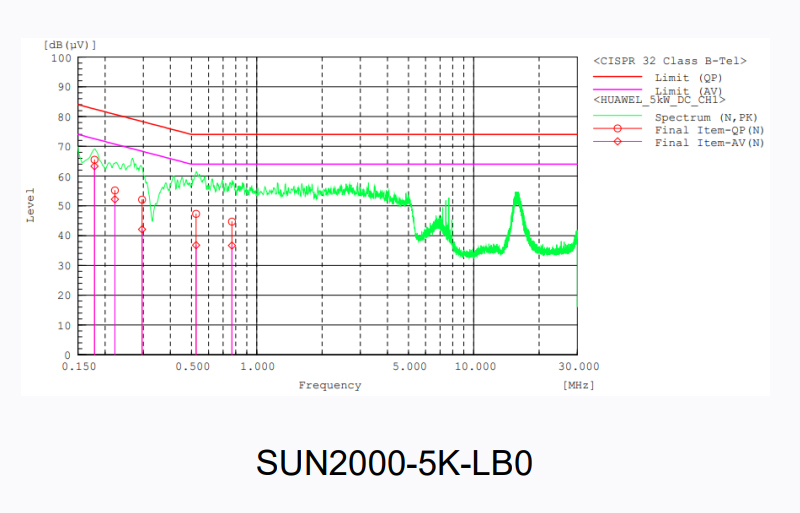
A key finding in this study was EMC. Solar inverters are powerful devices, and without proper shielding, they can emit electromagnetic "noise" that disrupts Wi-Fi, radio signals, and other sensitive electronics, or even pose health risks. Independent testing by the Electrical and Electronics Products Testing Center (PTEC) on emissions, following IEC62920 standards, produced clear results:

• Huawei was the only brand in this comparison to meet all CE and RE requirements.


Huawei Sets New Standards in Solar Innovation with Groundbreaking POC and EMC Lab Tests in Thailand, with Testing Conducted by Polytechnology, KlangSolar by Globaltronic, and EnergyDD

This testing highlighted Huawei's commitment to real-world performance: while some manufacturers use "golden samples," Huawei submitted real-world units and passed. The clear takeaway is that choosing a brand that meets these high standards ensures reliable performance and eliminates the risk of electronic interference in the home.

Quantifiable Performance: The Economics of Quality

Beyond safety, the trials measured how well the systems performed and how much value they provided, using a standard method to track their efficiency and energy production.

1. Energy Yield Superiority:

The debate between string inverters and microinverters often centers on efficiency. The POC data settled this by showing that Huawei’s smart string inverter with power optimizers (Group B) produced 2% more energy than the microinverter-only system (Group A) during the first nine days of testing. This extra efficiency is due to Huawei’s advanced tracking technology and wide operating temperature range, which helps maximize energy production in real-world conditions.

2. Battery Efficiency and Longevity:

Energy storage is a major investment, and the actual "usable" capacity often differs from the "advertised" capacity. The trial compared Huawei LUNA2000-S1 battery (Group D) with other batteries in the market.

• Huawei LUNA2000-S1: Achieved 100% Depth of Discharge (DoD) and a Round-Trip Efficiency (RTE) of approximately 95.1%.

For homeowners, this difference translates to financial impact. With Huawei LUNA2000-S1, users can access up to 100% Depth of Discharge, meaning they are able to fully utilize the capacity they invest in, supported by a high round-trip efficiency of approximately 95.1% and low round-trip energy losses (approximately 4.9%).

The Right Choice for Safety, Quality and Reliability

The results of the Thailand POC and EMC trials make it clear: strict adherence to standards like IEC 63027 (AFCI), IEC62920 (EMC), and IEC 63056 (Battery Safety) ensures superior safety, performance, and financial returns.

For homeowners and installers, the decision is simple: it’s not just about price, it’s about choosing the right quality. Huawei’s proven success in passing every test sets the benchmark for reliability and safety in the solar market and helping to shape the future of residential solar energy, providing consumers in Thailand and across Asia Pacific region with safer and more efficient solar power solutions, promising attractive return on investment.

Related Recommendations
Huawei Sets New Standards in Solar Innovation with Groundbreaking POC and EMC Lab Tests in Thailand, with Testing Conducted by Polytechnology, KlangSolar by Globaltronic, and EnergyDD

Feb 05, 2026

[Bangkok, Thailand, February 5, 2026] As residential solar power adoption grows across the Asia-Pacific, a clear divide is forming in the market: some systems simply work, while others are built to last, perform, and ensure safety. A series of Proof of Concept (POC) trials and Electromagnetic Compatibility (EMC) tests in Thailand from December 2024 to October 2025 have highlighted this difference, proving that not all solar brands are the same.

The initiative is a collaboration between local partners including Polytechnology, KlangSolar by Globaltronic, and EnergyDD, sought to benchmark performance under "real-world" conditions. By testing 8 different solar residential configurations side-by-side, the trials provided clear data on how advanced technologies perform in Southeast Asia’s hot and humid environment, driving improvements in energy efficiency, safety, and performance across Asia.

The Safety Imperative: Why Standards Matter More Than Price

For homeowners and installers, the primary concern must shift from initial cost to total cost of ownership and operational safety. The recent trials tested various configurations including Huawei’s integrated solution (Group B&D), microinverter-only systems (Group A), and mixed-brand setups (Group C&E), against Thailand’s strict new rooftop safety standards Engineering Institute of Thailand (EIT). The POC test focused on comparing the safety, performance, and energy yield of solar systems across three scenarios to assess the advantages of Huawei’s integrated Inverter, Optimizer, and Battery Energy Storage solutions over other solutions in the market.


Huawei Sets New Standards in Solar Innovation with Groundbreaking POC and EMC Lab Tests in Thailand, with Testing Conducted by Polytechnology, KlangSolar by Globaltronic, and EnergyDD

The most alarming finding involved Arc Fault Circuit Interrupters (AFCI), which are essential for preventing electrical fires. Despite safety claims, many brands cannot detect DC arc faults, rendering protection impossible. Therefore, the test results favoured systems that adhere to the IEC 63027 international standard for PV arc detection.

Huawei’s AI-driven AFCI technology was tested against the rigorous requirements. The regulatory limit for shutting down a system upon detecting an arc is 2.5 seconds. Huawei’s system achieved rapid shutdown in just 0.5 seconds, five times faster than the legal requirement. This discrepancy highlights an important advantage: high-quality brands engineered to IEC 63027 provide an extra safety margin, setting them apart from other batteries in the market that only meet the minimum standard.

The Hidden Risk - EMC

A key finding in this study was EMC. Solar inverters are powerful devices, and without proper shielding, they can emit electromagnetic "noise" that disrupts Wi-Fi, radio signals, and other sensitive electronics, or even pose health risks. Independent testing by the Electrical and Electronics Products Testing Center (PTEC) on emissions, following IEC62920 standards, produced clear results:

• Huawei was the only brand in this comparison to meet all CE and RE requirements.


Huawei Sets New Standards in Solar Innovation with Groundbreaking POC and EMC Lab Tests in Thailand, with Testing Conducted by Polytechnology, KlangSolar by Globaltronic, and EnergyDD

This testing highlighted Huawei's commitment to real-world performance: while some manufacturers use "golden samples," Huawei submitted real-world units and passed. The clear takeaway is that choosing a brand that meets these high standards ensures reliable performance and eliminates the risk of electronic interference in the home.

Quantifiable Performance: The Economics of Quality

Beyond safety, the trials measured how well the systems performed and how much value they provided, using a standard method to track their efficiency and energy production.

1. Energy Yield Superiority:

The debate between string inverters and microinverters often centers on efficiency. The POC data settled this by showing that Huawei’s smart string inverter with power optimizers (Group B) produced 2% more energy than the microinverter-only system (Group A) during the first nine days of testing. This extra efficiency is due to Huawei’s advanced tracking technology and wide operating temperature range, which helps maximize energy production in real-world conditions.

2. Battery Efficiency and Longevity:

Energy storage is a major investment, and the actual "usable" capacity often differs from the "advertised" capacity. The trial compared Huawei LUNA2000-S1 battery (Group D) with other batteries in the market.

• Huawei LUNA2000-S1: Achieved 100% Depth of Discharge (DoD) and a Round-Trip Efficiency (RTE) of approximately 95.1%.

For homeowners, this difference translates to financial impact. With Huawei LUNA2000-S1, users can access up to 100% Depth of Discharge, meaning they are able to fully utilize the capacity they invest in, supported by a high round-trip efficiency of approximately 95.1% and low round-trip energy losses (approximately 4.9%).

The Right Choice for Safety, Quality and Reliability

The results of the Thailand POC and EMC trials make it clear: strict adherence to standards like IEC 63027 (AFCI), IEC62920 (EMC), and IEC 63056 (Battery Safety) ensures superior safety, performance, and financial returns.

For homeowners and installers, the decision is simple: it’s not just about price, it’s about choosing the right quality. Huawei’s proven success in passing every test sets the benchmark for reliability and safety in the solar market and helping to shape the future of residential solar energy, providing consumers in Thailand and across Asia Pacific region with safer and more efficient solar power solutions, promising attractive return on investment.

Related Recommendations