According to the "World Energy Outlook 2024" report by the International Energy Agency (IEA), the global renewable energy capacity additions exceeded 560 GW in 2023. This represents a significant milestone in the transition towards clean energy. Furthermore, it is projected that by 2030, the global renewable capacity will surpass countries' current ambitions by approximately 25%. This highlights the growing recognition of the importance of clean energy and the accelerating pace of the global energy transformation. As a result of this transformation, power systems worldwide are undergoing unprecedented green upgrades across all aspects, including power generation, transmission, distribution, and consumption. This comprehensive overhaul is driven by the increasing realization of the need to combat climate change and the imperative to meet the energy demands of both production and everyday life.
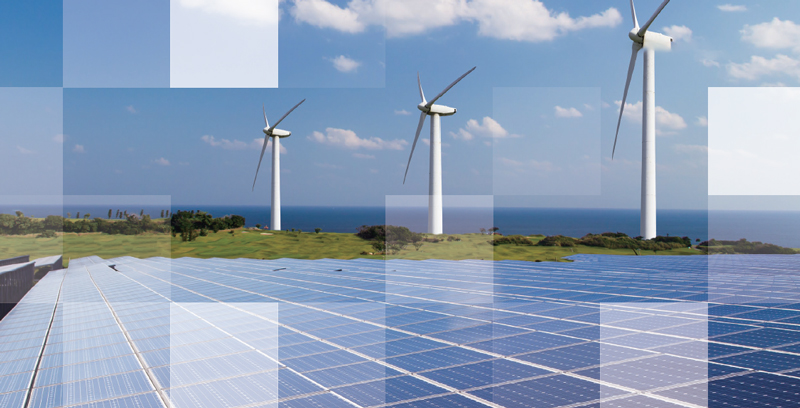
Accelerating the development of clean energy
The power sector is transitioning from a reliance on coal to a diverse energy mix comprising an increasing proportion of clean energy sources. The total installed capacity of clean energy sources, including hydropower, wind power, solar power, hydrogen, and nuclear power, is on the rise. Data indicate that in 2023, the global total installed capacity reached 8856 GW, and the energy yield reached 29,734 TWh. Wind and solar energy yield accounted for over 30% of the world's electricity mix for the first time. China was a major contributor, with 51% of the world's additions in solar energy yield.
Governments worldwide have implemented various policies to promote the growth of renewable energy sources. In 2022, the European Commission introduced the REPowerEU energy plan, which aimed to increase the target for renewable energy in the region from 40% to 45% by 2030 as part of the Fit for 55 package. Germany has also taken steps towards a greener future with its Renewable Energy Act (EEG 2023), raising the target for renewable energy in the electricity mix from 65% to 80% by 2030. Similarly, Brazil's Federal Law No. 14,300 offers generous subsidies until 2045 for existing distributed photovoltaic (PV) plants and those constructed by the end of 2023.
For wind and solar power, China has introduced comprehensive regulations, including the Regulations on Grid Connection of Renewable Energy and the Interim Measures for Grid Connection of Distributed PV Power Generation. These regulations outline the procedures, standards, and technical requirements for integrating power plants into the grid, providing clear guidance and policy support for the integration of renewable energy sources. According to the China Photovoltaic Industry Association, China's PV industry experienced robust growth in 2023, with a total production value exceeding CNY1.75 trillion and installed capacity additions reaching 216.88 GW, representing a 148.1% year-on-year increase. The industry's continuous expansion is underpinned by declining costs of key equipment, driven by technological advancements and economies of scale. Notably, the cost of PV parity has been achieved, signaling a significant milestone in the industry's development. As energy storage system (ESS) technologies evolve, the cost of PV cells is expected to decrease further. By 2028, it is projected that the levelized cost of electricity (LCOE) for PV + ESS systems will fall below CNY0.3. At this point, both PV and ESS will have achieved grid parity, making them cost-competitive with conventional energy sources. Consequently, PV + wind + ESS is set to emerge as the predominant energy mix, driving the transition to a more sustainable and reliable power system.
According to the Global Wind Energy Council (GWEC), 2023 witnessed the installation of 120.7 GW of wind turbine capacity globally. A significant portion of this, 81.6 GW, was supplied by Chinese wind turbine manufacturers, with six of the world's top 10 suppliers being Chinese firms. Over the past few years, the global installed capacity of offshore wind has consistently increased as more countries undertake or plan their first offshore wind farm projects and the cost of offshore wind power declines. Hydropower, characterized by its low cost, continuous, environment-friendly, and carbon-free power generation, is crucial to energy transformation.
According to the IEA, pumped storage hydropower accounts for over 90% of the world's stored energy. The Asia Pacific region is experiencing the most rapid growth in this sector, with a notable expansion of pumped storage hydropower plants. The "World Hydropower Outlook 2023" reveals that the combined installed capacity of pumped storage in East Asia and the Pacific has reached 84 GW.
Hydrogen is emerging as a leading energy source due to its carbon-free nature and exceptional energy efficiency. The "Hydrogen Insight 2023" report, jointly published by the Hydrogen Council and McKinsey & Company, estimates that global direct investment in hydrogen will surge to US$320 billion by 2030. The "Research Report on International Hydrogen Technology and Industrial Development 2023," released by the Hydrogen Energy Industry Promotion Association under the China Association for the Promotion of Industrial Development, forecasts a tenfold increase in global hydrogen demand and a hydrogen industry chain output value surpassing US$2.5 trillion by 2050. Currently, hydrogen finds widespread applications in transportation, industry, and construction, driving the transition towards greener and low-carbon practices across various sectors. In October 2024, the Federal Network Agency of Germany approved the construction of a nationwide hydrogen core network, with an estimated investment of up to EUR18.9 billion. China's Medium- and Long-Term Plan for the Development of the Hydrogen Energy Industry (2021-2035) outlines strategic initiatives for local governments to foster innovation in the hydrogen energy sector.
Despite the benefits of the renewable energy industry, there are also challenges, including the increased imbalance and unreliability of the power system as clean energy sources grow in proportion. Grid-forming ESSs have emerged as a crucial component of new power systems, emulating the characteristics of synchronous generators to enhance system support, stability, and emergency procedures. This technology can improve peak shaving and frequency regulation, enhance voltage stability, and ensure reliable grid connection, enabling efficient renewable energy utilization. Huawei Digital Power is committed to advancing the high-quality development of the grid-forming ESS industry, working to transform technologies from grid-following to grid-forming and facilitating the construction of new power systems. Through these efforts, countries are successfully integrating renewable energy, stabilizing energy supply, and reducing carbon emissions.
Minimized loss through improved transmission efficiency
Power transmission plays a vital role in ensuring energy security and optimizing the energy mix, serving as a critical link for achieving a greener and low-carbon transformation of power systems. The integration of dispersed renewable energy sources, including wind and solar, necessitates an efficient power transmission and transformation system that can effectively integrate these decentralized power resources and transmit them to the load centers. It is estimated that the market size of the power transmission and transformation industry will reach about CNY2.29 trillion in 2029.
To achieve green and low-carbon development in the power transmission link, several key actions need to be taken. First, it is crucial to expedite the construction of new power systems and the utilization of clean energy. Second, there is a need to improve the bearing capacity and self-recovery capability of power grids, along with the efficient utilization of renewable energy. Third, the construction of cross-province and cross-region power transmission channels should be promoted. This will facilitate the smooth flow of renewable energy from resource-rich areas to high-demand load centers. Lastly, it is essential to expedite the development of ultra-high voltage (UHV) direct current (DC) projects.
It is widely acknowledged that adopting high-voltage transmission lines is an effective solution to reduce power loss caused by resistance during power transmission. For instance, high-voltage direct current (HVDC) transmission technology is characterized by high transmission efficiency, high stability, rapid response to load changes, flexible control, convenient scheduling, large capacity, and minimal loss. These features effectively shorten transmission lines and reduce long-distance transportation costs. As a result, HVDC transmission technology is an ideal choice for transmitting renewable energy. According to the State Grid Corporation of China (SGCC), the total investment in UHV projects is expected to reach CNY380 billion during 2021-2025, representing a 35.7% increase compared to 2016-2020. The Federal Network Agency of Germany states that Germany will build and expand a total of 6,000 kilometers of transmission system by the end of 2024, with an investment of EUR20 billion.
It is important to highlight that smart grids effectively enhance the operational efficiency, reliability, and stability of power grids, while also reducing line loss. This contributes to the sustainable development of power grids. China has recognized the potential of smart grids and has implemented several policies to promote their growth. Notable examples include the Guiding Opinions on High-Quality Development of Distribution Networks under New Conditions and the Opinions on Accelerating the Digital and Intelligent Development of Energy. To further advance smart grid construction, innovative approaches such as virtual power plants (VPPs) and Shared ESS are being employed, along with cutting-edge technologies like cloud computing, big data analytics, IoT, mobile Internet, AI, and blockchain. These advancements significantly enhance the ability to adjust resources on the demand side. By the end of 2024, Europe plans to invest EUR600 billion in power grid construction, with a focus on UHV AC/DC projects and the digital and intelligent upgrade of power grids.
Power distribution is a key step toward diversifying energy consumption
Power distribution networks play a crucial role in delivering electricity from the central power grid to individual homes. Unlike the main grid, these networks consist of numerous dispersed devices. However, if issues like excessive overload or low voltage are not promptly detected and addressed, the reliability of the power supply can be compromised. To address this concern, in August 2024, the China National Development and Reform Commission, National Energy Administration, and National Data Bureau jointly issued the Action Plan for Accelerating the Construction of New Power Systems (2024-2027). The action plan emphasizes the need to enhance end-to-end management of power distribution networks, establish and revise distribution network standards, and develop an evaluation system for their progress. By improving the adequacy, reliability, and flexibility of power distribution networks, we can better integrate renewable energy sources and enhance the diversified utilization of energy.
Currently, the power distribution networks are underdeveloped, and local integration is insufficient, posing challenges to the industry. To address these issues, it is necessary to optimize the power grid structure, enhance regulation and integration, improve the management of power distribution devices to ensure device stability, and explore the application of new power devices to enhance the operation efficiency of power grids.
The connection of distributed energy is crucial. However, connecting massive amounts of distributed energy can increase the line load current of the power distribution network, making voltage adjustment more difficult and significantly impacting the distribution network. To prevent this, it is essential to consider various factors during planning and management and to continuously strive to upgrade and optimally reconstruct the power distribution network. This will enhance the integration capability of distributed energy, reduce transmission loss, and improve energy utilization. Correctly selecting the location and capacity of a distributed power supply and correctly connecting cables onsite are crucial to maintaining the reliability and safety of the distribution network.
Thanks to policy support and technological advancements, small-scale wind and solar power systems are being widely used in communities. Distributed PV systems and wind turbines offer a clean and sustainable power supply, bringing about reduced electricity costs and improved energy supply stability.
Actions to promote green energy consumption
An IEA report indicates that the annual investment in clean energy has reached nearly US$2 trillion, which is almost double the total investment in oil and coal. This significant increase in funding demonstrates the growing momentum behind green electricity. During the 7th China International Import Expo held in 2024, there was a noteworthy development: for the first time, 10,000 green power certificates were purchased from power generation enterprises in Shanghai. These certificates were equivalent to 10 million kWh of green electricity, ensuring a sustainable and environmentally friendly energy supply throughout the entire duration of the Expo, from its preparation to its closing.
Despite the increasing availability of green energy, there is still a lack of awareness among many users regarding its benefits and usage. This hinders the widespread adoption and advancement of green electricity. To address this issue, it is crucial to expand the outreach of green electricity, enhance incentive mechanisms, and encourage green consumption. One effective approach is to promote the use of energy-efficient electrical appliances in areas such as green buildings and transportation, thereby reducing carbon emissions. Additionally, the transformation of the power sector towards green and low-carbon sources will provide clean energy for electric transportation, leading to a reduction in carbon emissions in the transportation sector. This, in turn, will drive the power sector towards a cleaner and more efficient energy mix. On the demand management side, we can improve system efficiency by guiding users to use electricity responsibly and reducing power demand during peak hours. Implementing time-of-use pricing can facilitate peak shaving, lower overall electricity costs, and promote sustainable and low-carbon growth.
Sustainable development of new power systems brings more benefits
The green and low-carbon transformation occurring in the power sector offers a multitude of advantages. This transformation facilitates optimization and upgrade of the energy mix and encourages the development and utilization of renewable energy. It can enhance people's living standards, fuel high-quality economic growth, and play a crucial role in alleviating climate change worldwide. Additionally, the low-carbon transformation in the power sector can stimulate technological innovation and industrial upgrades, eventually creating jobs for communities. Given these numerous benefits, the transformation is an irreversible trend.
Nevertheless, advancing the green and low-carbon transformation of the power sector is a complex and systemic undertaking involving multiple aspects such as power generation, transmission, distribution, and consumption. To truly achieve the high-quality and sustainable development of the power sector and build a greener world, it is essential to streamline the entire industry chain and implement reforms and collaborations in various areas.