Against the backdrop of global sustainable development and energy transformation, the electric vehicle (EV) industry has emerged as a crucial force in reshaping the landscape of the international automotive market.
Understanding the charging process is of vital importance for both potential and current car owners. One of the most common questions is: "How long does it take to charge an electric vehicle?" The answer depends on several factors.Starting from the question "how long to charge an electric car", this guide will provide all the information needed regarding the charging times of electric vehicles and the best practices.
How Long Does It Take to Charge an Electric Car?
Charging times vary widely depending on the type of electric vehicle and the charging method. Below, we compare how long it takes to charge an EV based on its powertrain.
How Long Does It Take to Charge an HEV?
Hybrid Electric Vehicles (HEVs) have small batteries that recharge through regenerative braking and the internal combustion engine. Since they don't rely solely on plug-in charging, HEVs don't require long charging sessions.
Key Points About HEV Charging:
● Most HEVs have battery capacities between 1-5 kWh
● The gasoline engine automatically recharges the battery while driving
● Some newer HEV models offer limited plug-in capabilities (PHEV)
● Typical "charging" occurs through regenerative braking
● No need for dedicated charging infrastructure
How Long Does It Take to Charge a BEV?
"How much electricity does an electric car use to charge?" "The battery has 20% charge left. How long will it take to charge it to 80%?" Is there a way to calculate the charging time of different vehicle models more intuitively? Yes!
The charging time of an electric vehicle (BEV) is related to the actual charging power and the battery capacity. We can calculate it through a formula:
Charging time (hours) = Battery energy (kWh) ÷ Charger power (kW)
For example:
● Battery capacity: 60 kWh
● Charging power:7kW
● Charging time= 60 kWh÷7 kW≈ 8.57 hours
How should we calculate the charging time from 20% to 80% of the battery capacity? Using the example above, the difference between 80% and 20% is 60%. Then, 60kWh * 0.6 ÷ 7kW≈ 5.14 hours.
What Factors Affect Electric Vehicle Charging Times?
The variables that usually affect how long it takes to charge an electric car are: battery size, charging speed, frequency of vehicle use, ambient temperature, etc. Among them, the frequency of vehicle use and the charging speed are particularly important.
The Frequency of Car Use
Battery charging speed differs across charge levels. When starting from a low charge, it's fast. But as the battery charges up, the speed slows to safeguard it. So, cars often charged at low levels may have longer overall charging times.
Most new - energy vehicles use lithium - based power batteries, like ternary lithium and lithium - iron - phosphate ones. Keeping these batteries between 20% - 80% charge extends their lifespan. Owners should charge when the remaining charge is 20% - 40%, avoid charging near depletion, and don't always fully charge. Charging to 80% is enough. Minimize full charges, charge as needed with shallow cycles, and avoid over - charging and over - discharging.
The Charging Level
How long does it take to charge an ev car? Charger type is another key factor that affects charging time.
Level 1 Charging stations
Level 1 charging uses an ordinary household power outlet to provide charging services for an electric vehicle, and it transmits AC power. This is the most basic and also the slowest charging method. It is very convenient to install, and in general, electric vehicles are equipped with corresponding charging equipment. However, it takes 8 to 24 hours for the vehicle to complete a full charge using this charging method.
Level 2 Charging stations
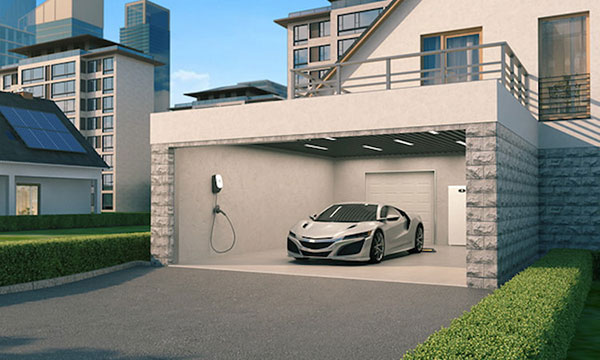
Level 2 charging station: With the help of a dedicated charging station, the same AC power is used, but the charging speed is much faster than that of a Level 1 charging station. In general, a Level 2 charging station can fully charge an electric vehicle in 4 to 8 hours. This charging mode is suitable for use in homes, office areas, or parking lots.
Level 3 Charging stations
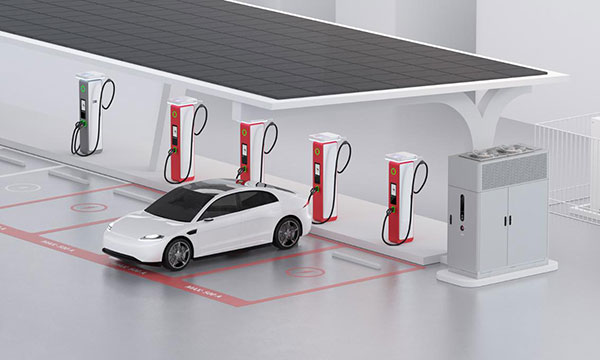
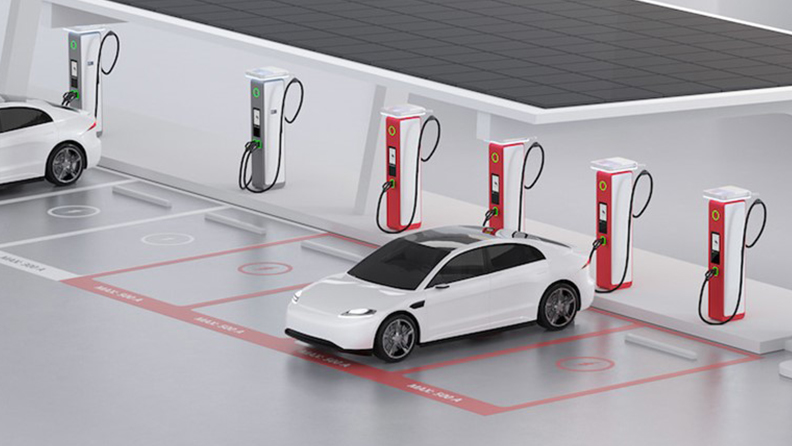
The Level 3 charging station is the fastest charging station. Unlike the Level 1 and Level 2 charging stations, it uses direct current to power it, which greatly reduces the charging time. With the help of the Level 3 charging station, the vehicle can be charged in 20 to 60 minutes. Such chargers are usually set up in highway rest areas, gas stations, and other areas with heavy traffic, like the exclusive "energy refueling station" of the car, quickly replenishing the energy of the vehicle for long-distance travel and helping it continue to travel smoothly.
|
Charger Type
|
Application
|
Power Output
|
Charging Speed
|
Charging Time
|
|
Level 1
|
Home
|
2-3 kW
|
Adds3-5miles/hour
|
8 to 24 hours
|
|
Level 2
|
Home& commercial
|
7-19 kW
|
Adds20-60miles/hour
|
4 to 8 hours
|
|
Level 3
|
Commercial
|
50-350 kW or even higher
|
Adds100-300miles/hour
|
20 to 60 minutes
|
Of course, charging time is also affected by other factors, such as:
Battery size: The bigger the battery, the longer it will take to charge;
Battery state: The current level of charge in your battery can impact how quickly it charges;
Ambient temperature: Extreme temperatures can affect the efficiency of the charging process.
How Long Does It Take to Charge an EV at a Rapid Charger?
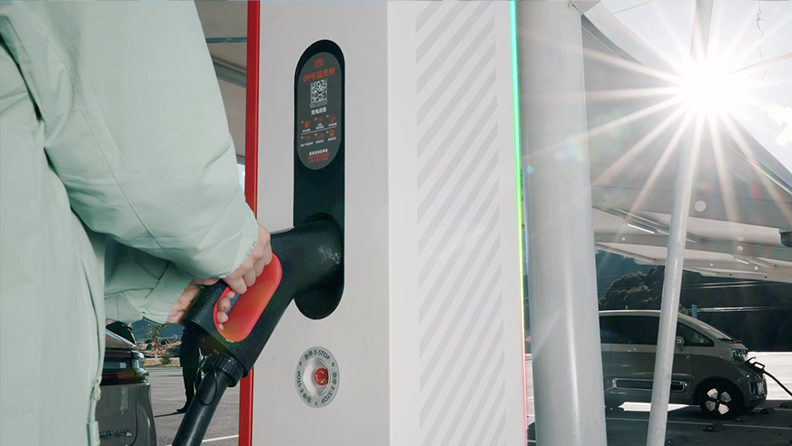
In order to effectively ease the concerns of electric vehicle owners regarding long charging times and difficulties in charging, high-power Liquid-Cooled Ultra-Fast Charging technology has come into being. This technology not only significantly optimizes the user experience but also brings about a breakthrough transformation in the field of fast charging for electric vehicles.
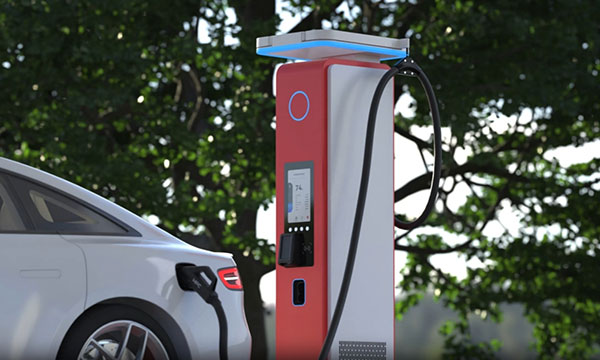
For example, Huawei’s Liquid-Cooled Ultra-Fast Charging technology can provide a current of up to 500 amperes, enabling an "ultra-fast charging experience of charging for one kilometer per second". In addition, Huawei's high-power liquid-cooled ultra-fast charging technology is compatible with all vehicle models.
For example, Huawei's Liquid-Cooled Ultra-Fast Charging technology can output a current of up to 500 A. With just a 5-minute charge, the vehicle's driving range can easily exceed 200 km*. Moreover, during the charging process, the noise interference it generates is less than 50 dB (A)*, allowing car owners to fully enjoy a quiet environment. In addition, the normal service life of the Liquid-Cooled Ultra-Fast Charging equipment exceeds 10 years*, and the failure rate of its components is less than 0.5%*, demonstrating excellent stability and durability.
Conclusion
How long does it take to charge an electric vehicle?As we've seen, it depends on multiple factors including the vehicle's battery capacity, the frequency of use, the type of charging station, and so on.The significance of knowing the charging time lies in its ability to enhance your EV experience. By accurately understanding how long to charge an electric car, you can plan your trips more effectively.
For the best experience in 2025, consider these recommendations:
● Install a Level 2 home charger for daily convenience
● Use Liquid-Cooled Ultra-Fast Charging stations for long trips
● Maintain your battery between 20%-80% for optimal longevity
● Plan charging stops in advance for long-distance travel
● Monitor your vehicle's charging patterns for maximum efficiency
The EV charging infrastructure continues to improve rapidly, with new technologies promising even faster charging times in the near future. By understanding these charging fundamentals, you can make the most of your electric vehicle ownership experience, avoid power and range anxiety, and reduce our carbon footprint.
FAQs
How Often Should I Charge My Electric Vehicle?
It depends on how often you use your car and the battery's capacity. However, keep in mind that to prolong the battery's lifespan, experts recommend keeping your electric car's battery between 20% and 80% charged during daily use, reducing the number of full charges, and charging and discharging lightly to avoid overcharging and over-discharging.
Are Public Charging Stations Faster Than Home Chargers?
Yes! If you choose a DC fast charger, it will be faster than a Level 1 or Level 2 home charger. At a 150kW fast charging station, the charging time for a typical electric vehicle (60kWh battery) from empty to full may only take 30 minutes or less. However, if you use a 3kW home charger, it is expected to take 20 hours to complete the charging, and using a 19kW home charger will take about 3 hours.
.How Much Does It Cost to Fast Charge an Electric Car?
The cost of charging an electric vehicle depends on several key factors, including: the amount of electricity required for charging, the electricity prices in the area where you are located, the pricing policies of the charging network you use, and the charging time you choose, etc. Understanding these variables will help you estimate the charging cost more accurately and may uncover opportunities to save on the charging expenses of your electric vehicle.
* The data is based on theoretical values obtained by Huawei internal labs through tests carried out under specific conditions. Actual performance may vary due to differences between software versions, usage conditions, and environmental factors. All data is subject to actual usage.
*The dispenser noise is less than 50dB(A)@25°C at 1m. The data is based on theoretical values obtained by Huawei internal labs through tests carried out under specific conditions. Actual performance may vary due to differences between software versions, usage conditions, and environmental factors. All data is subject to actual usage.
Disclaimer: Any views and/or opinions expressed in this post by individual authors or contributors are their personal views and/or opinions and do not necessarily reflect the views and/or opinions of Huawei Technologies.