As the world pursues greener practices, the share of clean energy in the global energy mix is rising rapidly, adding more renewable capacity.
Globally, more than 560 GW of green energy capacity has been added in 2023, according to the "World Energy Outlook 2024" by the International Energy Agency (IEA). Over the past decade, the share of fossil fuels in the global energy mix has gradually decreased. In fact, despite a 15% increase in global energy demand, 40% of the supply comes from clean energy.
In China, by the end of 2023, clean energy accounted for 58.2% of the country's total installed capacity, according to the "China's Energy Transition" white paper released in August 2024. And more than half of China's energy consumption growth comes from clean energy sources.
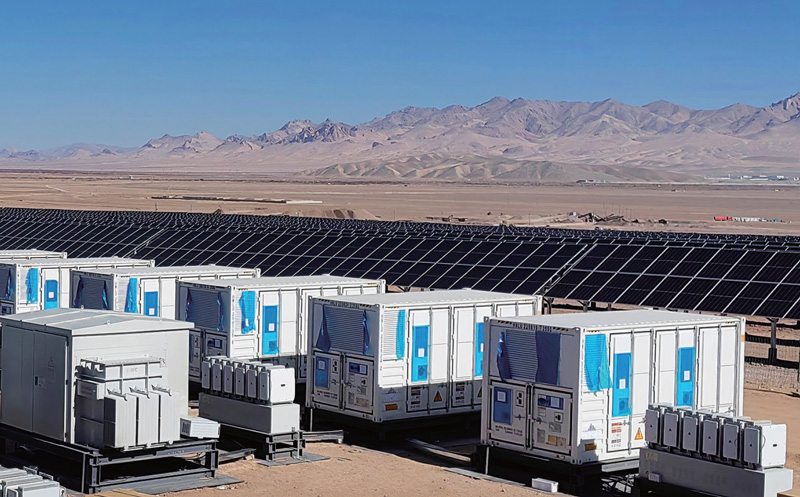
However, such a high proportion of renewable energy may put the stability of power systems at risk, creating a shared challenge for the global renewable energy industry. The grid-forming ESS has become one of the key technologies for new power systems because it can proactively support the stability of grid voltage, frequency, and power angle.
The grid-forming ESS is crucial for new power systems
With more clean energy production and installed capacity, new power systems will require more power electronic equipment and rely more heavily on renewable energy sources. This shift presents challenges for grid integration, connectivity, and stable operations.
Conventional power grids use synchronous generators to regulate power and voltage, ensuring stable operations. As the penetration rate of renewable energy grows, grid-connected devices that use the grid-following control technology are unable to actively support voltage and frequency when the power grid experiences faults.
In the new power system, grid-forming ESS technology can replicate the characteristics of synchronous generators, enabling it to actively implement grid forming, respond independently, and provide instant inertia and voltage support to maintain grid stability. This technology is crucial for integrating a high proportion of renewable energy, allowing renewables to transition from being a supplementary power source to a primary energy source.
In recent years, China has released policies that encourage renewable energy projects to deploy grid-forming ESSs, improving the overall stability and adaptability of power grids. In October 2024, China's National Development and Reform Commission, National Energy Administration, and National Data Administration issued the "Action Plan for Accelerating the Construction of New Power Systems (2024–2027)" to promote the application of the grid-forming technology.
The northwest of China has also issued policies to encourage or make it mandatory for renewable energy projects to deploy grid-forming ESSs. As a result, the industry bidding progress was accelerated significantly in the second half of 2023. And, by June 2024, the bidding for 2.28 GW/7.58 GWh grid-forming ESS projects in China has been completed.
Technological innovation solves industry bottlenecks in grid-forming ESSs
Grid-forming ESSs are trending but face several technical challenges. They lack sufficient capabilities in voltage and frequency support, wideband oscillation damping, and weak anti-interference; they also have low inertia.
Thanks to years of experience in digital and power electronics technologies, Huawei has developed many innovations and best practices in algorithms, devices, and components to address these challenges with its Smart String Grid-Forming ESS Platform.
Algorithms: Huawei's multi-site self-synchronized amplitude and frequency regulation technology can adjust the amplitude and frequency of multiple sites in a power system to ensure consistency among the voltage and frequency parameters of the sites. This proactively supports and ensures the stability and reliability of the power grid. At the same time, the wideband impedance reshaping algorithm enables grid-forming ESS devices to have positive damping characteristics within the wideband range, ensuring stable operation of the ESS devices. This innovative wideband stabilizing control technology ensures that the grid-forming ESS can output damping power to proactively suppress grid oscillation and help stabilize the grid. This technology is not restricted by the grid scale or strength, thus applicable to power grids with multiple types of power supplies.
Devices: Huawei has pioneered a two-stage power conversion architecture for the Smart String ESS, decoupling voltage from active power and ensuring grid stability and ESS safety. This approach improves the availability, capacity expansion, and upgrade capability of the ESS.
Components: The components including high-reliability power modules ensure long-term, stable, and reliable device operation in complex and harsh environments. In addition, Huawei has also built a safe and reliable capability system for designing and manufacturing foundational core components.
Large-scale roll-out accelerates the grid-forming ESS industry
A new technology must undergo rigorous testing before it can be commercially used on a large scale. Huawei Digital Power has worked with customers and partners to perform comprehensive functional and performance testing on grid-forming ESSs at the device, single-site, and multi-site levels. This includes 35 kV and 110 kV short-circuit tests that took place between 2022 and 2024 in Hami, Qinghai, and the Ngari Prefecture. Successfully completing these tests indicates that Huawei's Smart String Grid-Forming ESS is ready for large-scale implementation in real-life engineering applications.
The CR Power 25 MW/100 MWh grid-forming ESS project in Hami passed the world's first performance tests at a 100 MWh smart string grid-forming ESS plant. The project also completed the world's first black start test for an on-grid smart string grid-forming ESS plant, shortening the start time to minutes.
The CGDG 50 MW/100 MWh ESS project for the multi-energy renewable power plant in Golmud, Qinghai, completed the world's first performance tests at a 100 MWh multi-energy grid-forming ESS plant. The tests verified the complementary features of PV, wind, solar thermal, and conventional ESS.
The Ngari Prefecture is situated at an altitude of 4500 m, and winter temperatures can drop below –20°C. The region has an extremely weak power grid. The ZDI 6 MW/24 MWh ESS project in Ngari Prefecture passed the world's first performance tests at a grid-forming ESS plant located at a high altitude and facing low temperatures and weak power grid conditions.
The success of these tests demonstrates that Huawei's Smart String Grid-Forming ESS significantly improves renewable energy grid integration and can be used in a range of scenarios, including strong and weak power grids and off-grid conditions. When on the grid, Huawei's solution achieves capabilities similar to those of synchronous generators (including synchronous condensers) in supporting the stability of voltage, frequency, and power angle. In off-grid scenarios, the solution has been commercialized and can operate reliably for a 100% PV+ESS microgrid at the GWh level.
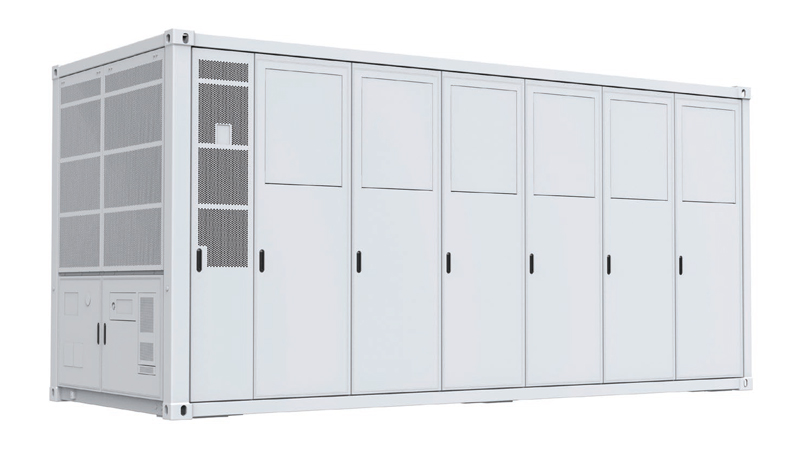
In July 2024, Huawei's Smart String Grid-Forming ESS underwent a rigorous technology evaluation meeting that assessed the solution's key technologies and applications and their usability in various scenarios that utilize a high proportion of renewables. The committee comprised experts from research institutions and companies, including the Chinese Academy of Sciences, the Chinese Academy of Engineering, and the State Grid Corporation of China (SGCC).
The experts unanimously agreed that the preceding projects have achieved world-leading capabilities in terms of improving new power system stability and renewable energy integration. The committee also agreed that these projects have developed and adopted the Smart String Grid-Forming ESS through research in multi-site self-synchronized amplitude and frequency regulation technology, wideband self-stabilizing and stabilizing control technology, smart string two-stage conversion architecture, and power modules.
Outside China, Huawei's Smart String Grid-Forming ESS has been deployed in the Middle East for building the world's first city powered by 100% clean energy. This solution helps maintain the power grid's stability and implement continuous off-grid fault ride-through. It also supports the GWh-level black start of the entire microgrid, enabling power recovery in minutes.
With the increasing adoption of renewable energy and the use of power electronic devices, problems such as randomness, high fluctuations, low inertia, intermittency, and weak support will become more and more prominent in power systems. As such, grid-forming ESSs will become essential for new power systems. Huawei's Smart String Grid-Forming ESS Platform will continue promoting the evolution from grid following and support to grid forming, enabling clean energy to become the main energy source.